
News
The Pixel Slate is Google’s first tablet to run Chrome OS
Android is not for tablets anymore


Google didn’t just announce the Pixel 3 phones today, they also welcomed a new member to the Pixel family: the Pixel Slate. The Slate is a practically a 2-in-1 tablet that runs Chrome OS — not Android.
Right off the bat, the Pixel Slate is a full-sized 12.3-inch tablet with an LCD using Low Temperature PolySilicon (LTPS) technology. Google is proud of its 293ppi resolution and color accuracy which will be pleasing to mainstream consumers, and even professionals. Complementing it are two front-facing speakers that are said to be loud and crisp.
What’s perhaps the best feature of the Pixel Slate is its operating system. This version of Chrome OS is redesigned to be touch-optimized. Of course, it can also do a regular desktop interface.
Inside the tablet are powerful specifications. It’ll come with either Intel Celeron or Core m3, i5, or i7 processors and memory options from 4GB to 16GB. You won’t run out of space with the Pixel Slate and its top 256GB SSD configuration, but you could also just settle for 32GB.
The rest of the specs include 8-megapixel cameras on both sides, which use machine learning to do portrait mode. It also has an embedded fingerprint reader on the power button and two USB-C ports. As for the battery, it’s rated to last up to 12 hours on a single charge.
To fully enjoy the Pixel Slate for productivity, it has a specially designed keyboard folio with circular keys, trackpad, and a dedicated Assistant button.

The Google Pixel Slate will go on sale later this year starting at US$ 599. The keyboard folio will be sold separately for US$ 199, while the PixelBook Pen remains at US$ 99.
SEE ALSO: Google Pixel 3 and Pixel 3 XL retain single rear camera, add wireless charging






Enterprise
Google illegally destroys 250,000 trees for a single AI data center
This is what we stand to lose with data centers.

In the Philippines, it’s illegal to cut down a single tree without a permit. It’s a constant reminder that the preservation of nature should be a civil, besides being a moral, obligation. And yet, corporations are seemingly immune from obligations and morals. Google, the company that used to stand for “Don’t be evil,” shows off its true colors by illegally cutting down 250,000 trees in Finland for a datacenter.
As first reported by The Guardian, Finland is now staring at 330 hectares of land suddenly denuded of around 250,000 valuable trees, all thanks to Google. A local ecologist has also said that the company killed a further 150,000 trees at a separate site.
The environmental desecration is part of Google’s multibillion-dollar push to build data centers all over the world for artificial intelligence. Google has since been ordered to stop the development in the country after Finland found that the company acted without securing the needed assessments and permits to clear the area.
Google brushed away the report by saying that they acted “on the best understanding we had of the legislation at the time.” The company also said that they are protecting the water quality at the affected sites and committed to replanting trees across 130 hectares, a pale comparison to the total area affected.
Other AI companies are also trying to weasel their way into other countries to build data centers. An example is the controversial Pax Silica in the Philippines. Finland now stands as a cautionary tale against the unimpeded and unsupervised growth of data centers for a service that no one asked for.
Don’t be evil, my ass.

As one of the wisest sages of the 2000s once said, “He was a punk, she did ballet. What more can I say?” Sometimes, opposites attract. Now, two of those opposites in the audio space are coming together: the punk Skullcandy and the ballet-loving Bose.
Today, Bose has announced its acquisition of Skullcandy. The latter will continue to operate as a separate brand but now officially under the Bose umbrella. Although, it’s not a new collaboration as the two brands have previously worked together on devices before. Skullcandy will just have more access to Bose’s technologies moving forward.
Alternatively, Bose will now have access to Skullcandy’s more varied audience. Compared to Bose’s focus on premium products, Skullcandy caters to more alternative lifestyles. Though the brand has since mellowed from its more radical roots, it is still known as one of the alternative brands.
Bose, on the other hand, is still a household name for home audio and noise-cancelling headphones. The new relationship between two polar opposites might be seen as a weird one, but it’s ultimately beneficial to both parties. Besides, both brands were very strong in the 2010s. Keeping both brands going is a boon to audiophiles of the past decade.
Gaming
Next Xbox might cost double the price of an Xbox today
The most expensive Xbox Series X costs $900. The next Xbox’s price might double that.
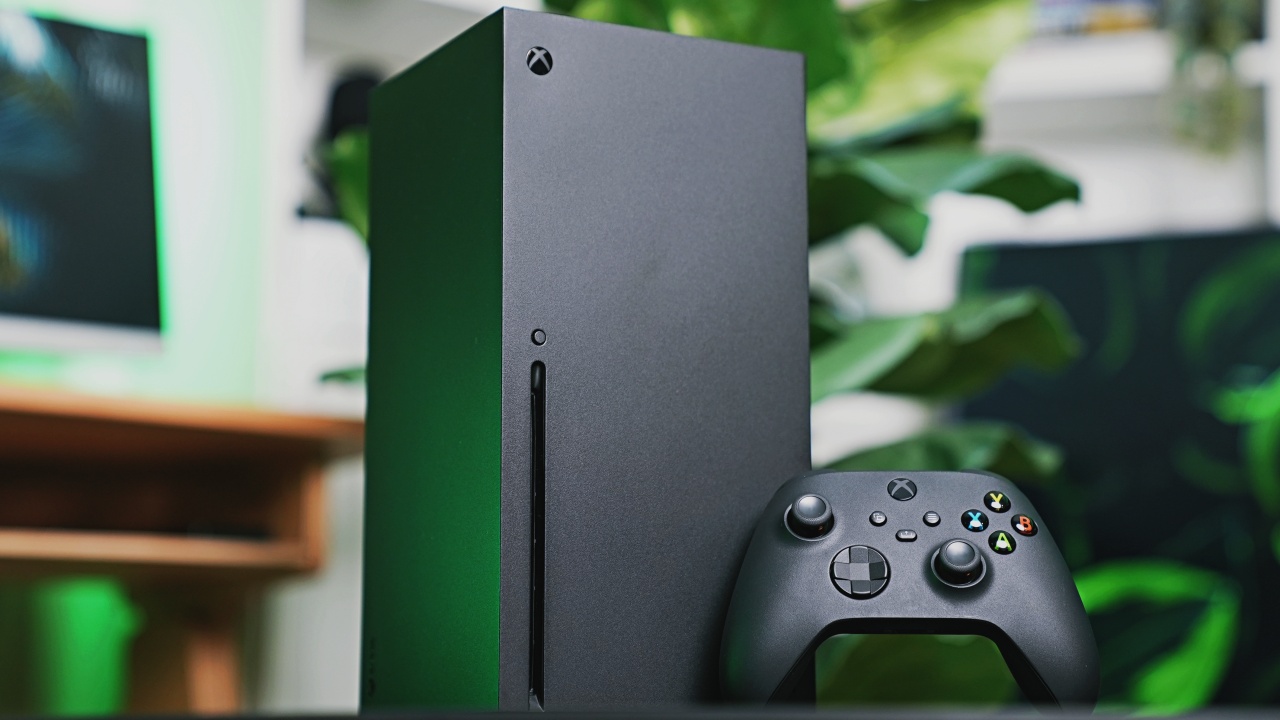
Buying a new gaming setup must be one of the most torturous things you can purchase these days. The rising price of chips has hampered the buying ability of many a consumer today. Sadly, that trend isn’t changing anytime soon. According to new reports, the next Xbox might cost double of what an Xbox costs these days.
The next console is currently codenamed Project Helix. Spearheaded by relatively new Xbox CEO Asha Sherma, Project Helix has hopes of being an all-around gaming machine capable of playing PC games besides console exclusives. Sharma obviously wants the platform to come back as a worthy destination for gamers.
That’s a monumental task, though, especially after the rising prices of chips are constantly threatening the prices of new devices. Now, according to a profile of Sharma published by Fortune, the next Xbox might cost as high as US$ 1,800. For reference, the limited 25th anniversary edition of the Xbox Series X currently costs US$ 899.
Should Fortune’s estimate hold true, a new console in the coming years is double the cost of the most expensive Xbox Series X variant available today. The next generation of gaming might be even more of a luxury than it already is.
Unfortunately, things aren’t getting better across the board. Gaming on PC and on PlayStation aren’t going to be much cheaper as the RAM crisis continues.
SEE ALSO: Xbox might get rid of physical discs too

HP OMEN Max 16 review: Gamer-maxxing in deep black
Peripherals deemed necessary to max this out


vivo V80 review: Good phone, tough sell
A capable travel companion


Ghost of Yōtei Complete Edition review: More of a great thing
Picking up where Atsu left off

Visa: 79% of Filipinos want to learn about stablecoins

CASETiFY Match: Finding the right case for your Galaxy Z8 Series phone
HP OMEN Max 16 review: Gamer-maxxing in deep black

Google illegally destroys 250,000 trees for a single AI data center

FINAL FANTASY RESONANCE now available across major platforms

TECNO CAMON Slim 5G review: Slim on size, big on surprise

TECNO CAMON Slim 5G: Price, availability in the Philippines

HONOR Magic9 Pro Max launches in China with ARRI-powered imaging

BYD says that way better EV batteries are coming next year

TECNO CAMON Slim 5G teases an ultra-slim design ahead of launch


-

 Gaming2 weeks ago
Dragon’s Dogma 2: Dark Arisen launches with new Official Pawns
-

 News1 week ago
vivo V80 debuts with ZEISS cameras
-
 Deals2 weeks ago
Score PhP 22,000 in guaranteed freebies when you pre-order the iPhone 18 Pro at Beyond the Box
-

 Philippines1 week ago
TECNO CAMON Slim 5G gets launch discounts, free MagBadge
-

 News1 week ago
Samsung: Galaxy Z Fold8 demand rose because of iPhone Duo
-

 Features1 week ago
I don’t want a phone that unfolds — the Galaxy Z Fold8 gets why
-
Reviews6 days ago
vivo V80 review: Good phone, tough sell
-

 News4 days ago
OPPO Find X10 Series: Price, availability in the Philippines