
Uncategorized
HoYo FEST 2025 set across 6 Southeast Asian cities
Happening July 24-27


HoYo FEST 2025 is officially returning from July 24 to 27, bringing HoYoverse fans four days of immersive events and activities across six Southeast Asian cities: Indonesia, Malaysia, the Philippines, Singapore, Thailand, and Vietnam.
Now in its fifth year, the event will celebrate popular HoYoverse titles:
- Genshin Impact
- Honkai: Star Rail
- Zenless Zone Zero
- Honkai Impact 3rd
The event will feature themed experiences, exclusive merchandise, giveaways, and interactive showcases for fans.
Artist Alley goes regional
This year marks the regional debut of HoYo FEST’s Artist Alley, which was previously held in 2024 in Indonesia and Vietnam.
For the first time, all participating locations will feature the Artist Alley, where local creators and fan artists can exhibit and sell HoYoverse-themed merchandise.
The move marks a first in Southeast Asia, as HoYoverse becomes the first gaming company to support fan-created merchandise at its own official event in the region.
Onsite experiences and new stage showcases
In addition to the Artist Alley, attendees can look forward to themed booths based on each HoYoverse game. There will also be exclusive freebies, merchandise, a lucky draw, and other interactive attractions.
This year’s edition will also introduce a Stage Segment, offering cosplayers, performers, and fan artists the opportunity to present live on stage.
Tickets available from June 24
Tickets go on sale June 24 at 11:00 AM (UTC+8) through the official HoYo FEST website. Fans can choose from 1-Day Passes, Multi-Day Passes, or Fast Passes. Fast Pass holders will receive early access, exclusive merchandise, and priority entry to event booths and activities.
For more information, including ticketing details and venue-specific updates, visit the official HoYo FEST 2025 website: https://hoyo.link/wqjjLntrY.







Uncategorized
Biwin launches high-speed Amber microSD card for intensive gaming
With up to 900/800 MB/s read/write speeds

Biwin has expanded its Amber series with the launch of the ME300 microSD Express Card. This next-generation portable storage is engineered for smoother gaming and more scenarios with its high-speed performance.
The Amber ME300 microSD is built on the SD 7.1 specification and is powered by PCIe NVMe technology. Aside from exceptional speed, it has ample storage capacities and broad compatibility.
The memory card has sequential read speeds up to 900 MB/s and write speeds up to 800 MB/s.
As such, it dramatically reduces load times, accelerates game launches, and delivers smoother responsiveness especially during intensive gameplay.
This makes the product ideal for gaming handheld consoles. In other scenarios, it can also support media processing, like for a Kodak Charmera or budget smartphone.
Customers can choose from 256GB, 512GB, and 1TB storage configurations. This allows gamers the freedom to build larger libraries without deletion or re-downloading.
In addition, the Amber ME300 is backward compatible with UHS-I for a flexible option for upgrading in stages.
As for maintenance, Biwin built the Amber ME300 with comprehensive protection features. Users can expect it to withstand dust, water, accidental drops, shocks, and more.

Rayman: 30th Anniversary Edition launches February 14 on Ubisoft+, PS5, Xbox Series X|S, Nintendo Switch, and PC via Ubisoft Store and Steam.
Ubisoft developed the anniversary release with Digital Eclipse and Ubisoft Montpellier to celebrate 30 years of the original 1995 platforming classic. The package includes five versions of the game, covering PlayStation, Atari Jaguar, MS-DOS, Game Boy Advance, and Game Boy Color.
Players return to familiar locations like the Dream Forest and the Band Lands. The goal remains the same. Rescue the Electoons and stop Mr. Dark.
This edition keeps the original experience intact while adding new content. Highlights include a never-before-playable SNES prototype, 120 extra levels from bonus packs, and a reimagined soundtrack by composer Christophe Héral. New quality-of-life features are also included, such as a 60-second rewind, infinite lives, and optional invincibility.
Rayman: 30th Anniversary Edition also features an exclusive interactive documentary. It offers over 50 minutes of new interviews with the original developers, alongside unseen concept art, early sketches, and design documents that trace the series’ origins.
The game launches digitally tomorrow. A physical edition arrives in select regions this June.

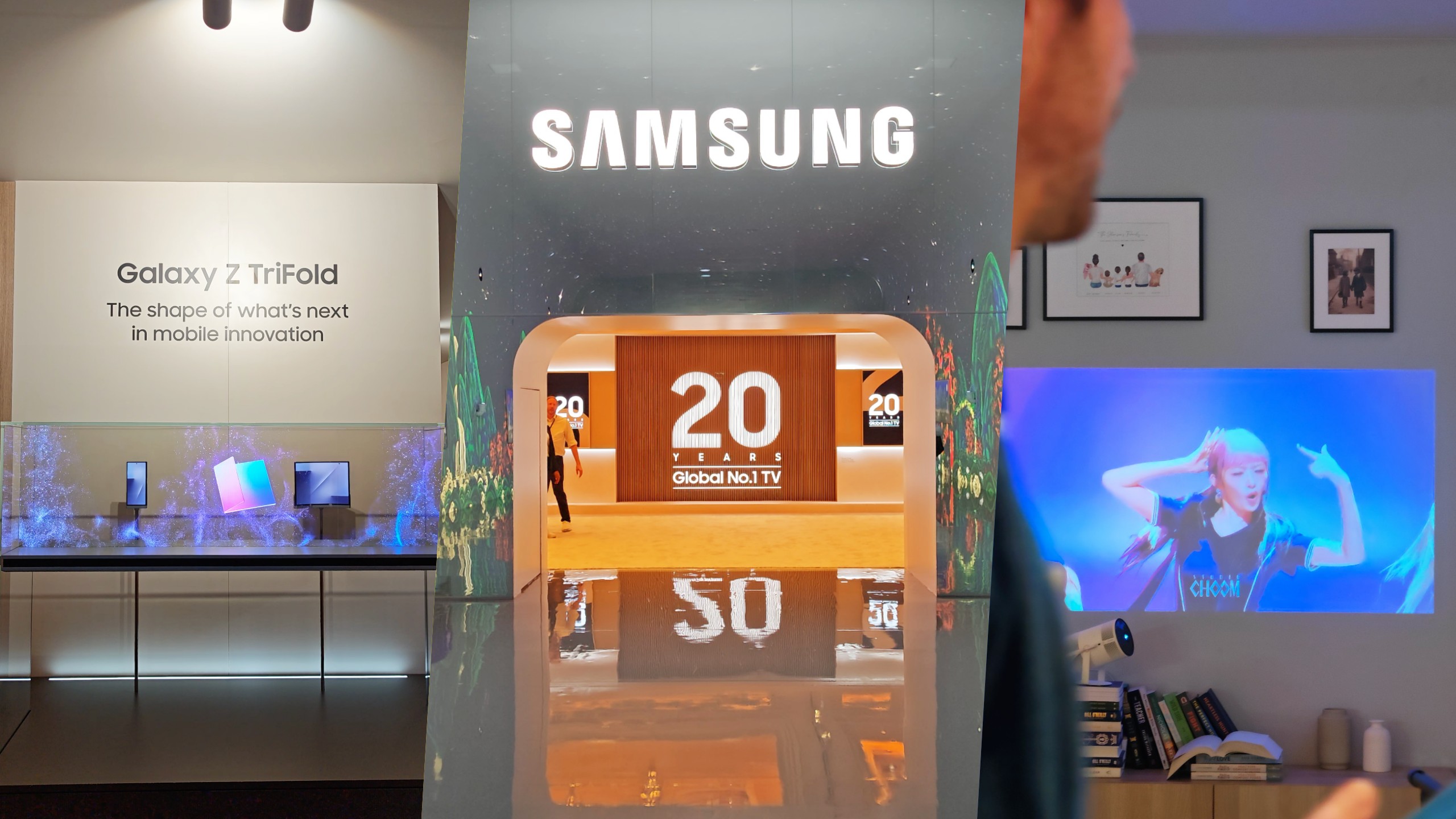
CES has always been about showing what’s possible with technology. At Samsung’s First Look session for CES 2026, the company leaned into that idea—not by unveiling a single hero product, but by showing how its entire ecosystem can work as one.
Samsung showcased plenty of familiar hardware. Robot vacuums. Washer-dryer combos. The Frame TVs. Even the attention-grabbing Galaxy Z Trifold made an appearance. But the real focus wasn’t any one device.
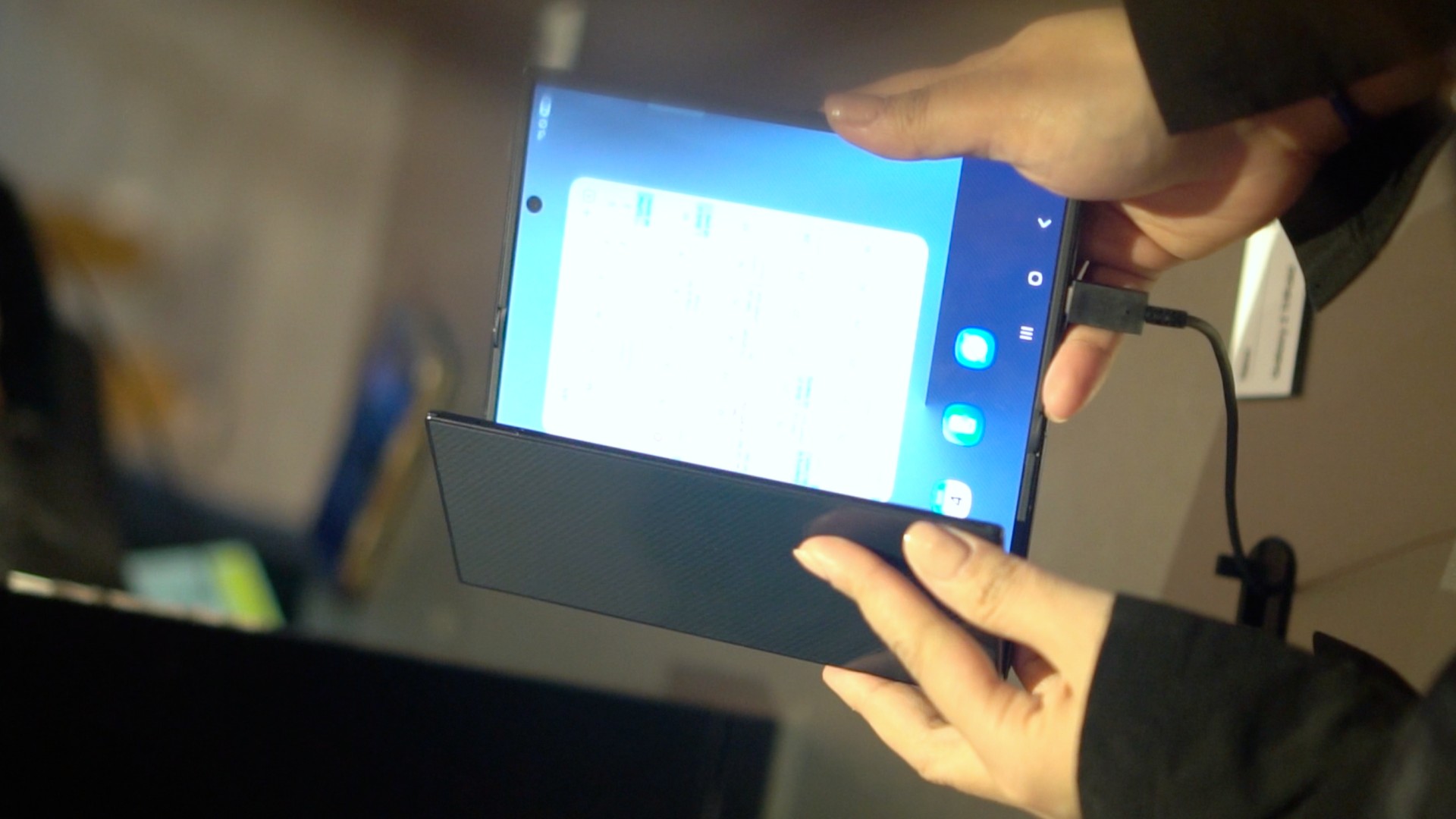
It was how all of these products connect end-to-end—and how easily they can be controlled through a Samsung Galaxy phone or watch.
This is what Samsung now calls its vision of being a “companion to AI living,” and at CES 2026, it was less about futuristic promises and more about everyday flow.
AI as an ecosystem, not a feature
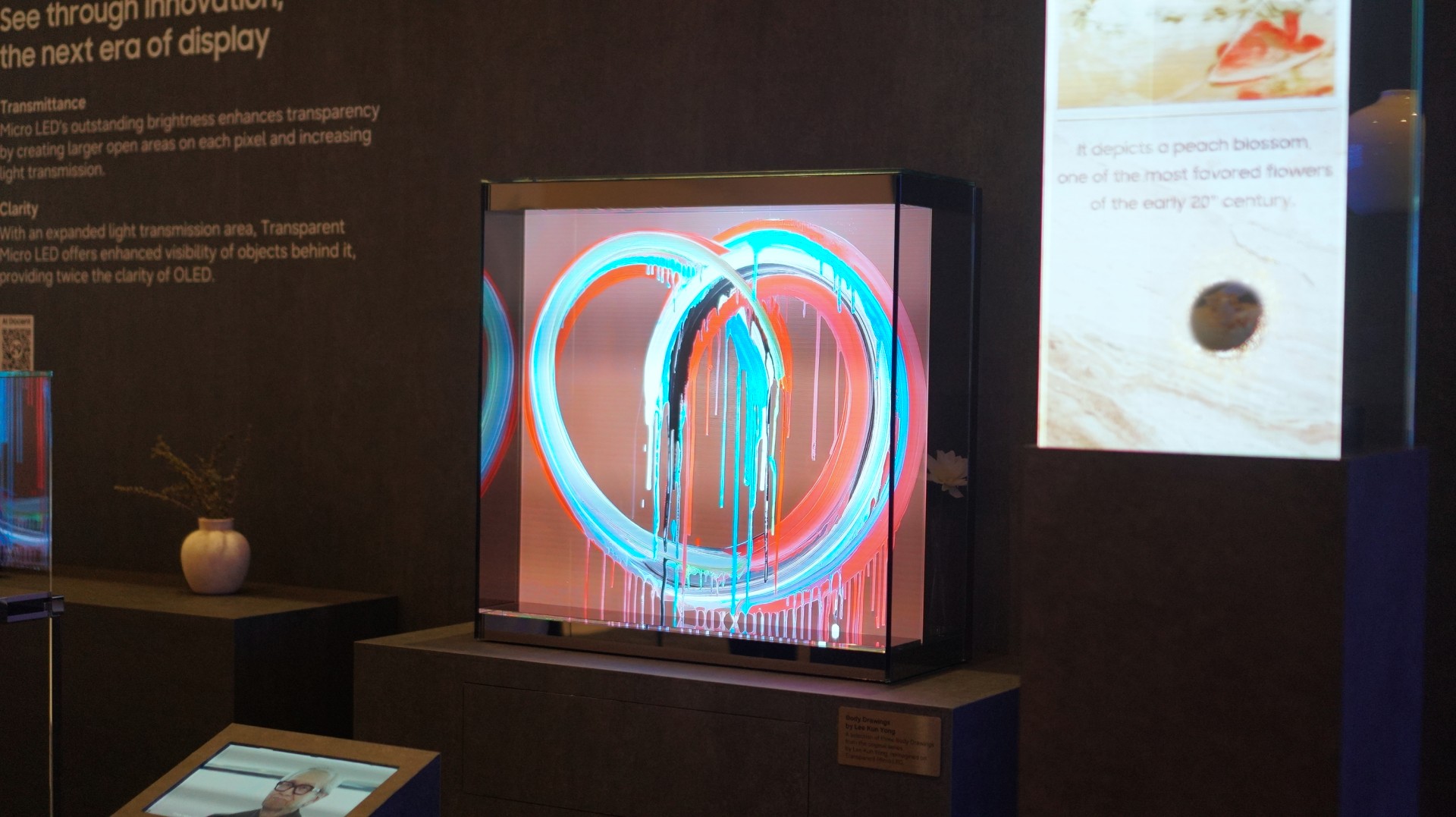
At The First Look, Samsung framed AI not as a checkbox feature, but as a foundation that runs across mobile, displays, home appliances, and services. The idea is simple: devices shouldn’t feel like separate tools. They should behave like one system that understands routines, preferences, and context.
That theme carried across the exhibition floor, where displays showed how TVs talk to kitchen appliances, how wearables feed into home routines, and how SmartThings quietly connects it all in the background.
Samsung executives positioned this scale as the company’s advantage. With hundreds of millions of connected SmartThings users worldwide, the ecosystem has enough real-world data to move AI from reactive to assistive—and, eventually, proactive.
The TV becomes an active companion

On the display side, Samsung’s vision pushes TVs beyond passive viewing. The company introduced Vision AI Companion, a system designed to guide what you watch, listen to, and even eat—based on what’s on screen and what’s happening around you.
At the center of the showcase was the massive 130-inch Micro RGB display, a statement piece that set the tone for Samsung’s 2026 TV lineup. But more interesting than its size or picture quality was how Samsung wants users to interact with their screens.

From adjusting sound levels during sports broadcasts to pulling up recipes inspired by a cooking show, the TV becomes a hub for lifestyle decisions. Those recommendations can then be sent directly to other devices—like kitchen appliances or mobile screens—without breaking the flow.
Samsung also confirmed that its 2026 TVs will support seven years of Tizen OS upgrades, positioning the TV as a long-term platform rather than a disposable display.
When appliances start doing the thinking
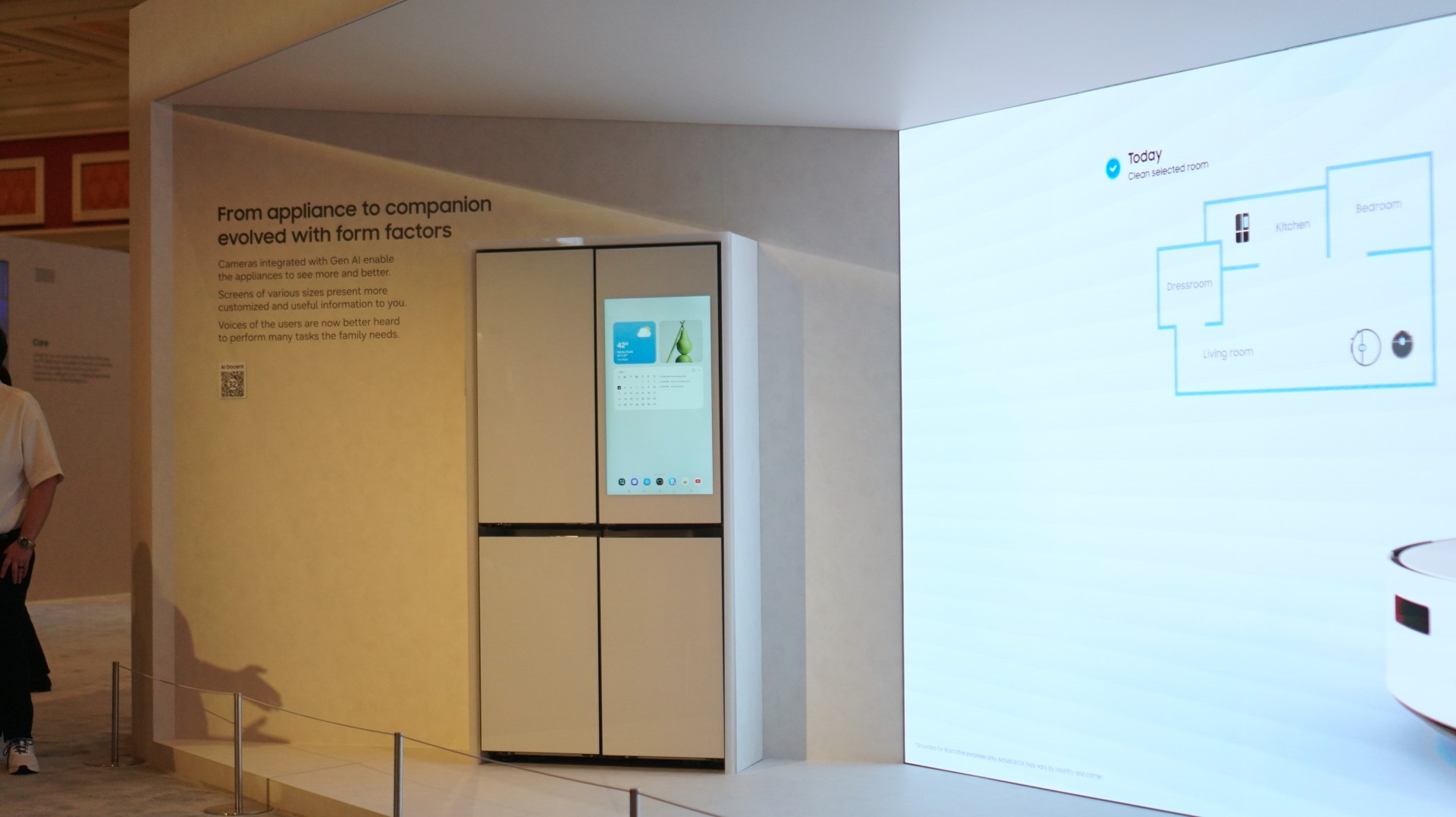
In the home, Samsung’s AI push focused on reducing friction in daily chores. The upgraded Family Hub refrigerator now uses AI Vision powered by Google Gemini to better track food items as they go in and out, making meal planning more automatic.
Features like “What’s for Today?” turn the fridge into a decision-maker, suggesting meals based on what’s available—or offering something random when you’re tired of choosing. Those recipes can then be sent to connected cooking appliances, creating a surprisingly smooth loop from planning to execution.
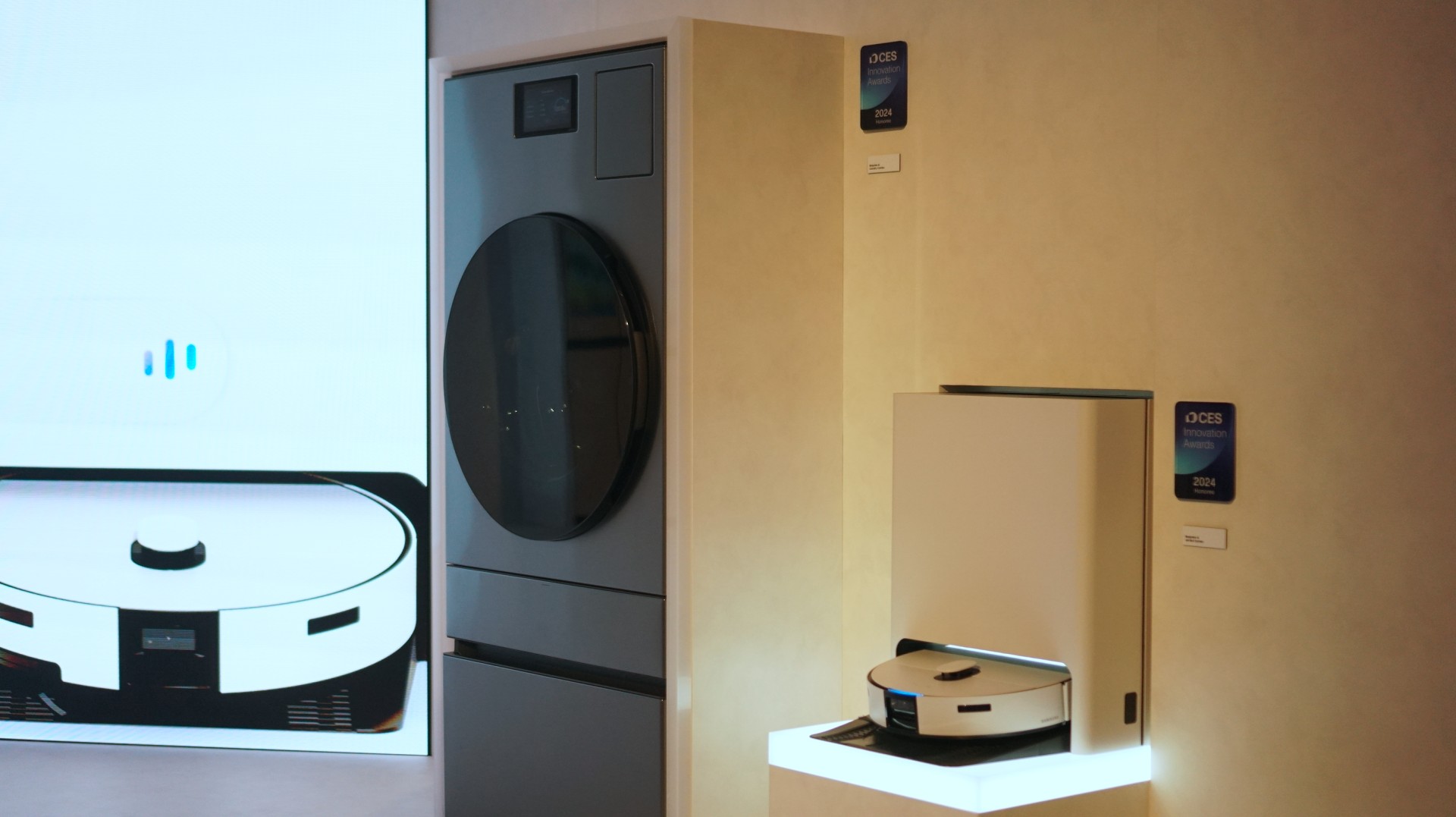
Laundry and cleaning also got similar treatment. The Bespoke AI Laundry Combo removes the need to transfer loads, while the AirDresser tackles wrinkles with minimal effort. Even the robot vacuum now doubles as a home monitor, capable of recognizing spills, navigating intelligently, and responding to conversational voice commands.
It’s all designed to make the background tasks of daily life fade into the background even more.
From reactive care to proactive wellness

Samsung also outlined a longer-term vision for health, where phones, wearables, and home devices work together to spot patterns before they become problems.
The company highlighted future plans around personalized exercise and sleep coaching, nutrition suggestions tied to what’s in your fridge, and early detection of potential health concerns. If something looks off, the system could alert users and connect them with healthcare providers through integrated platforms.
It’s an ambitious shift—from reacting to health issues to preventing them—and one that leans heavily on trust, data security, and accuracy.
Security as the quiet backbone

Underpinning the entire ecosystem is Samsung Knox and Knox Matrix, which the company positions as essential to making AI feel personal without feeling invasive. As AI models evolve, Samsung says its security systems are evolving alongside them, focusing on protecting data not just in use, but also during training and processing.
It’s a necessary reassurance, especially as AI becomes more embedded in private spaces like homes, kitchens, and bedrooms.
Tech, culture, and the Samsung brand

Ahn Hyo Seop at Samsung’s First Look event for CES 2026
The event also leaned into culture as part of the experience. Actor Ahn Hyo Seop (KPop Demon Hunters, Business Proposal) appeared as Samsung’s TV ambassador, while K-pop elements were woven throughout the exhibition. Several displays featured the Studio Choom performance of IVE’s “XOXZ.” One of their members — Jang Wonyoung — is a long-time Samsung Galaxy ambassador.
It was a reminder that Samsung’s vision of AI living isn’t just about efficiency—it’s also about entertainment, identity, and how technology fits into modern lifestyles.
A quieter, more confident CES message

At CES 2026, Samsung didn’t try to win attention with one loud announcement. Instead, it presented a calmer, more cohesive idea: that the future of AI isn’t a single breakthrough device, but a network of products that understand each other—and, ideally, you.
If Samsung can make that ecosystem feel as seamless in real homes as it did on the CES floor, “AI living” might finally start to feel less like a buzzword and more like a daily convenience.





Stylish, student-friendly HONOR X8d launches

The HONOR X8d is serviceable

Why the OPPO Reno15 5G series is a creator’s essential

The hunt begins: The Witcher in Concert hits Manila with surprises in tow

WATCH: The Super Mario Galaxy Movie final trailer


-

 Reviews2 weeks ago
The Xiaomi 17 shoots Leica dream
-

 Hands-On2 weeks ago
OPPO Reno15 F 5G hands-on
-

 Gaming2 weeks ago
Project Helix is Xbox’s next console, and it plays PC games
-

 Computers1 week ago
GIGABYTE collaborates with Capcom for RE Requiem custom PC
-

 Entertainment1 week ago
The internet is thirsting over the One Piece Season 2 cast
-

 Laptops1 week ago
Apple MacBook Neo Review
-
 News2 weeks ago
Globe postpaid opens pre-orders for Samsung Galaxy S26 series
-

 Apps6 days ago
Google Maps is finally getting a 3D mode