
Enterprise
Huawei sues the US government over unconstitutional ban on 5G equipment
The Chinese company is not holding back


After all the heated tension and fiasco, Huawei is finally making a move to defend itself in court. Earlier today, the Chinese telecoms giant held a press conference in Shenzhen, China to announce that they have filed a complaint against the US government.
The complaint was filed in a federal court in the Eastern District of Texas, USA. It challenges Section 889 of the National Defense Authorization Act (NDAA), signed into law by US President Donald Trump last year, which bars federal agencies and their contractors from procuring Huawei equipment and services.
Huawei’s Rotating Chairman Guo Ping claimed that they were left with no choice after the actions of the US Congress. While reading on the company’s new Mate X device, he also said that “Huawei has not and will never implant backdoors.”
With operations in over 170 countries and regions, it’s obvious that Huawei wouldn’t want to be restricted in fair competition, especially in the rising 5G market. The NDAA restrictions prevent the company from providing 5G technologies to American consumers. Without them in the picture, Huawei claimed that Americans will have to pay higher prices for inferior products.
“Huawei is not owned, controlled, or influenced by the Chinese government.”
During the press conference, Huawei accused the US government of hacking their servers and stealing emails. Yet, the US has never presented any evidence to support the accusations thrown at Huawei as a cybersecurity threat.
The actions of the US government are not limited to its borders, something that also concerns the Chinese company. It’s no secret that the US is influencing other countries to block and get rid of Huawei’s 5G technologies.
In a nutshell, Huawei is saying that the actions of the US will only hamper the rollout of 5G on American soil. Additionally, they are presenting themselves as an advanced telecoms company and are willing to address all the security concerns of the US government.
The press conference was streamed live on YouTube. Here’s the full video:
If you’re interested in knowing more about Huawei’s legal action, head here to read the transcript of their speeches.
SEE ALSO: US warns Philippines against using Huawei technologies





Automotive
How the Ford Ranger is powering community resilience
Through machine and technology, Ford Philanthropy is helping Gawad Kalinga bridge the gap for remote communities.

Strong communities aren’t just built with bricks and mortar. They are sustained by the hands that reach out and the wheels that get them there.
For Gawad Kalinga (GK), reaching the most isolated provinces in the Philippines is often the biggest hurdle to delivering hope.
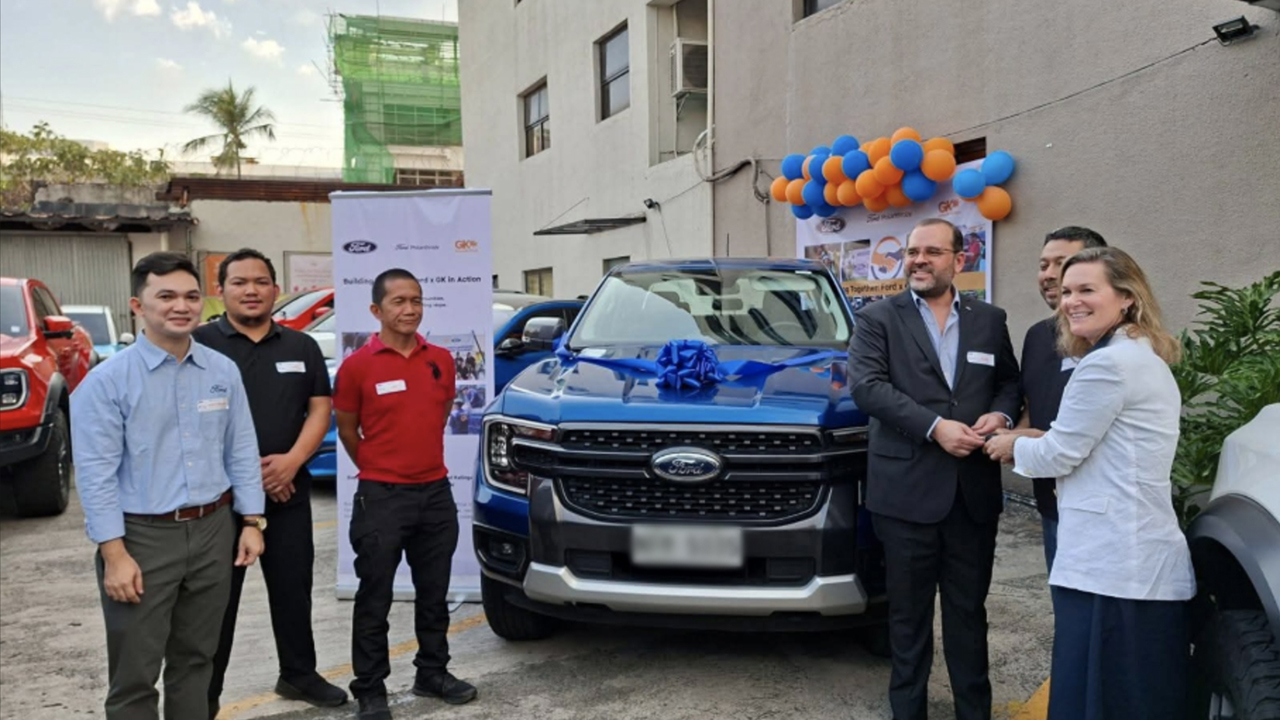
To bridge this gap, Ford Philanthropy and Ford Philippines recently handed over the keys to a brand-new Ford Ranger Sport 4×4.
During the launch of the “Ford Building Together” initiative at the GK Headquarters in Mandaluyong, the Ranger was introduced as a vital partner for GK’s nationwide relief operations.
The Ranger provides the performance and off-road capability needed when every second counts.
More than a mission
“Strong communities are built through strong partnerships,” said Mary Culler, President of Ford Philanthropy.
Alongside Pedro Simoes, Managing Director of Ford Philippines, Culler highlighted how this initiative unites dealers, employees, and owners.
It’s a collective effort to scale the heart of what Ford does: moving people forward.
Through Operation Walang Iwanan, Ford has already equipped disaster response hubs across six regions with essential tech: from Starlink mini-satellites and EcoFlow solar power to water filtration systems.
Between 2024 and 2025, these tools supported over 11,500 individuals through fires and natural disasters.
Investing in the everyday

The impact stretches into the daily moments of community life. Since 2015, Ford’s partnership with GK has reached 15,000 patients through medical missions. They also trained 1,100 health champions.
Through the Kusina ng Kalinga program, children receive the nutrition they need to stay focused in school. Meanwhile, the new READ program provides 12 weeks of literacy support for students in Caloocan.
Even food security is getting a tech-driven boost. Ford has renewed its collaboration with Scholars of Sustenance Philippines, using mobility to rescue surplus food. It is then redistributed to families experiencing hunger in Nueva Vizcaya.
In the end, technology lives inside these real moments. By combining grassroots action with reliable mobility, Ford and Gawad Kalinga are ensuring that no community is ever truly out of reach.

AMD is prepared to lead the industry in its agentic AI era with their high-performance CPU strategy.
As the industry pivots from simple AI models to agentic AI systems that are capable of independent planning and decision-making, the CPU is reclaiming its role as the critical “head coach” of the data center.
This was noted by AMD CEO and Chair Dr. Lisa Su during the AMD Advancing AI event last year. The rise of autonomous agents has transformed inference into a complex and multi-step workflow that demands sophisticated logic and orchestration.
And while high-performance GPUs are necessary to generate insights in real time, the surrounding infrastructure is just as important.
This is where CPUs enter the picture. Their performance and efficiency are more important than ever in the overall performance of modern AI infrastructure.
And AMD delivers an advantage with their offerings. In recently published data, a 5th Gen AMD EPYC CPU-based system is estimated to perform up to 2.1x better per core against an NVIDIA Grace Superchip-based system.
The same system AMD-based system also delivers up to 2.26x uplift on SPECpower, measuring operations per watt.
The x86 CPU architecture gives customers the advantage of a broad, proven software ecosystem that can run existing workloads natively.
This avoids the costly refactoring and code-base duplication often required when switching to Arm-based alternatives.
Looking ahead, AMD is doubling down on the balanced system philosophy. Future architectures such as the “Venice” CPUs will power the “Helios” rack-scale AI design.
By integrating EPYC CPUs with Instinct GPUs and the ROCm software stack, AMD aims to maximize cluster-level performance and lower the total cost of ownership in the agentic era.

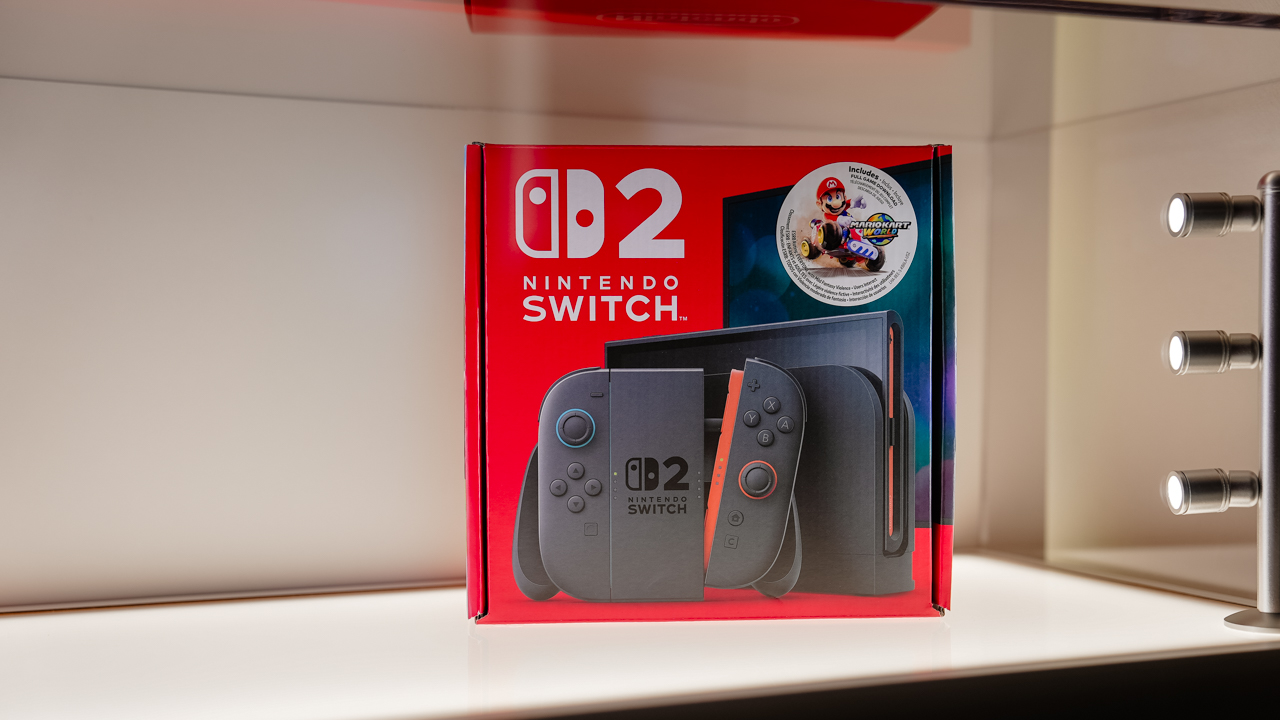
What happens when an unstoppable force meets an immovable object? After a year of wrestling through tariffs from the current American administration, Nintendo has decided to sue the United States.
Last year, the Trump administration was trigger-happy with implement tariffs on countries everywhere. Though the controversy mostly circulated around geopolitics, major corporations also found themselves on the receiving end of Trump’s ire. All over the world, the tariffs sparked product delays and price hikes.
Nintendo is no exception. As a result of the fiasco, the company had to delay the launch of the Switch 2, in anticipation of disruptions caused by the tariffs. First reported by Aftermath, the Japanese gaming giant is now going after the American government over refunds associated with the tariffs.
Now, the tariffs aren’t a big issue anymore. Notably, the Supreme Court scratched off the White House’s implementations that the former found illegal. While a big sigh of relief for future business, corporations like Nintendo have already paid duties and deposits in the past. As a result, Nintendo is now looking for recompense for what they paid before.
Nintendo isn’t the first company to seek restitution over the illegal tariffs. Others, including FedEx and Revlon, are also asking for refunds. However, the Japanese giant is certainly one of the biggest names to cross the government’s path. After all, the company is notoriously litigious over anything it considers as an affront to its business, including small streamers using Pokémon on their broadcasts.
With all its global resources, Nintendo likely won’t just give up without a fight.
SEE ALSO: The Nintendo Switch is now Nintendo’s best-selling console ever



How the Ford Ranger is powering community resilience

God of War: Sons of Sparta takes a more contained approach to Kratos

Samsung brings AirDrop support to Quick Share with Galaxy S26 series

Now Playing: Hoppers

Jackery SolarSaga series: Free power for small devices


-

 Reviews6 days ago
POCO X8 Pro Max review: A new beast from the far east
-

 News6 days ago
POCO X8 Pro Series: Price, availability in the Philippines
-
 Laptops2 weeks ago
Apple MacBook Neo Review
-

 Computers2 weeks ago
GIGABYTE collaborates with Capcom for RE Requiem custom PC
-

 Apps1 week ago
Google Maps is finally getting a 3D mode
-

 Entertainment2 weeks ago
The internet is thirsting over the One Piece Season 2 cast
-
 Features1 week ago
Galaxy AI on the Samsung Galaxy S26 Ultra
-
 Automotive2 weeks ago
BYD is reportedly considering an F1 team