
Enterprise
Microsoft is changing how Microsoft Office looks
It looks cleaner and more focused

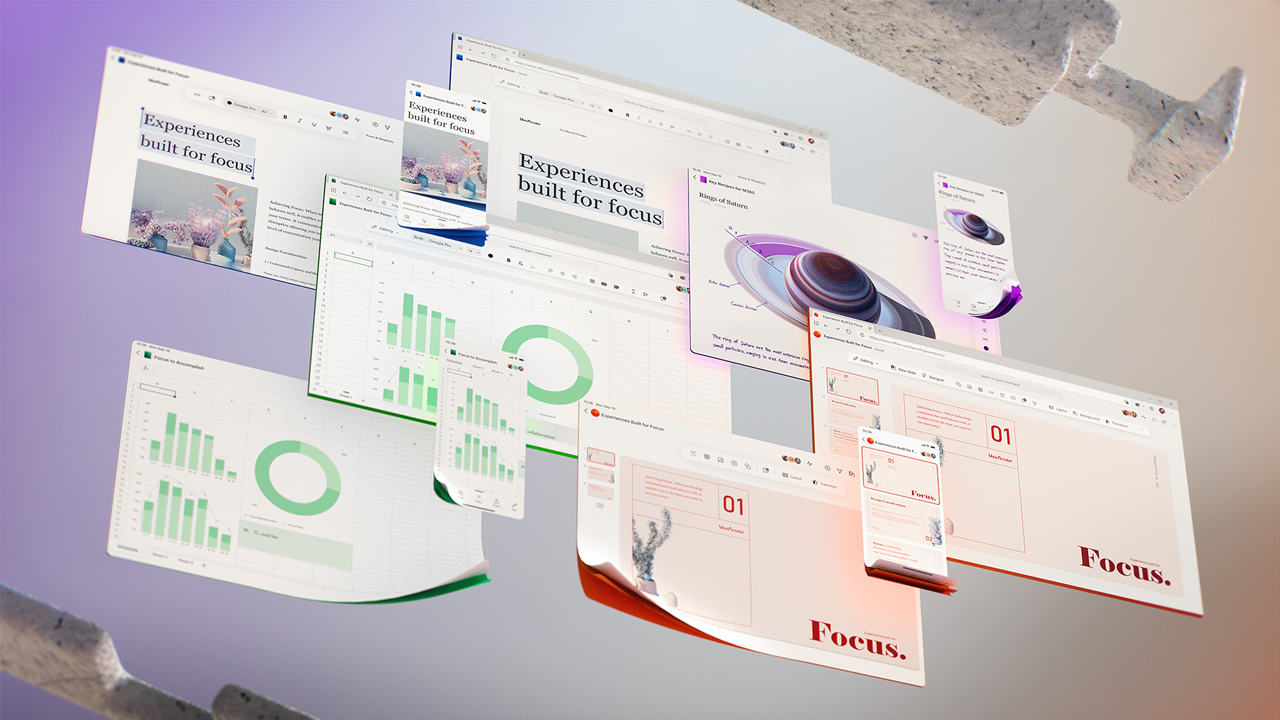
For years, Microsoft Office flaunted the design of its wide array of tools. Across several generations, every Microsoft Office software presented all of its functionalities in a toolbox fashion. In the current iteration, Microsoft’s Fluent Design minimizes all frills but still stuffs buttons in a single tray. Today, Microsoft is changing how Microsoft Office looks with an all-new, cleaner vision.
In a new Medium post, Jon Friedman, Microsoft’s corporate vice president of design and research, described the future of Office’s design. Most consumers will revel in a renewed direction for focus. Though the current generation has hidden a lot of functionalities in a home page, the next generation will hide more functions from view.

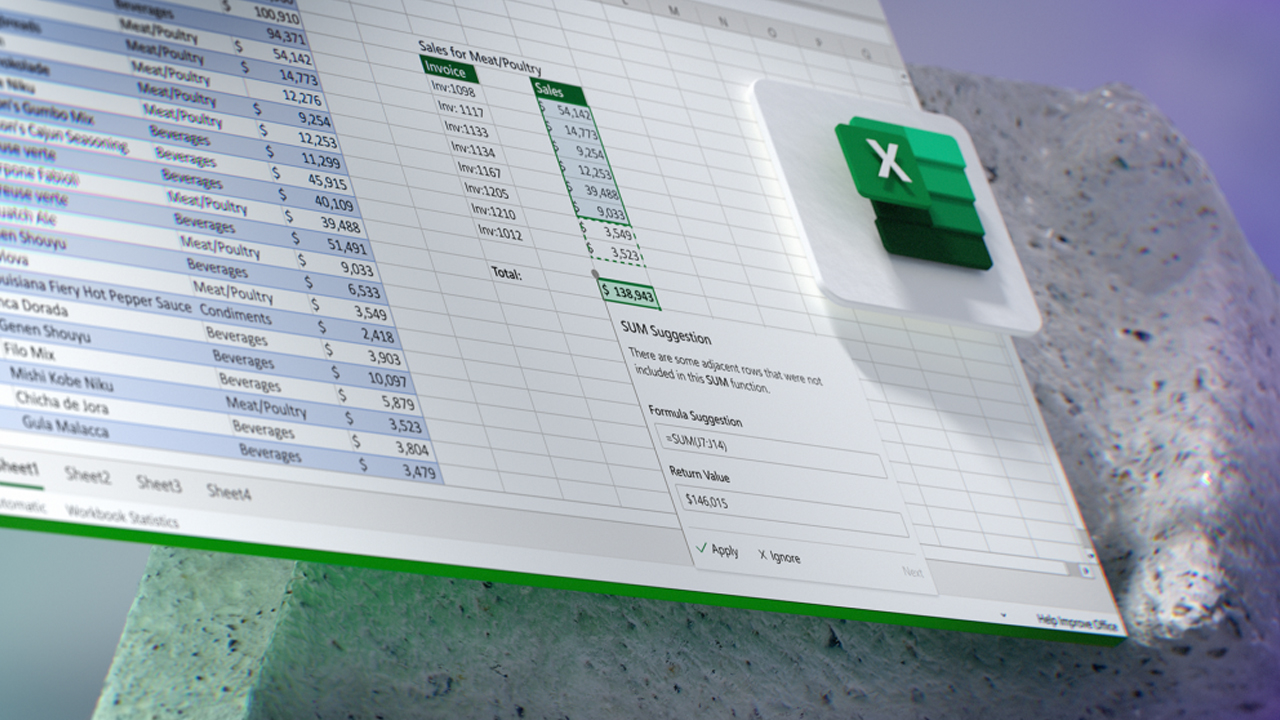
Instead of a static toolbar, the future update will undock all tools in a dynamic panel. Further, the panel will analyze a user’s writing and present contextual tools based on what it thinks the user will need. Think Clippy but without the mascot and bolstered by AI.
According to the presented video, Microsoft Office will become much more minimal and, hopefully, more focused. It bears some slight resemblance to Apple’s own productivity tools.

Additionally, Microsoft is also updating Office’s tablet and smartphone tools. In doing so, the update will also unify the functions of its ecosystem. If a user uses several tools at the same time, a new tool will scour the different software in action, supplemented by Microsoft’s voice assistant, Cortana.
For the back end, Microsoft is also strengthening the security of each document produced in the Office suite. It will support both huge corporations and families.
Unfortunately, Friedman’s Medium post does not detail when the new design language will roll out. Still, we’re excited with the changes. It’s a welcome change to their usual design direction.
SEE ALSO: Microsoft unveils new logos for Windows






Enterprise
AgiBot robots can now learn skills on the factory floor
Robotics company deploys real-world reinforcement learning system

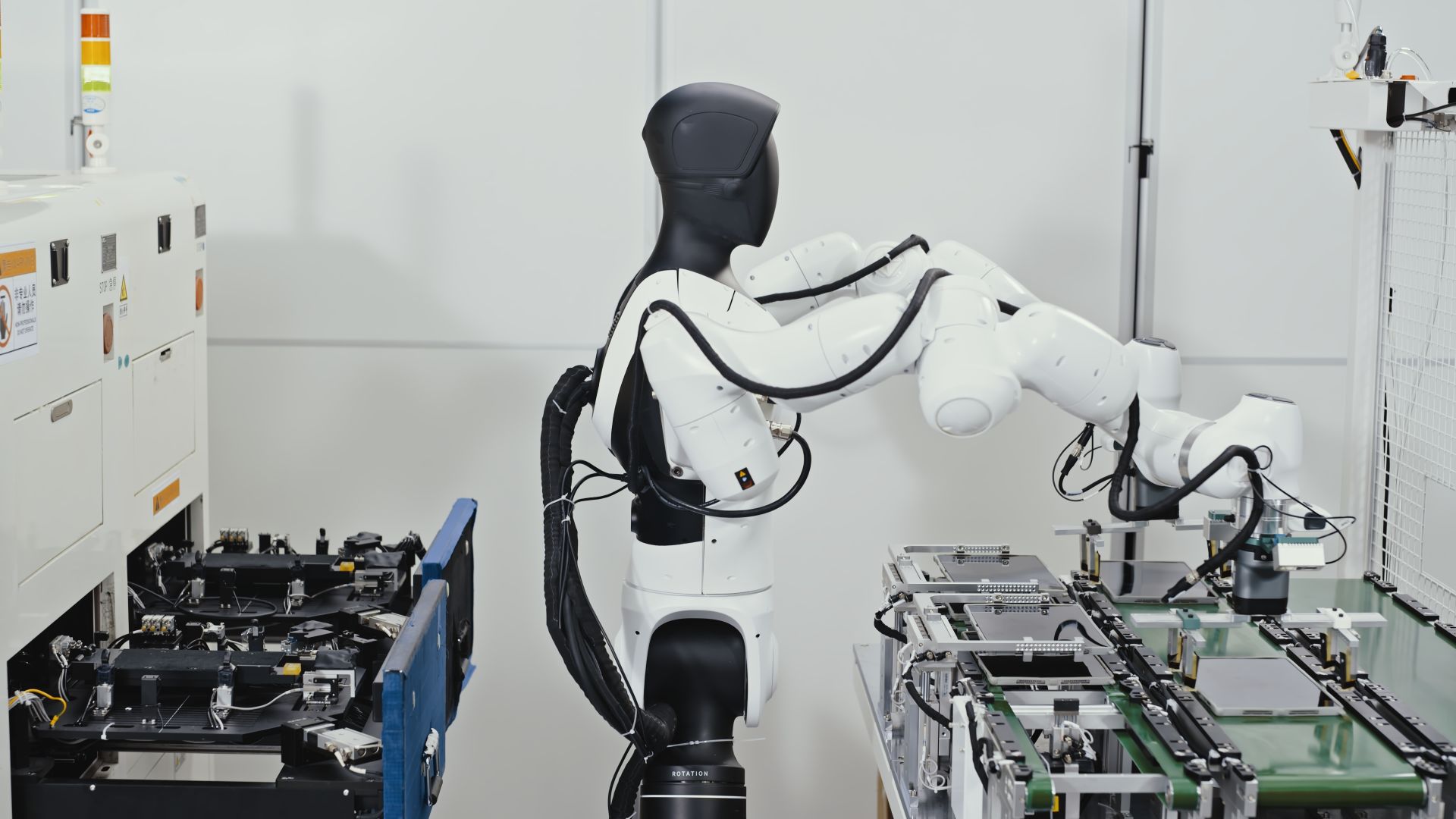
Robotics company AgiBot has successfully deployed its Real-World Reinforcement Learning (RW-RL) system on a pilot production line with Longcheer Technology.
The company specializes in embodied intelligence, and the project marks the first application of RW-RL in real industrial robotics.
It connects advanced AI innovation with large-scale production, signaling a new phase in the evolution of intelligent automation for precision manufacturing.
Precision manufacturing lines have long relied on rigid automation systems that demand complex fixture design, extensive tuning, and costly reconfiguration.
Where AgiBot’s RW-RL system comes in is addressing such pain points. It enables robots to learn and adapt directly on the factory floor.
Within just minutes, robots can acquire new skills, achieve stable deployment, and maintain long-term performance without degradation.
The system also autonomously compensates for common variations, such as part position and tolerance shifts
Meanwhile, during line changes or model transitions, only minimal adjustments and standardized deployment steps are required. This dramatically improves flexibility while cutting time and cost.
Moreover, AgiBot’s system allows for flexible reconfiguration. Task or product changes can be accommodated through fast retraining; such solution exhibits generality across workplace layouts and production lines.
This milestone signifies a deep integration between perception-decision intelligence and motion control. And it represents a critical step forward unifying algorithmic intelligence and physical execution.
Unlike many laboratory demonstrations, AgiBot’s system also achieved validation under near-production conditions. It has completed a full loop from cutting-edge research to industrial-grade verification.
Moving forward, AgiBot and Longcheer plan to extend real-world reinforcement learning to a broader range of scenarios. These include consumer electronics and automotive components, with focus on developing modular and rapidly deployable robot solutions.

Once again, Warner Bros. Discovery is up for sale. Right now, the entertainment giant does not have a new owner yet. But, of course, there is a growing list of potential suitors. One of which has seemingly made its presence known. Netflix is reportedly considering a bid on its streaming rival.
In 2022, the then-named WarnerMedia, owned by AT&T, completed a blockbuster merger with Discovery. The new Warner Bros. Discovery brought the entire Warner library, HBO, Discovery, and Cartoon Network under a single umbrella. The resulting streaming service, dubbed HBO Max, now has enough content to rival Netflix and Disney+.
Recently, Warner Bros. Discovery put itself up for sale. Almost immediately, competitors have expressed interest in buying the library, including Amazon, Apple, and Netflix.
Over the weekend, Netflix has hired Moelis & Co, an investment bank, to evaluate a potential offer for the company, as reported by Reuters. Though it’s not an official bid yet, it’s a big show of interest from the other streaming giant.
According to Netflix CEO Ted Sarandos, the company will evaluate what value the entire library can offer Netflix. However, Sarandos isn’t interested in acquiring the legacy cable networks currently under the Warner umbrella, such as CNN and TNT.
SEE ALSO: Max is rebranding once again to HBO Max
Enterprise
US caught dumping ‘millions of tons’ of e-waste into Southeast Asia
This includes Indonesia, Malaysia, Thailand, and the Philippines.
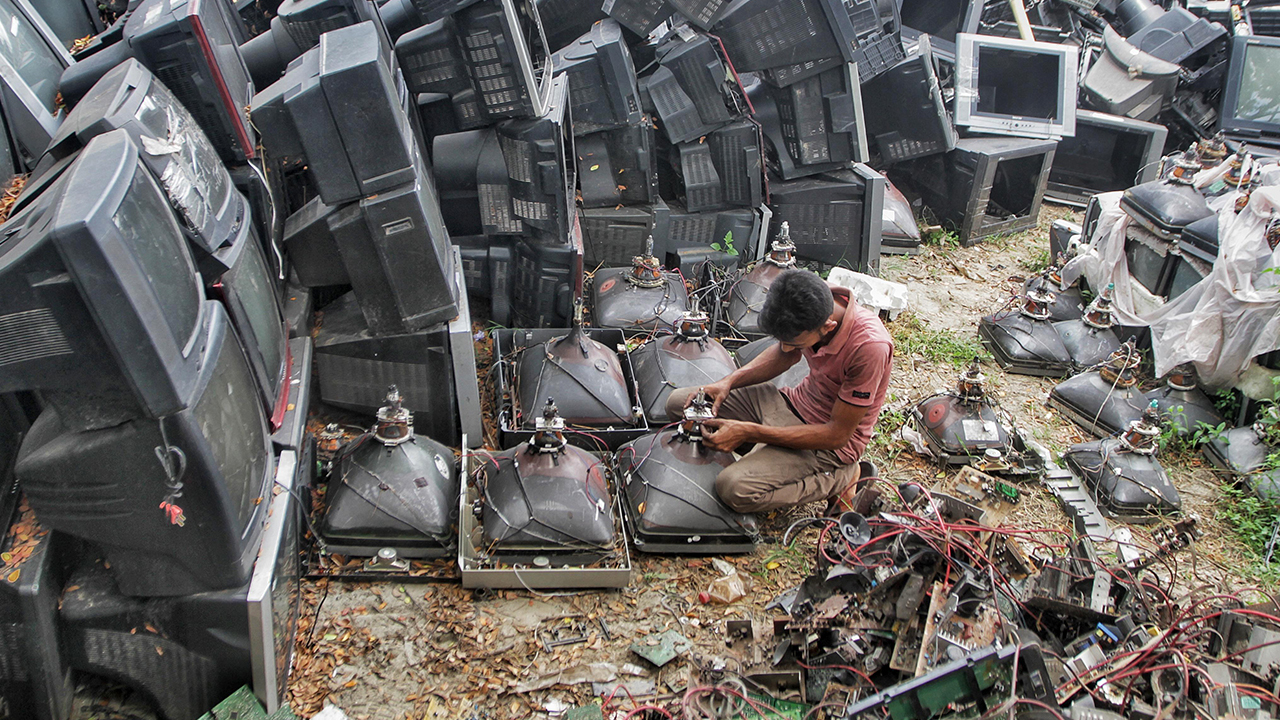
Where do all old devices go after we’re done using them? If you’ve ever been in a place with a good recycling system, then you’ve probably seen bins for e-waste. Then again, you can go further down the chain and ask where these bins go. If you’re an American, a new report has an answer for you: Southeast Asia.
A Seattle-based organization called the Basel Action Network (or BAN, for short) conducted a two-year investigation on e-waste produced by the United States. The investigation revealed that at least ten American companies are shipping millions of tons of waste to several countries in Southeast Asia and the United Arab Emirates. These Asian countries include Indonesia, Malaysia, Thailand, and the Philippines.
According to ABC News, a few of the ten companies implicated have refuted that the imports are well within environmental standards and do not include harmful chemicals. Notably, these importers don’t handle the recycling themselves. Though their own processes might be legally allowed, the imports might still enable environmental hazards.
Regardless, the importing of e-waste is banned under an international treaty called the Basel Convention. The treaty covers hazardous waste shipped to other countries. The United States, however, have not ratified the treaty, so they’re not covered by the rules from a legal standpoint.
The shipping of waste has been a constant problem for Southeast Asia for a long time. However, e-waste carries more risk because of the harmful chemicals involved. The waste itself, for example, carries cadmium, lead, or mercury; all of which are harmful for humans. Further, the recycling process can involve harmful working conditions without appropriate protective gear. Some just burn the waste, leading to toxic fumes.
According to the report, Asia already produces almost half of the world’s e-waste. With America — a huge contributor of e-waste by itself — dumping e-waste all over Southeast Asia, the region is turning into a dumping ground for toxic garbage.


Predator: Badlands is the adventure comedy that the series needs
There are so many good ideas, too.


Cooling down my daily life with the Aecooly Aero Ultra
A fan built for real heat


This gaming mouse made me fall in love with working from home again
The Razer Basilisk Mobile may be built for play, but it excels at work!

Canon announces EOS R6 Mark III camera, RF45mm f/1.2 STM lens

The Mate 70 Air is HUAWEI’s clapback to the iPhone Air

Spotlight: ASUS ProArt P16

Get a chance to win an iPhone 17 Pro with the ECOVACS 11.11 sale

realme With You 2025: Over 50M worth of prizes, more initiatives

DJI Osmo Nano review

The HONOR MagicPad 3 is an almost perfect premium pad partner

The Redmi K90 Pro Max is the first smartphone with Bose-powered speakers

Samsung Galaxy S25 FE review: Closer to flagship than ever

vivo X300 Pro headlines Dimensity 9500 and Sony’s LYT-828 image sensor


-

 Reviews1 week ago
realme 15 Pro review: A step forward or a step back?
-

 Gaming2 weeks ago
ROG Xbox Ally X review: A proper sequel
-

 Reviews1 week ago
Infinix GT 30: Champion value budget gamer
-

 Gaming2 weeks ago
Anno 117: Pax Romana is a relaxing city building experience
-

 Singapore2 weeks ago
OPPO Find X9 Series: Price, availability in Singapore
-

 News2 weeks ago
OPPO Find X9 Series launches globally
-

 Gaming1 week ago
DRAGON QUEST I & II HD-2D Remake launches, completing the Erdrick Trilogy
-

 Features1 week ago
10 years of Siege: Challenges, ups, relevance, and the decade that lies ahead