
News
OPPO F3 Plus launches across Asia


Smartphones that specialize in taking selfies are not unusual, but among those that do it best, OPPO is recognized as the “selfie expert.”
In particular, its F1s smartphone is insanely popular in Asia because of its front camera with a whopping 16 megapixels.
But with competition stepping up its selfie game, China’s largest smartphone brand is hell-bent on keeping its title. And what better way to do so than by introducing an even better phone with not just one but two selfie cameras.

The OPPO F3 Plus that launched in simultaneous events across Southeast Asia and India today hopes to be the selfie lover’s best friend.
[sciba leftsrc=”http://www.gadgetmatch.com/wp-content/uploads/2017/03/oppo-f3-plus-sample-01.jpg” leftlabel=”WIDE ANGLE” rightsrc=”http://www.gadgetmatch.com/wp-content/uploads/2017/03/oppo-f3-plus-sample-02.jpg” rightlabel=”NORMAL” mode=”horizontal” width=”800″]
The first of its two selfie cameras has a wide-angle lens, the widest we’ve ever seen. With it you can take selfies that show off not just your lovely face but your bangin’ body also.
In our tests, we were able to fit up to six people in a single frame with room to spare for a couple more.

The second camera is your typical portrait-style selfie camera. You can switch between both modes with a quick tap from your camera app. Using this lens and Beauty Mode, you can take selfies with a creamy bokeh effect.
We’ve spent a week taking selfies with the F3 Plus and are thrilled with the results. If only the rest of the world could get their hands on the phone.

Speaking of hands, folks with small hands might find the F3 Plus challenging.

The phone comes with massive 6-inch display making the phone hard to grip, although if you don’t mind that, the extra screen real estate is great for watching videos and playing games.
Here’s what the phone looks like side by side with the iPhone 7 Plus.

Apart from its selfie camera specialty, the phone is designed for users who seek power and performance under $500. Of particular interest is its extra-large 4000mAh battery and lightning-quick VOOC charging.
The OPPO F3 Plus launched in the Philippines, Vietnam, India, Indonesia, and Vietnam on March 24. It will be available in gold and black starting April 1st and will retail for PhP 23,990 in the Philippines, INR 30,990 in India, and IDR 6.5 million in Indonesia.
[irp posts=”11567″ name=”OPPO F3 Plus Unboxing”]





News
realme 16T to come with 8,000mAh battery, 7-year battery health guarantee
Power and endurance designed to last for years

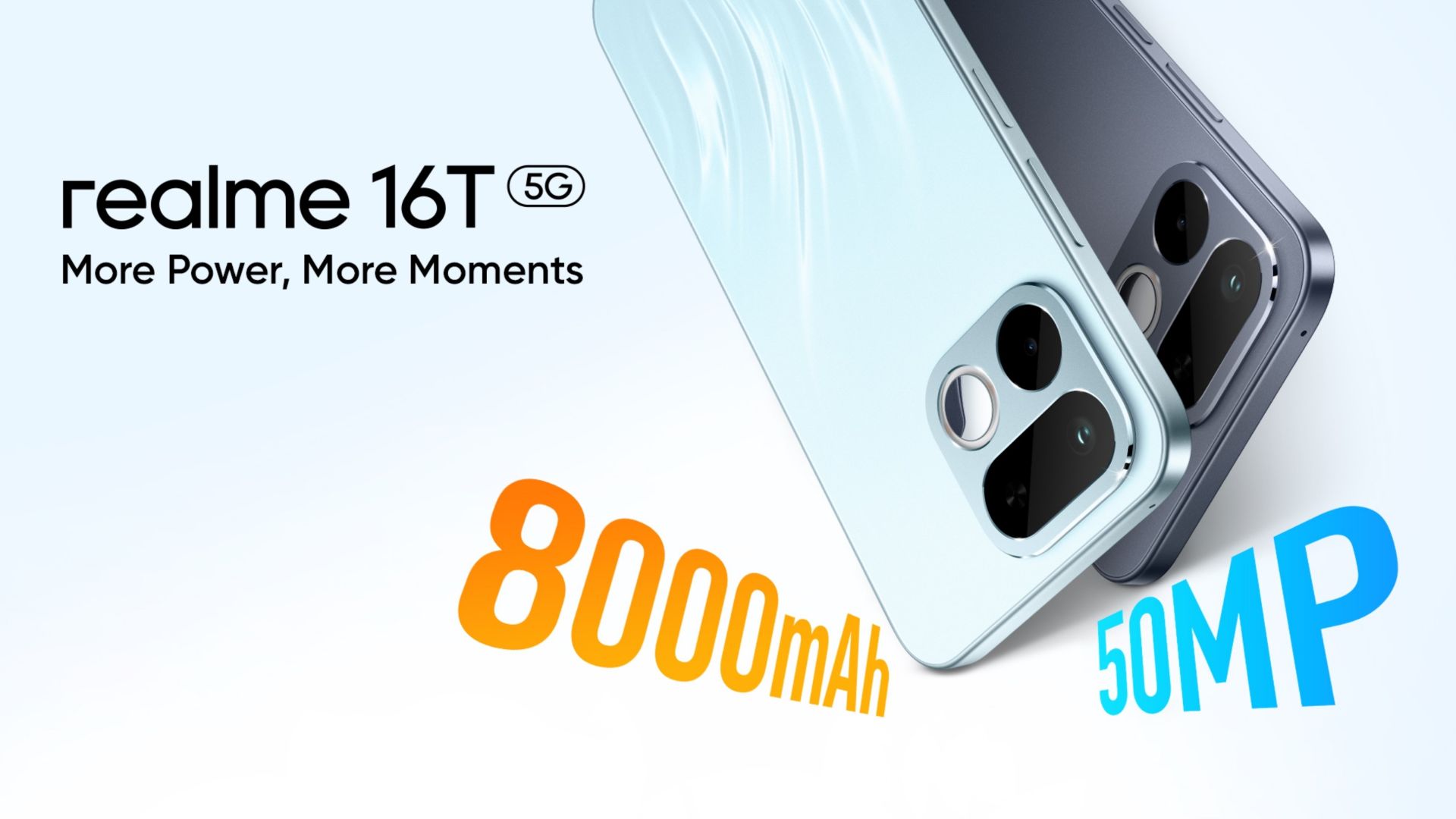
The upcoming realme 16T will have an 8,000mAh Titan Battery and a 7-Year Battery Health Guarantee for power and endurance designed to last for years.
The brand credits this to its Titan AI Deep Power and Extended Use Care, which work to slow down battery wear over time.
Moreover, the device is also backed by a 6-year Guaranteed Smooth Performance with AI Boost to help keep thing running steadily even after years of daily use.
The realme 16T’s battery supports 45W SUPERVOOC Charge, along with Bypass Charge and Reverse Charge.
These features come handy for keeping the phone cool while plugged in, and for topping up other devices when needed.
Furthermore, the device comes with All-Around Water & Drop Protection, carrying an IP69 Pro rating and Military-Grade Shock Resistance. This way, it can withstand daily bumps, spills, and dust exposure.
Alongside long-term durability, realme is offering added value to early buyers.
Customers who blind pre-order the realme 16T from August 17 to 27 and claim their reserved unit on the First Selling Day on September 4 can enjoy freebies and discounts worth PhP 8,097.
The exclusive offer includes a free TechLife Bluetooth Speaker 3, free Laifen SE Lite Hair Dryer, a Privilege Card with six-mnth extended warranty and six-month screen damage protection. To top it all off, there will be a PhP 2,000 off discount.
More details about the realme 16T like its price, full specs, and launch date will be revealed soon.
News
Asia to get its own D23; tickets on sale this November
Singapore to host The Ultimate Disney Fan Event tailored for Asia next year

Asia is getting its own D23 with Singapore hosting the first ever edition of The Ultimate Disney Fan Event next year.
The Walt Disney Company announced the milestone, with D23 Asia taking over the iconic Marina Bay Sands and parts of Sands Expo & Convention Center from June 25 to 27, 2027.
Fans will be able to purchase tickets by November 2026.
The first-ever D23 Asia will bring together Disney fans from across Asia Pacific and beyond in a three-day celebration of Disney storytelling, creativity, and innovation.
It will feature immersive experiences, exclusive showcases, special announcements, shopping, entertainment and more.
Building on the legacy of D23 fan events in Anaheim and around the world, the Singapore edition will offer a uniquely Asian experience while staying true to the scale, excitement and fan-first spirit that defines D23: The Ultimate Disney Fan Event.
News
Smart showcases cloud gaming platform in partnership with Blacknut
Play over 1,000 titles straight on your smartphones

Philippines mobile service provider Smart showcased the country’s first cloud gaming platform in partnership with Blacknut at the recent Philippine GameDev Expo (PGDX) 2026.
As the event’s main presenter, Smart highlighted its collaboration with the cloud gaming subscription service. Together with its value-packed Power All offers, the network provider is highlighting what the future of gaming can look like.
Smart and TNT subscribers can conveniently access Blacknut Cloud Gaming through a dedicated site. Here, they can play more than 1,000 premium console and PC-quality games on their smartphones.
That’s without the need for expensive gaming hardware or lengthy downloads. Weekly subscriptions start at just PhP 145 and can be conveniently charged to prepaid load following a simple OTP verification process.
To make the experience better, Smart also has Power All offers, which provide generous open-access data for today’s digital lifestyles. There’s a package for cloud and mobile gaming, streaming, content sharing, and productivity.


Now Playing: Assassin’s Creed Black Flag Resynced
Nostalgia does a lot of heavy lifting.

Samsung Galaxy Z Fold8 Review
8 Galaxy Folds later, Samsung finally nailed It!


30 days later with the ASUS ExpertBook Ultra: Like seeing an ex
Felt exactly as I remembered.

realme 16T to come with 8,000mAh battery, 7-year battery health guarantee

TCL unveils C7L SQD-Mini LED TV, new entertainment lineup

REDMI Note 17 Series focuses on long-term reliability
Now Playing: Assassin’s Creed Black Flag Resynced

Kingdom Hearts IV is coming in late 2027

Hands-on: Samsung Galaxy Z Fold8, Flip8, Ultra

VinFast debuts two-wheeler models, opens 21 e-motorcycle showrooms

Garmin launches its first screenless fitness band

Sony announces new FX5 full-frame camera

NBA 2K27 cover athletes unveiled: Wemby, Clark, DRose


-

 News2 weeks ago
OnePlus officially leaves the United States and Canada
-

 Laptops1 week ago
ROG STRIX G16 Review: Building for the moment
-

 Gaming2 weeks ago
Tides of Annihilation opens first public demo at Gamescom 2026
-
 News2 weeks ago
Google will force Android users to use Gemini next month
-
 Accessories2 weeks ago
DJI Osmo Mobile 8P: From a videographer’s perspective
-

 Gaming2 weeks ago
Street Fighter 6 adds first Filipino fighter Yasmine to its roster
-

 Gaming2 weeks ago
Gangstar Mirage City launches on August 20 with SEA localization
-

 Deals2 weeks ago
nubia expands gaming lineup with Neo 5 Max, Neo 5 GT Special Edition