



The digital age ushered in an era where cybersecurity issues pose a threat to our personal safety and big risks in businesses and the economy. As if the world isn’t cruel, violent, and scary enough, we’re all forced to stay on our toes and double up our guard.
Several data breaches and news about tech companies spying on us have been alarming, to say the least. “Is our data still safe?” is the common question among concerned individuals.
Recently, the CxO Innovation Summit 2019 — a data and security conference held by VST-ECS Philippines — was mounted in Boracay. GadgetMatch had an exclusive interview with executives from Samsung Global and Samsung Philippines.
Samsung’s series of unfortunate events
In a press conference, Samsung discussed its attempts to protect its consumers’ data. Samsung recently faced a series of unfortunate mishaps concerning security and privacy, causing concerns among its loyal customers.
Samsung Mobile B2B Asia’s Corporate VP and Chief Revenue Officer David Kim stated how Samsung isn’t the only one that suffered from malicious attacks. He reiterated how the company uses Knox as a security measure along with its authentication factor. Kim explained, “You can only control the hardware, software, and who access the phones.”

The executive added, “There are also Wi-Fi and networks. If someone can sneak in your network, they can sneak in your email.”
Samsung believes they’re more secure than any other brand. Kim confidently claimed to GadgetMatch, “We don’t have a perfect security rating, but we are well received. That’s why the White House is comfortable with us.”
Amidst the issues surrounding the company, Samsung also took pride in how they’re one of the few companies that organically make their hardware components and develop their software.
Knox makes the difference
Samsung’s Product Manager Anton Andres supported the claims, stating how Samsung’s Knox sets them apart. “The main difference is the Knox platform. It has two components: Platform security and the solutions we offer in the market like Knox Manage and Knox Configure.”
The young executive demonstrated, “Knox Platform is embedded on a smartphone. At first, it was just a security platform that automatically encrypts and decrypts information every time you boot up the device.”
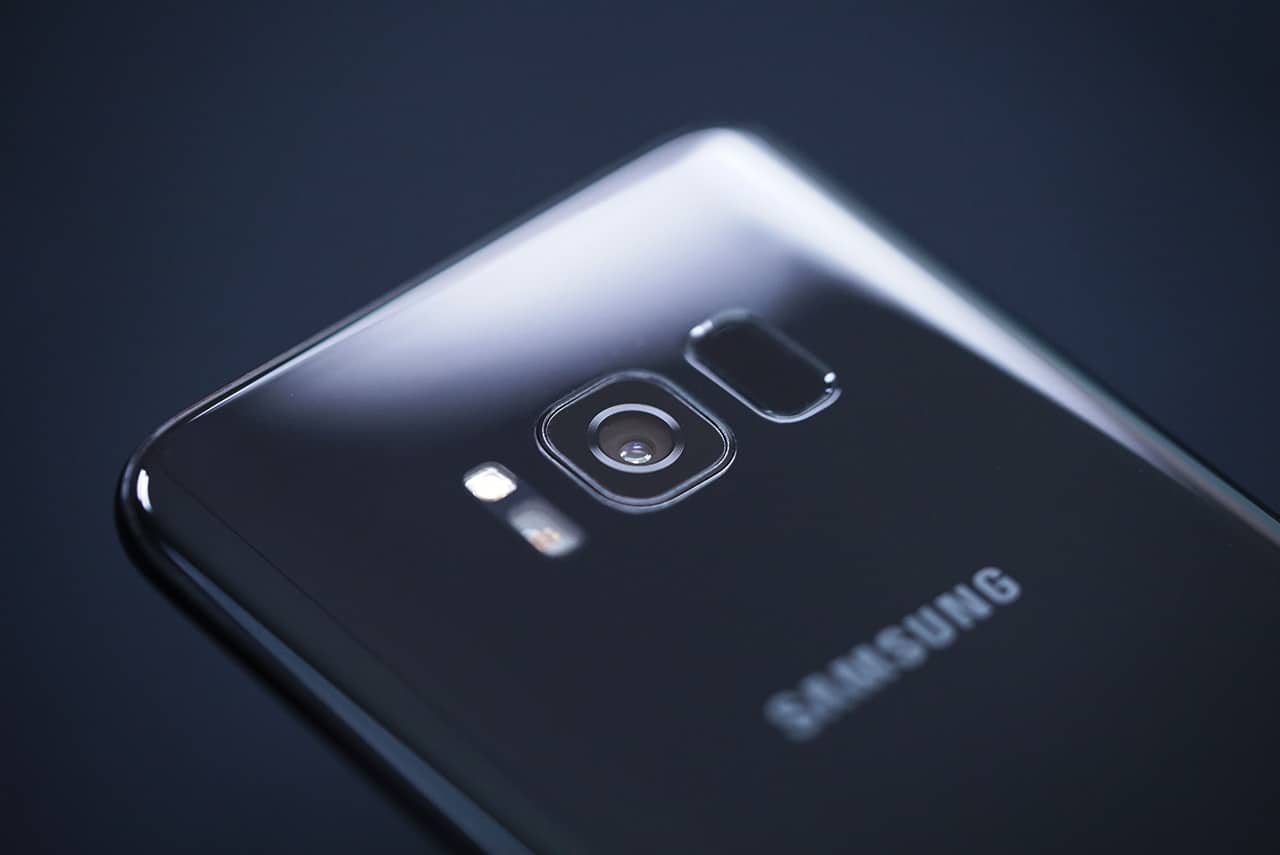
Andres further explained how the Knox Platform has multi-layers of security. “First is the hardware chip. If a device — like a Samsung Galaxy S8 — was compromised and reset, Knox automatically blows the fuse.”
“If you have corporate or personal info, your data is automatically wiped, preventing any data leakage and security risks.”
Be careful of what you download
Similar to Huawei’s warnings, Andres warned about downloading third-party apps and keyboards. Though it may customize your keyboard to your liking, it can compromise your security. Andres believes the challenge is the keyboard loggers, which sends your credentials to third-party servers every time you put your credentials.
“If you access your mobile banking credentials on a third-party keyboard, they can phish your information,” Andres said. “With Samsung Knox, we identify specific applications and URLs. Once identified, Knox automatically hides your information to prevent potential threats.”
Currently, Samsung is constantly updating the Knox Platform and its security solutions. Recently, the Samsung Galaxy A50s highlighted Knox. The Korean company is also looking for more ways to make Knox easily understandable for everyday consumers. Presently, the Knox Platform is limited to Samsung devices while Knox Solutions are compatible with Android, Windows, and iOS.
SEE ALSO: Huawei: ‘We do not touch data’




Enterprise
Cebu Pacific becomes 1st SEA low-cost carrier with Starlink Wi-Fi
Rollout expected to begin in 2027


Cebu Pacific has introduced Starlink, making it the first low-cost airline in Southeast Asia to bring Wi-Fi in the sky for passengers.
The rollout is expected to begin in 2027. Starlink delivers an unparalleled broadband experience inflight, with high-speed, low-latency Wi-Fi capable of HD streaming, online gaming, productivity and more.
Beyond enhancing the passenger experience, Starlink will also support improved operational connectivity for Cebu Pacific’s flight crews and operational teams. This enables better operational efficiency.
The collaboration is a significant milestone for Philippine aviation. The rollout forms part of Cebu Pacific’s continued investment in customer experience and digital innovation.
As part of the partnership, Cebu Pacific and Indigo Partners portfolio airlines, Wizz Air, and JetSMART expect to install Starlink on over 1,000 aircraft.
Enterprise
Google ordered to pay EUR 4.1 billion in fines
The EU alleges that Google uses its apps to establish an unfair dominance.

European fines have unintentionally become a normal part of doing business in the American technology space. For too long have American companies paid paltry fines to prevent harsher regulation in the European Union. Now, for the first time, Google is about to pay a record-breaking fine that goes beyond “paltry.”
Today, via CNBC, Google has been ordered to pay an astonishing EUR 4.1 billion (or approximately US$ 4.67 billion) in fines. The fine is in response to an anti-competition case.
This has been a long time coming for Google. The original case started in 2018. At the time, the European Union accused the brand of using anti-competitive practices to ensure its dominance in the smartphone market. According to the courts, the company’s bundling of first-party apps for every Android smartphone gives them an unfair advantage in the market and lessens the user’s choice in selecting apps.
For years, Google has fought the fine to seemingly no avail. Now, the company has lost its final attempt, which means that the fine still stands. On the bright side, they did get it reduced from the original EUR 4.34 billion fine.
The European Union is the scourge of every American tech company (and a godsend to consumers). Most notably, the continent’s government forced Apple to adopt USB-C, leading to a more universal experience across brands.
Google’s hefty fine aims to do the same. And it is quite hefty. Whereas previous fines were in the millions (and hence, negligible for most companies), a fine in the billions is more tangible.
Apps
foodpanda relaunches cult-favorite roast chicken brand after 8 years of persistent search queries
Heritage chain Andok’s returns to the platform, driven entirely by long-term user analytics.

In the world of e-commerce and food delivery, platform algorithms usually dictate what consumers see. But occasionally, consumer behavior is so relentless that it shapes the platform’s strategy.
In a move driven entirely by long-term user analytics, foodpanda has officially relaunched Andok’s, one of the Philippines’ most iconic heritage rotisserie chains, back onto its platform after an eight-year absence.
The search bar as a digital wishlist
The decision to ink the partnership wasn’t just a marketing play. It was a response to an ongoing data anomaly. Despite being offline from the foodpanda platform for eight years, Andok’s consistently ranked as one of the most-searched merchants on the app.
Year after year, users treated the empty search results page as an unofficial wishlist. This persistent search intent gave foodpanda a clear, data-backed signal of pent-up demand.
Prior to the official digital rollout, teaser campaigns on social media validated this demand, generating thousands of organic interactions from users anticipating the return.
Bridging heritage flavor with digital infrastructure
For foodpanda, onboarding a merchant with this level of built-in demand fits its broader strategy of marketplace optimization and hyper-local network expansion, turning a heritage brand into another data point for how legacy retail plugs into delivery infrastructure.
For Andok’s, the integration works as a fast track to digital scale. A legacy quick-service chain skips years of independent app development and reaches customers already using foodpanda’s existing logistics network, on a platform they already check daily.
Andok’s built its following on charcoal spit-roasted chicken, a slow-cooked technique that’s stayed largely unchanged since the brand’s early days, alongside seasoned grilled pork belly.
More recently, the Dokito line extended that following into crispy fried chicken and chicken burgers, broadening the brand’s appeal beyond its original rotisserie format and giving foodpanda a menu with both heritage pull and everyday fast-food convenience.


Samsung Galaxy Z Fold8 Review
8 Galaxy Folds later, Samsung finally nailed It!


30 days later with the ASUS ExpertBook Ultra: Like seeing an ex
Felt exactly as I remembered.

ROG STRIX G16 Review: Building for the moment
Setting it up however you want to make the most out of it

Kingdom Hearts gets 1st-ever original anime series on Disney+

Asia to get its own D23; tickets on sale this November

OBSBOT Meet Flip Hands-on
Samsung Galaxy Z Fold8 Review

Smart showcases cloud gaming platform in partnership with Blacknut

Hands-on: Samsung Galaxy Z Fold8, Flip8, Ultra

VinFast debuts two-wheeler models, opens 21 e-motorcycle showrooms

Garmin launches its first screenless fitness band

Sony announces new FX5 full-frame camera

NBA 2K27 cover athletes unveiled: Wemby, Clark, DRose


-
 Automotive2 weeks ago
VinFast debuts two-wheeler models, opens 21 e-motorcycle showrooms
-

 News2 weeks ago
OnePlus officially leaves the United States and Canada
-

 Gaming2 weeks ago
Genshin Impact opens Snezhnaya in Version 7.0 this August 12
-
Laptops6 days ago
ROG STRIX G16 Review: Building for the moment
-

 Gaming1 week ago
Tides of Annihilation opens first public demo at Gamescom 2026
-
 News1 week ago
Google will force Android users to use Gemini next month
-

 Gaming2 weeks ago
Street Fighter 6 adds first Filipino fighter Yasmine to its roster
-
 Accessories2 weeks ago
DJI Osmo Mobile 8P: From a videographer’s perspective