
News
Xiaomi Mi 9 SE: The first Snapdragon 712-powered smartphone
The new Xiaomi midrange star


Alongside the launch of the Mi 9, Xiaomi unveiled the Mi 9 SE. Like its predecessor, the Mi 9 SE is a step below the main flagship offering, but it’s a star on its own. It borrows the looks of the Mi 9 with some changes to meet its price point.
The Mi 9 SE is the first phone in the world to sport the new Snapdragon 712 chipset, the slightly faster version of the Snapdragon 710. The new processor is paired with 6GB of memory and up to 128GB of internal storage.
Much like the Mi 8 SE from last year, Xiaomi has a strong midrange contender here. It’s also just a bit smaller than the Mi 9 with its 5.97-inch AMOLED display and a waterdrop notch.

You might forget that the Mi 9 SE is below the Mi 9 because Xiaomi still gave it triple rear cameras. It has a main 48-megapixel sensor, a 13-megapixel super wide-angle lens, and an 8-megapixel telephoto shooter.
To complete the camera department, it has a 20-megapixel front camera for taking selfies. Of course, the cameras are powered by AI and have beauty filters to boot.

A 3070mAh battery powers the Mi 9 SE and it quickly charges through the phone’s USB-C port using an 18W fast charger. The phone has an in-display fingerprint reader as well, just like the more expensive phones out there.
The phone will come in shades of blue, violet, and black starting at CNY 1,999 (US$ 300) and will go as high as CNY 2,299 (US$ 340) in China.
SEE ALSO: Xiaomi Mi 9 beats iPhone XS Max and Galaxy Note 9 on DxOMark




“Useful AI has arrived,” NVIDIA CEO Jensen Huang proclaimed in his monumental keynote speech to kick off COMPUTEX 2026, essentially admitting to the state of AI prior to today. But don’t let the past mess with how you view the present. AI today, according to the graphics-turned-AI company, will now serve everyday users, rather than procuring abstract and intangible benefits. For us normal people, it all starts with the new RTX Spark.
Rarely does a new product claim to reinvent the entire industry. Confident in its own abilities, that’s just what the RTX Spark wants to do. But what is it exactly?
Think of it like Microsoft’s Copilot+ PCs but on AI-powered steroids. NVIDIA wants to bring the power of a supercomputer into the hands of regular consumers, just like how the personal computer (PC) brought gigantic computers to the comfort of everyone’s homes.
Co-engineered with Microsoft, RTX Spark will run autonomous AI agents the entire day. The agent is tied to you and your intent but will orchestrate all your devices under one roof.
Let’s get down to the nitty-gritty. The new series will leverage a Blackwell RTX GPU and a 20-core Grace CPU from MediaTek. It can also support up to 128GB of unified memory, delivering several of the most powerful (and most expensive) PCs available to consumers today. With the capabilities comparable to an RTX 5070, the series can supposedly play modern games with ease.
Inside, it will come with CUDA, the trove of information that powers AI technology today. Finally, despite how slim NVIDIA promises the series will be, the RTX Spark should come with a battery that lasts the entire day.
The first NVIDIA RTX Spark laptops will launch later this fall with six premium laptops for various brands. This, along with the 30 models launching soon after, will include Acer, ASUS, Dell, HP, Lenovo, and MSI. No word yet on how much these will cost, though.

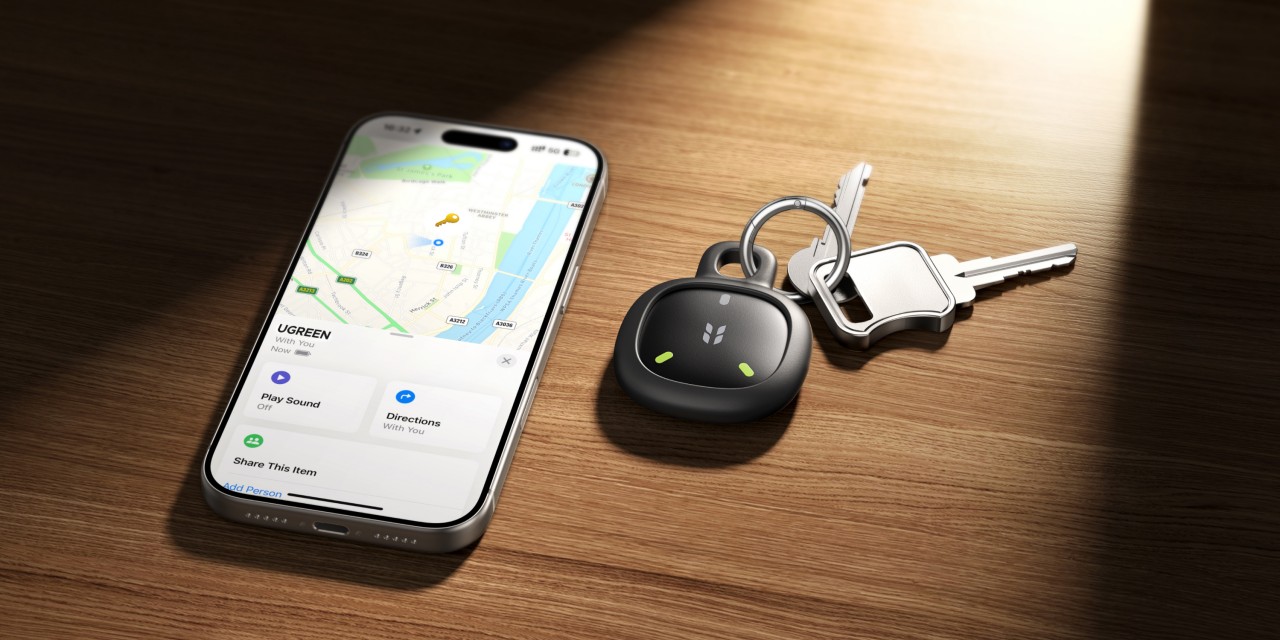
UGREEN is expanding its smart travel lineup with the launch of the new FineTrack Series, a collection of compact trackers designed to help users keep tabs on everyday essentials.
Leading the announcement are the FineTrack 2 and FineTrack Mini 2, both of which support Apple’s Find My network for easy location tracking through compatible Apple devices. The trackers are built for travelers and commuters who want an extra layer of security for items such as keys, bags, wallets, and passports.
The FineTrack 2 comes in a soccer-inspired design created to celebrate the upcoming 2026 World Cup, while the FineTrack Mini 2 adopts a slimmer tag-style form factor that fits more easily inside wallets and passport holders. Both devices feature glow-in-the-dark accents for improved visibility in low-light conditions.
UGREEN says the trackers offer global tracking capabilities through Apple’s Find My ecosystem, along with smart left-behind alerts that notify users before they accidentally leave important belongings behind. When an item is nearby, users can trigger an alarm reaching up to 110dB to help locate it faster.
The company also highlights long-term reliability, with battery life rated for up to seven years. The FineTrack 2 additionally carries an IP68 rating for dust and water resistance.
UGREEN has also announced Southeast Asia pricing for the new FineTrack Series.

Price and availability
In Singapore, the FineTrack 2 is priced at SGD 29.99, while the FineTrack Mini 2 costs SGD 25.99. Malaysian pricing comes in at RM 69 and RM 59, respectively.
For the Philippines, the FineTrack 2 retails for PHP 850, while the FineTrack Mini 2 is priced at PHP 799. In Vietnam, the trackers cost VND 369,000 and VND 339,000, respectively. Thailand pricing starts at THB 590 for both models.
Alongside the FineTrack Series, UGREEN also introduced its new Air Editions lineup. This includes the Nexode Air 65W Charger, Nexode Air 45W Charger Slim, and the MagFlow Air Magnetic Power Bank 10000mAh 15W, all designed around portability with compact and lightweight builds. The company has separately announced Southeast Asia pricing for these accessories.
The FineTrack Series is now rolling out across select Southeast Asian markets.

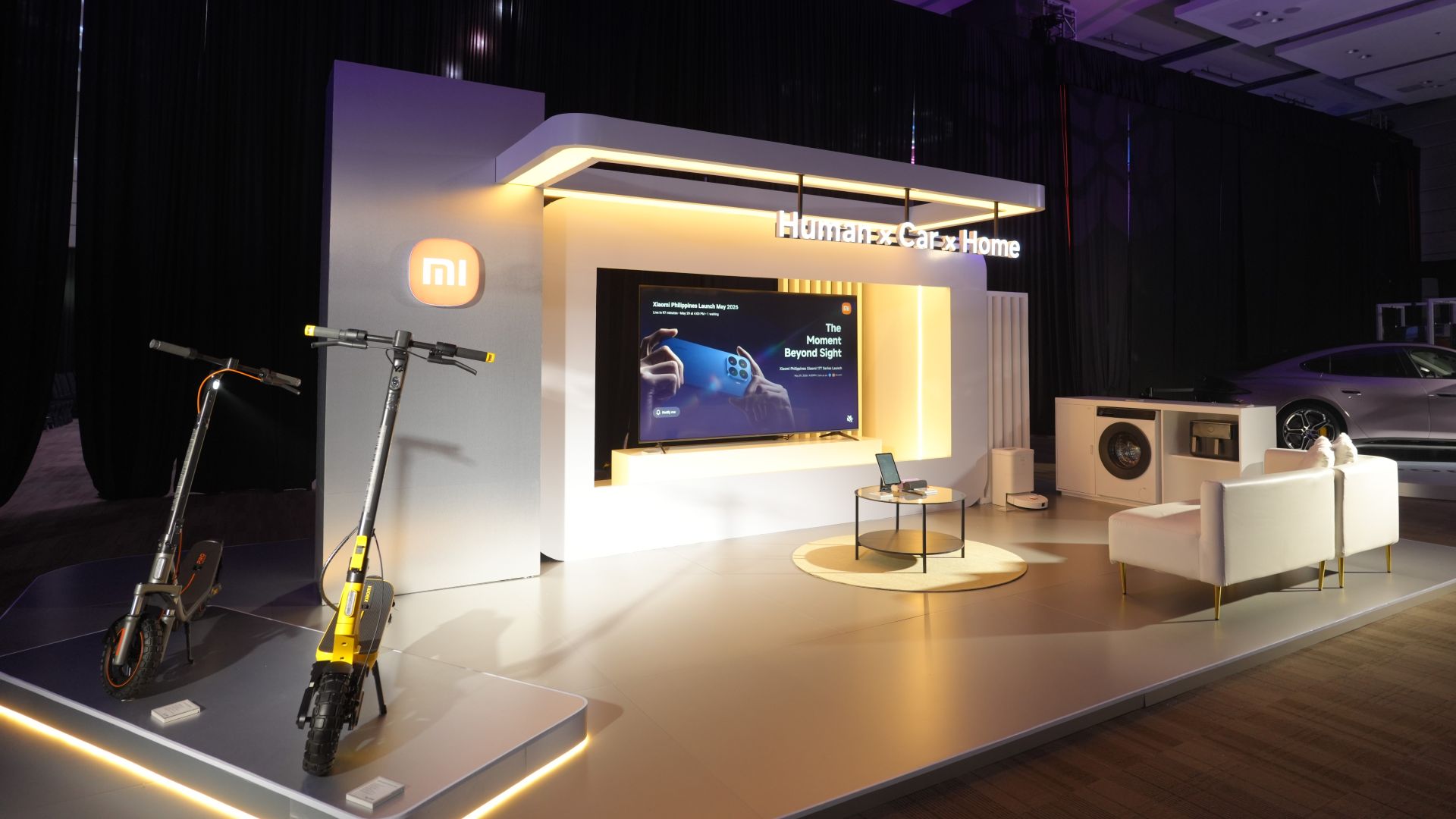
Along with the launch of the Xiaomi 17T Series, the company has likewise introduced a new lineup of AIoT offerings from wearables to smart home devices.
The new Xiaomi ecosystem lineup includes the Xiaomi Watch S5 46mm, Xiaomi Smart Band 10 Pro, and Xiaomi Buds 6 on the wearables end.
Furthermore, there’s the Xiaomi TV S Mini LED Series 2026 and Mijia Front Load Washer Dryer 9kg on the smart home front.
All these products are available with early bird offers also in store for consumers until June 7.
Xiaomi Watch S5 46mm
The Xiaomi Watch S5 46mm combines a refined 46mm stainless steel design with a 1.48-inch AMOLED display.
It has up to 21 days of battery life, supports over 150 sports modes, and has upgraded heart rate monitoring and system GNSS.
It also offers deeper sleep insights, Xiaomi HyperOS 3, and Xiaomi Home integration.
This wearable retails for PhP 10,229 (SRP: PhP 10,999) with a free strap. The Special Edition retails for PhP 11,159 (SRP PhP 11,999).
Xiaomi Smart Band 10 Pro
Additionally, there’s the everyday wellness tracking device in the Xiaomi Smart Band 10 Pro. It has a 1.74-inch AMOLED display, up to 2,000 nits brightness, and up to 21 days of battery life.
It supports upgraded heart rate tracking and more than 150 sports modes, as well as more improvements.
It is priced at PhP 4,199 (SRP: PhP 4,499) with a Special Edition retailing for PhP 5,019 (PhP 5,399) — both with free straps during the promo period.
Xiaomi Buds 6
Furthermore, there’s the Xiaomi Buds 6, bringing a semi in-ear audio experience for comfortable and immersive listening.
It features an 11mm triple-magnet dynamic driver, Harman-tuned audio, Qualcomm aptX Lossless technology (on compatible devices), dimensional audio with head-tracking, ANC, 3-mic AI noise reduction, and HyperOS support.
It is available for PhP 5,679 (SRP: PhP 6,099).
Xiaomi TV S Mini LED Series 2026
For home entertainment, the new Xiaomi TV S Mini LED Series 2026 brings cinematic entertainment in five different sizes: 55-inch, 65-inch, 75-inch, 85-inch, and 98-inch.
The TV is powered by QD-Mini LED technology, and supports up to 1,200 nits of peak brightness. Other features include HDR10+, HLG, Filmmaker Mode, and Dolby Vision on select models.
The series also supports Google TV with Apple AirPlay, Google Assistant, and Google Cast support.
Mijia Front Load Washer Dryer 9kg
Lastly, the Mijia Front Load Washer Dryer 9kg combines two laundry tasks into one smart solution.
It has a large drum, power wash technology, high-temperature steam hygiene mode, and over 30 wash programs. Included is a 15-minute quick wash, as well as one-tap wash-and-dry function.
Through the Xiaomi Home app, users can also monitor cycles, customize settings, save preferences, and receive software updates over time.

Close without crossing: A Xiaomi 17T Pro photo essay
Distance and closeness are not always opposites.


Spring reset: Growing more at home with Auk Mini
From kitchen counter experiment to everyday habit

UGREEN MagFlow Air review: Airy Yet Mighty
Slim and light power bank with a strong suit and core

The Surface Laptop Ultra wants to bring “unmetered intelligence” to you

Xiaomi 6.6 sale: Up to 6,000 off on select phones, more

Samsung Display unveils world’s first 4K 360Hz QD-OLED

Samsung Display makes its case for OLED at Computex 2026

God of War Laufey puts Faye in the spotlight


-

 Accessories2 weeks ago
CASETiFY x Tamagotchi brings back nostalgia
-
Health2 weeks ago
Spring reset: Growing more at home with Auk Mini
-

 Automotive2 weeks ago
GAC Aion UT brings big car energy to the compact segment
-

 Computers2 weeks ago
Samsung’s SECRET That Made OLED Even Better
-

 Events2 weeks ago
Recap: Google I/O 2026
-
 Accessories2 weeks ago
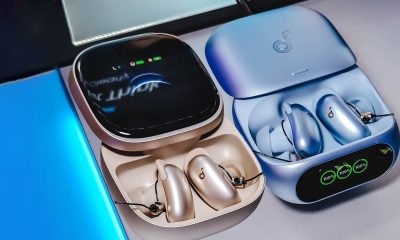
Anker’s soundcore Liberty 5 Pro series is powered by an AI chip
-

 Gaming2 weeks ago
PlayStation increases the prices of PlayStation Plus
-
 Smartphones2 weeks ago
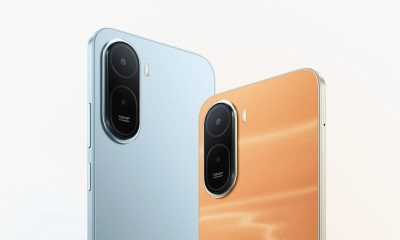
Xiaomi launches budget-friendly REDMI A7 Pro