

While building your own desktop PC is both easy and cost-saving, going for a pre-built machine can provide you with some premium additions.
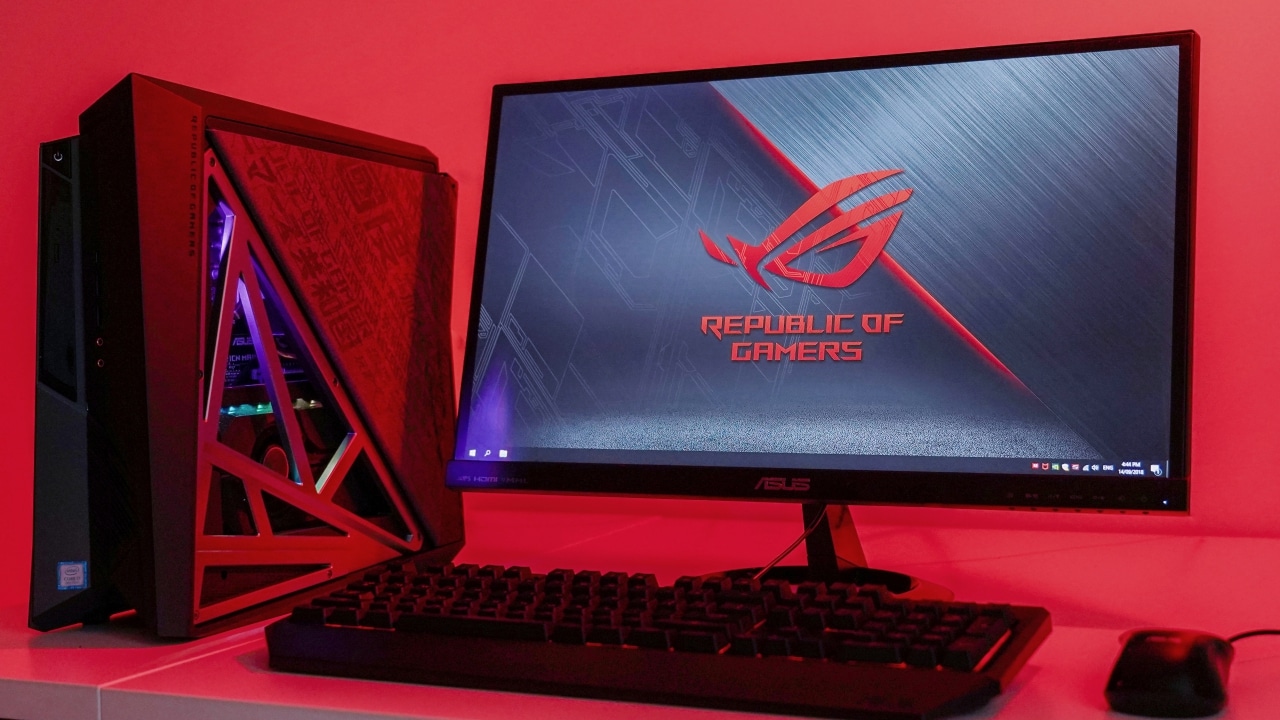
That’s the case with the ROG Huracan (G21), which is a standard gaming rig on the inside, but with one of the most unique and functional enclosures we’ve seen in a while.
I’m already familiar with ASUS’ slim gaming desktops — having played around with the ROG GR8 in the past — but this one takes the form factor to another level.
It may look like an unassuming gaming PC at first…
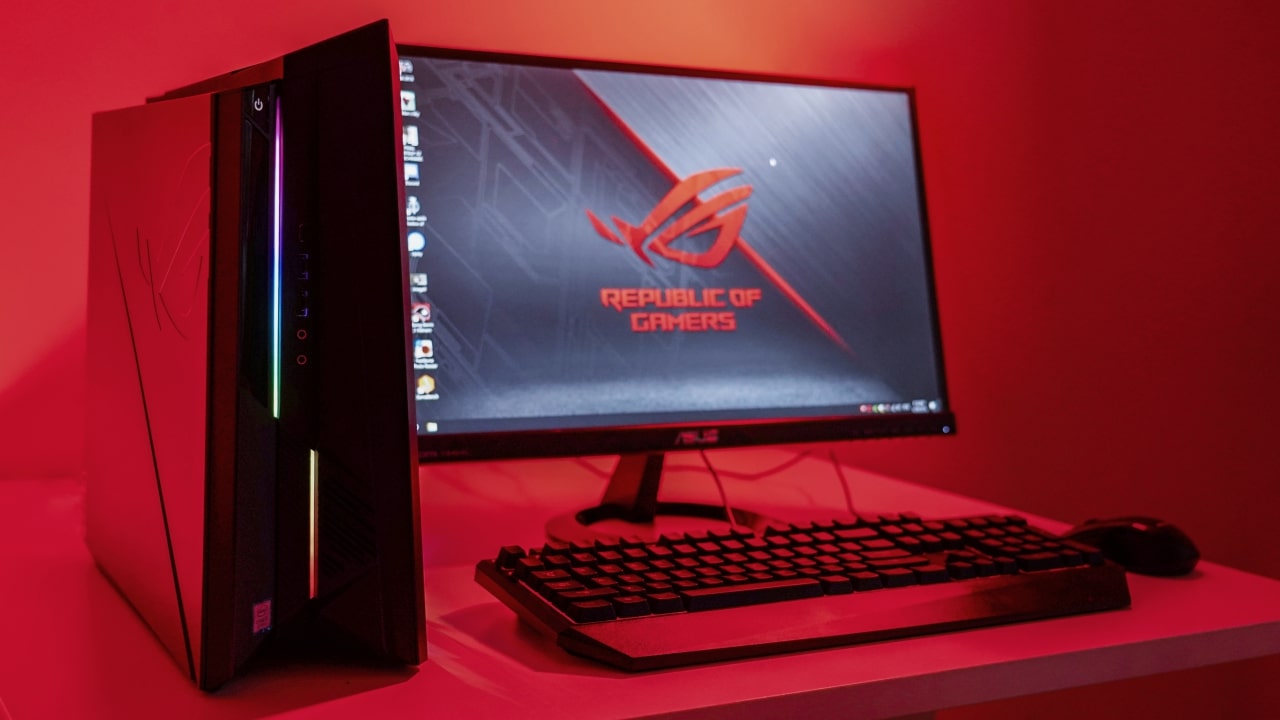
… but raise the flap on the side…

… and it activates Turbo Gear!
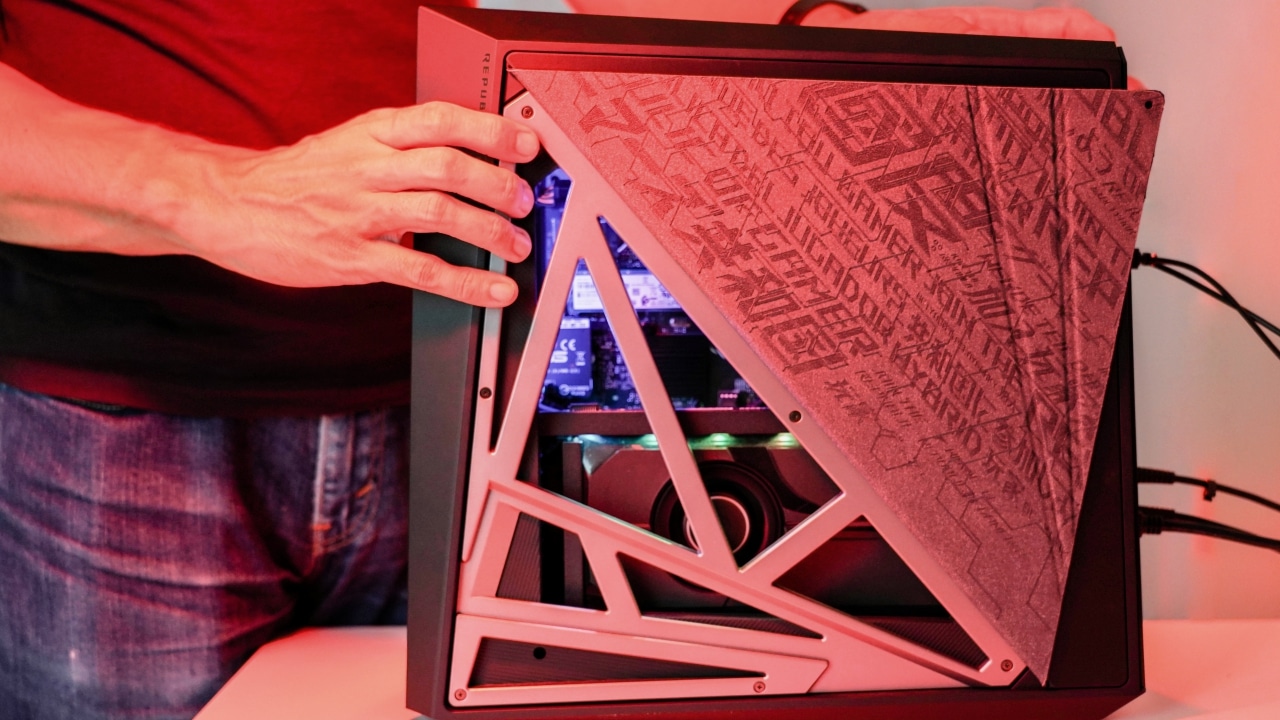
Yes, that means better cooling and faster performance

If that’s not enough, you may easily swap components for better ones

Add more RAM

Replace the HDD

Boost the SSD storage

Install a newer graphics card

Update to a more modern CPU and cooler if you’re brave enough
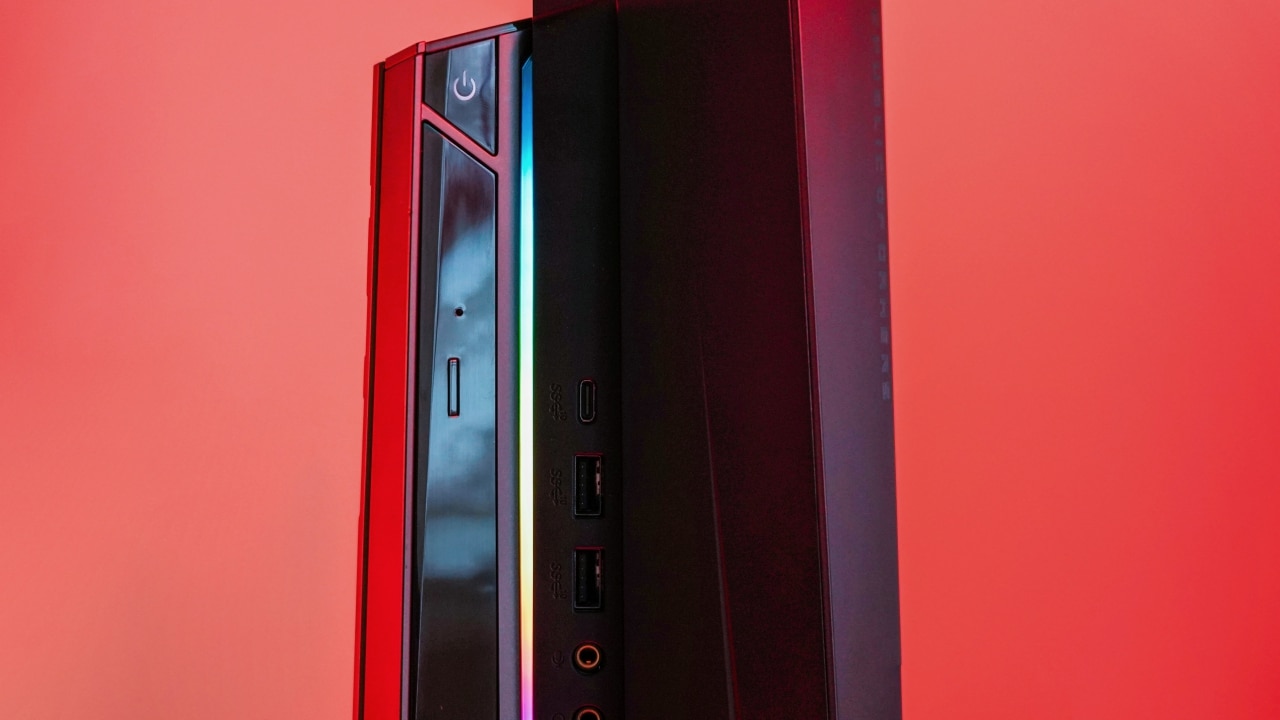
Its port selection is complete, too

USB-C, USB-A, and audio ports in front

Ethernet, S/PDIF, and loads more USB-A ports at the back

DVI, DisplayPort, and HDMI through the GTX 1080 graphics card
And even an optical disk drive!
But is it all just for show?
It’s easy to dismiss the ROG Huracan as an overpriced, extravagant piece of gaming machinery, but there are some legit components inside that justify the high price tag.
For one, it has Intel’s eighth-generation Core i7-8700 processor which provides six cores with a total of 12 threads; that’s more than enough to handle the latest AAA games, plus it’s one of the best mainstream chips you can get for video editing and other heavy tasks.
Coming along for the ride are 16GB of memory, a 1TB HDD, and 512GB SSD, all of which can easily be replaced or expanded as mentioned earlier. Even the graphics card it comes with — a more than capable NVIDIA GeForce GTX 1080 — may be swapped for one of those yummy RTX cards launched recently.

It’s also important to mention that the ROG Huracan is equipped with 802.11ac 2×2 Wi-Fi and Bluetooth 5.0, so bringing this machine from one spot to another won’t mean dealing with cumbersome cables during each setup.
In addition, you can add a 2.5-inch SATA SSD from the top (without the need to open up the entire side panel) if the built-in storage isn’t enough for you. Considering how resource-hungry the newest games have been getting, this is certainly a welcome sight.
Do the numbers speak for themselves?
This wouldn’t be a proper review without benchmark scores to show off. Since Turbo Gear is a thing on the ROG Huracan, it’s vital to include numbers with and without the flap on.
In ASUS’ own words, opening the magnetic side cover improves airflow and, in effect, enables a boost in both CPU and GPU performance. The whole process is pretty much a fancy way to overclock the gaming rig, and it shows whenever the RGB lighting begins dancing once the flap is raised.
While that seems like a straightforward way to kick things into overdrive, the output was quite mixed depending on where it’s applied. See the data for yourself:
Unigine Superposition
Turbo Gear on, 1080p Extreme, DirectX: 4002, 29.93fps
Turbo Gear off, 1080p Extreme, DirectX: 3961, 29.63fps
Cinebench R15
Turbo Gear on: 1391 (CPU), 128.33fps (OpenGL)
Turbo Gear off: 1374 (CPU), 131.76fps (OpenGL)
Final Fantasy XV benchmark
Turbo Gear on, High Quality, 1080p: 8011
Turbo Gear off, High Quality, 1080p: 7628
Deus Ex: Mankind Divided benchmark
Turbo Gear on, Ultra settings, 1080p: 66.4fps
Turbo Gear off, Ultra settings, 1080p: 66fps
GPU temperature under full load
Turbo Gear on: 73 degrees Celsius
Turbo Gear off: 83 degrees Celsius
For pure benchmarking apps, the difference in scores are either so minuscule or backwards that we can’t give a proper analysis. The boost in actual gaming performance is equally minor, though more significant in comparison.
Where the Huracan’s Turbo Gear feature does excel at is in keeping the system cool. By allowing more air to enter the side, you get a dip in temperature by as much as 10 degrees Celsius for the GPU. That’s seriously good for something that feels like a gimmick at first.
In short, it’s safe to say that leaving the side flap open at all times would theoretically lengthen the PC’s lifespan, at the expense of letting lots more dust come in. The performance boost isn’t anything to write home about, so it’s up to you if you prefer a cool system or a clean one.
Any drawbacks?
Of course, grand performance comes at a grand cost. Not only do you have to spend a pretty penny to own one, but you also have to plug in two power adapters — one 180W and one 230W — to give this beast its juice. That means your electric bill will experience its own shock every month.
On top of that, taking the slim rig around isn’t as seamless as it may seem at first. Carrying the 8.3kg system is already a challenge; bringing two heavy power bricks along only adds to the overall weight. I haven’t even mentioned the monitor, keyboard, and mouse, which aren’t integrated like what a gaming laptop offers.
Is this your GadgetMatch?
For the price, it’s tempting to simply go for a high-powered gaming notebook that can do as much with less effort to carry around. ASUS has a fine line of Zephyrus laptops that can match the performance of the ROG Huracan — pricier, yes, but then you wouldn’t have to spend for a monitor anymore.
The value of the ROG Huracan depends solely on how long its novelty would last. How badly do you want to go into overdrive with the flip of a magnetic flap and lots of RGB lighting? Truth be told, any other gaming PC can do the same, if not better, with a few clicks of the mouse through software.
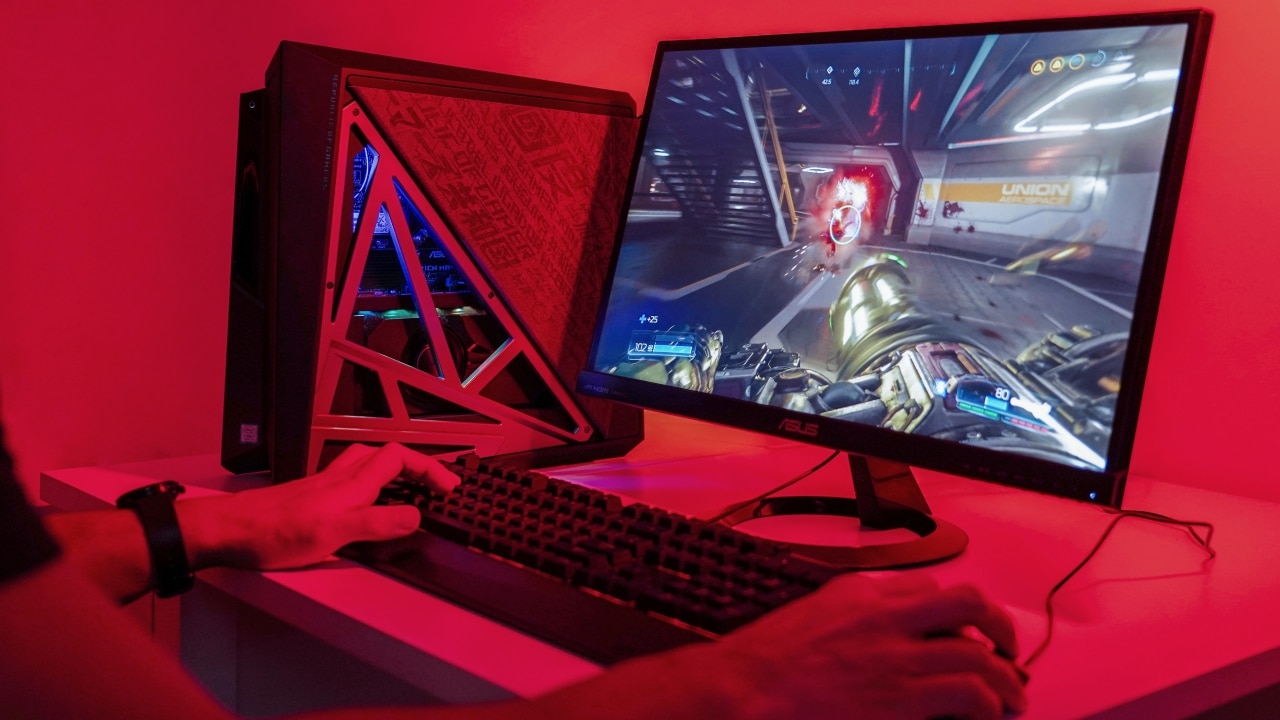
Don’t get me wrong; it’s certainly a cool-looking desktop and is built to be future-proof. This is the gaming rig you want if design, upgradeability, and raw starting power matter to you. Yes, building a custom PC would be far cheaper, but it likely wouldn’t look as sharp as this.
The ROG Huracan retails for at least US$ 2,000, depending on which configuration you choose. For the same price, you could afford a high-end gaming laptop like the aforementioned Zephyrus line. Which style you prefer ultimately hinges on how mobile you are as a hardcore gamer — and how deep your pockets go for added accessories.








Acer is expanding its storage lineup with the PA100 Portable SSD. It’s a compact external drive designed for users who need faster storage across multiple devices.
The PA100 uses USB 3.2 Gen 1 connectivity. It reaches sequential read speeds of up to 560MB/s and write speeds of up to 430MB/s. This makes it suited for everyday tasks such as transferring large files, backing up content, managing documents, and moving media between devices.
Up to 2TB of portable storage
The PA100 comes in three capacities: 500GB, 1TB, and 2TB. This gives users options depending on whether they need extra space for documents and schoolwork or larger collections of photos, videos, and project files.
Acer also designed the drive with mobility in mind. The PA100 has a slim 9mm profile and a lightweight build, while its reinforced construction is designed to withstand everyday travel and handling.
The drive comes with a 2-in-1 USB-C to USB-C and USB-A cable. This allows it to connect to compatible PCs, tablets, smartphones, and other devices without requiring a separate adapter. It also supports major operating systems and USB-C mobile platforms.
Designed for everyday use
Power efficiency is another focus. Acer says the PA100 uses less than 3W during operation, while idle power consumption can drop to as low as 0.62W.
The drive also features an optimized thermal design to help maintain stable performance during extended transfers and daily workloads.
The Acer PA100 Portable SSD is backed by a three-year limited warranty. Pricing and availability may vary by market.
Computers
New Mac mini starts at a whopping $899, only 256GB of storage
It comes with the M6 or the M5 Pro.


Almost two decades ago, Apple was infamous for being an anti-gamer brand. Though the company’s devices touted superior protection against viruses, they couldn’t play video games, alienating a significant chunk of the population and forcing them onto PCs. For a while now, the Mac has changed the status quo, bringing in more powerful hardware that can play games. Today, Apple is championing that cause further through the newly launched Mac mini.
Compared to the chunkier Macs, the Mac mini has a lithe 5” x 5” profile, emphasizing the “mini” in its name. Despite the size, the new mini will tout two flavors of Apple silicon: the M6 and the M5 Pro.
The M6 variant delivers with up to two times faster gaming performance with ray tracing when running Cyberpunk 2077: Ultimate Edition, compared to the previous M4 version. Meanwhile, the M5 Pro version touts up to 4.5 times faster rendering performance with ray tracing in Blender, compared to the M2 Pro. It will come with macOS 27 Golden Gate out of the box.
You won’t have to worry about connectivity, either. The Mac mini comes with compatibility for Wi-Fi 7, Bluetooth 6, and 2.5Gb Ethernet (going up to 10Gb in upgraded versions). It will also have two USB-C ports, three Thunderbolt 5 ports (but only Thunderbolt 4 for the M6 version), and HDMI port, an Ethernet port, and a headphone jack.
Unfortunately, price seems to be another thing that it’s getting from PCs. The new Mac mini has an increased starting price. Specifically, the M6 version starts at US$ 899 (with only 256GB of storage), and the M5 Pro version starts at US$ 1,699 (for 512GB of storage). Preorders are open now, but they ship out on September 22.
SEE ALSO: Apple raises the prices of iPad and MacBook lineups
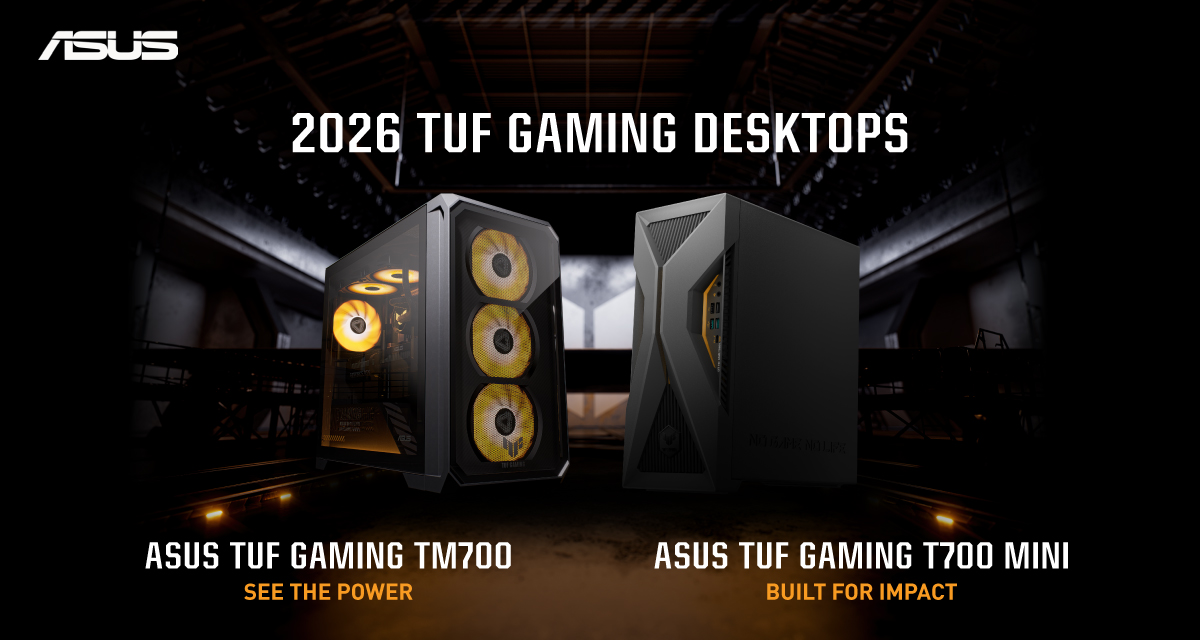
ASUS has announced the arrival of its latest TUF Gaming desktop lineup models: the TUF Gaming T700 and TUF Gaming T700 Mini.
These new offerings bring heavy-duty performance and military-grade durability to gamers, engineered to endure extreme operational demands while delivering rock-solid stability.
The new ASUS TUF Gaming T700, in particular, is engineered to take on modern AAA titles with its uncompromising performance.
It has an aggressive mecha-inspired MIL-STD chassis, including a transparent side panel to put powerful components on display. Vibrant orange ambient lighting also adds a bold finishing touch.
Inside is an AMD Ryzen 7 8700F processor and up to an NVIDIA GeForce RTX 5060 Ti GPU for high-frame rate gaming.
The T700 also features a robust thermal solution equipped with quad 65 CFM fans and a 240mm liquid cooler.
Meanwhile, the TUF Gaming T700 Mini is tailored for competitive gamers while maintaining a compact, battle-tested chassis.
It has an Intel Core Ultra 5 225F desktop processor, paired with with NVIDIA GeForce RTX 3050 graphics.
This combination provides seamless multitasking, crisp visuals, and reliable frame rates across today’s popular titles.
The internal hardware is cooled by a custom thermal matrix featuring dedicated copper heat pipes and a heavy-duty 90mm cooling fan.
True to the TUF Gaming legacy, the T700 Mini is likewise MIL-STD tested to endure extreme operational demands.


DJI Lito X1 review: Is this the best lightweight drone for creators?
Making a strong case as a travel companion and a capable B-cam!


REDMI Note 17 Pro Max review: A new breed born from AI greed
Welcome to the new normal


Marvel’s Wolverine review: When the claws come out
A brutal, cinematic superhero adventure
DJI Lito X1 review: Is this the best lightweight drone for creators?

Now Playing: Resident Evil

HONOR, Fidesmo partner for contactless payments across Europe, Middle East

Ford revs up Truck Month with extended 5-star care offers
REDMI Note 17 Pro Max review: A new breed born from AI greed

TECNO MEGAPAD 2 review: Eyes on the size

realme 16T 5G with 8000mAh battery, IP69 Pro rating launches in PH

HUAWEI Pura X View is 2026’s first WIDE slab-type smartphone

REDMI reveals the refreshed Note 17 and Note 17 Pro series

REDMI Note 17 Series: Price, availability in Singapore


-
 News1 week ago
HUAWEI Pura X View is 2026’s first WIDE slab-type smartphone
-

 News1 week ago
The CAMON Slim 5G is TECNO’s latest ultra-slim smartphone
-

 IFA 20262 weeks ago
TECNO MEGABOOK T15 360 unveiled at IFA 2026
-

 Gaming2 weeks ago
NBA 2K27 review: A two-way All-Star
-

 News1 week ago
iPhone 18 Pro series: Price, availability in the Philippines
-

 IFA 20262 weeks ago
TECNO’s POVA 8 Pro gets a stealthy makeover
-

 Automotive2 weeks ago
Ford’s new Everest lineup brings V6 engine to the top, tech down the line
-

 Gaming2 weeks ago
Now Playing: Elden Ring Tarnished Edition