


Apps
Florence: Half-baked beautiful game about first loves?
Shows stunning subtleties of delicate love

Alright, alright. As much as I wanted to review the game from a single perspective, I thought maybe with a game about first loves, it was best to bring in a twist, so I brought in some reinforcements: Richard, my boyfriend.

Florence, as I’ve written before, is a mobile game that tackles the delicateness of first loves. With stunning first impressions from the teasers and trailers, it was tough not to want to play the game even if it came with a price tag. While Richard initially got this game for me to review alone, the game intrigued him, so we figured it would be interesting to write a review together since we played the game at the same time anyways.
His perspective

I’m the kind of guy that prefers watching Studio Ghibli films that focus on slice-of-life dramas instead of magical monsters. I’m also into playing whatever independent title that’s getting rave reviews on Steam. Florence encompasses both things. The hand-drawn art style is gorgeous and the puzzles are inspiring. Focusing on someone lost in life, living alone, and falling in love sounded like something I could personally relate to with traveling across the world to live alone. This was worth a shot.
Her perspective

The game was undeniably visually charming and the vignettes seemed intriguing at the very least. I’d kept my eye on the game since the teaser came out. It was a pretty novel concept: a mobile game that committed to dabbling into a slice-of-life narrative. With dating simulation game reviews that I’d previously sunk my toes into, I thought an interactive visual novel about love would be a refreshing perspective.
A stunning beginning

Split into several acts, the game introduces you to Florence, a young woman going about mundane tasks of daily adult life. It then explores Florence’s childhood and hints at her somewhat rough relationship with her mother.
As you progress in the game, you inevitably encounter Krish, a cellist who Florence falls in love with. From here on, the game is drop-dead stunning. It digs deep into relatable experiences from awkward first dates, quirky dates that follow, to the honeymoon stage of their relationship.
Witty nuances and subtleties

The game uses the mobile platform incredibly well. Florence has a very unique take as an interactive visual novel especially without the game walking you through how each mini-game is meant to be played. With varying mechanics for mini-games, you would think that it would be a challenge to pull off, but the game design is fascinatingly intuitive.
The game experiments with adjusting focus, piecing together torn paper, and using touch to shake Polaroid photos. The game even incorporates both portrait and landscape orientations depending on the sequence.
 Perhaps the most poignant mini-game was conversing with Krish. With no voice-overs and minimal text in the game, talking is done by filling a speech bubble. When Florence first meets Krish, the jigsaw puzzle is composed of about six simple pieces. As the conversation goes on, the pieces become bulkier and the puzzle, less complex. We both thought it was such a witty way of visualizing the sort of growing ease Florence had developed the more she spoke with Krish.
Things that fall through the cracks

As it enters the later acts, the game takes an unexplained turn and falls short with depth. It begins to feel like as much as the design and mechanics were thought through and through, the game drops all effort of reeling you back with context.
By the time the credits finally roll, the final sequence comes off as a rushed finale to an almost perfectly delightful game. Everything turns out fine and she lives happily ever after. It’s acceptable but it admittedly seems to miss an opportunity to excel.

The mini-games are great, but we both wish they impacted the story line. Throughout the game you have phone calls with your mom, but none of your responses have any effect on your relationship by the end of the game. Trying to win arguments offers nothing different from refusing to participate. In one sequence, you share messages with emoji; being the sadist that Richard is, he replied only with sad emoji but didn’t get any real feedback.
Florence sadly disregards cause and effect. The story persists the way the developers have set it with no room to wander and experiment — sadly, making your play-through have no impact in the game at all.
Reading too much into it?

As much as Richard and I agree with how the game fell a bit short despite its remarkable beginning, I think there’s a bit of me that seems to defend the plot of Florence. Facing a different take of visual novels can be difficult and the plot does leave you longing for a better one. It’s short, sweet, and memorable but it leaves you wanting a better resolve, an explanation, and an impact. In hindsight, that’s not too far from what a failed cherished first love makes you feel.
Is this your game match?
The game feels like it had so much potential to be something so much more that it already is. As much as your choices and how you play the game have no impact on the story, Florence is a great introductory game to ease into more in-depth interactive visual novels. The game is visually stunning and the mini-games are clever. With lovely tunes to ease you into every act of the story, this title is worth trying out despite its pitfalls. If you’re willing to give it a go, you can download Florence here.
SEE ALSO: Sky: A new jaw-dropping mobile game coming out soon!


Apps
Google Photos can now censor your kid’s face better
The new Redact feature can censor sensitive information.


Censoring photos is heavy work. Either you stick on random emojis or draw an indiscriminate splotch of doodles to cover sensitive information. It’s an imperfect art but an essential one to protect privacy. Today, Google Photos is getting a Redact feature which can censor sensitive bits with pixelated blocks.
An addition to the Markup tool, Redact acts like a nifty pen that can hide information that you don’t want seen. Unlike a ghastly emoji or a splotch, the censored bar mixes better with the surrounding elements. In the example that Google used, a censored license plate blends well with the car it’s attached to, making the photo look more cohesive. Besides license plates, it’s the perfect tool for covering other information like phone numbers, addresses, and the faces of your loved ones.
Google Photos is also rolling out Moods, a set of filters that give photos a nostalgic look, including a 2000s night digicam vibe that’s popular today. There are also 15 new Remix templates to add more creation options.
Both the Redact and the Moods features will roll out to Android users starting today. The new Remix templates, however, will be limited to some countries on both Android and iOS.
SEE ALSO: Google will force Android users to use Gemini next month
Apps
Smart launches LiveSmart App for exclusive deals
Exclusive deals, cashback, and bill payments in one app.

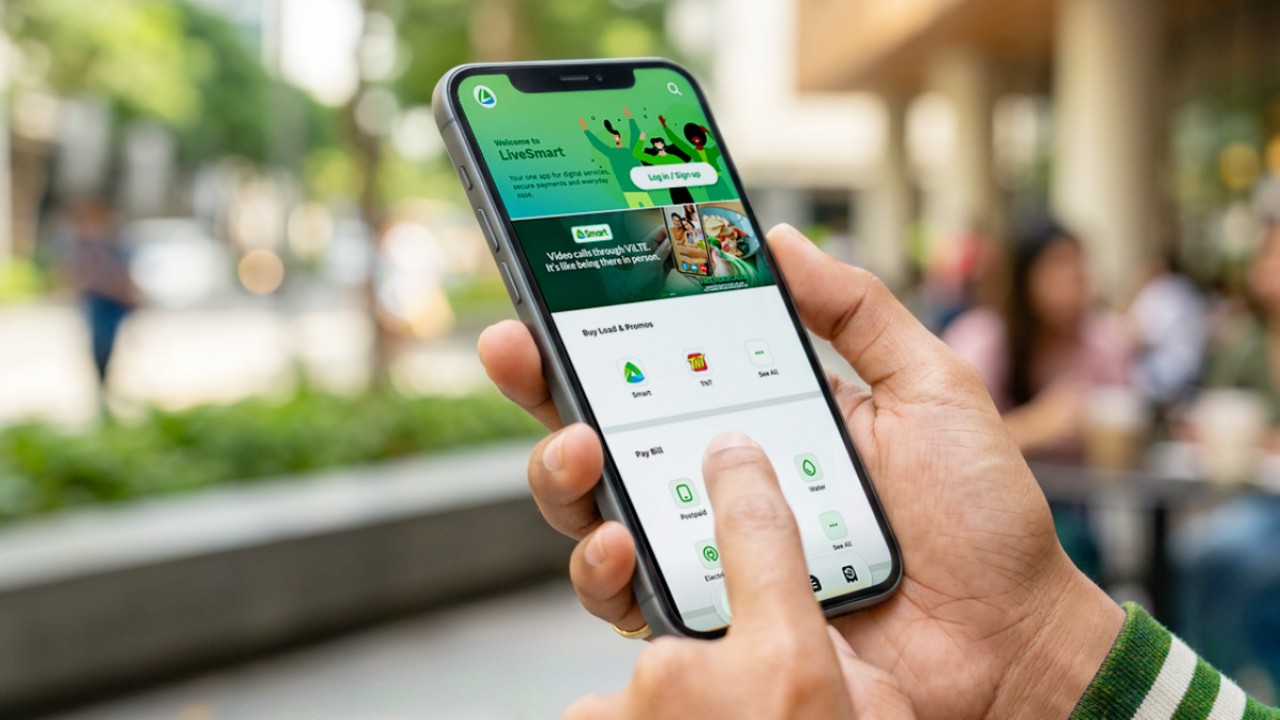
Smart Communications, Inc. (Smart) and TNT have launched the LiveSmart App, a new platform that combines loading, bill payments, exclusive offers, and other everyday transactions in one app.
The app is available on the Google Play Store and Apple App Store. It is open to Smart, TNT, and subscribers of other mobile networks.
The LiveSmart App gives users access to exclusive deals and savings. These include cashback offers, discounted Smart and TNT data packages, and limited-time access to AI.Smart.
“Filipinos are becoming more deliberate about where they spend and how they can get more value from every peso,” said Lloyd R. Manaloto, FVP and OIC for Smart. “The LiveSmart App is designed to help make those everyday decisions a little smarter, by giving users convenient ways to load, pay bills, and access exclusive savings and offers in one place.”
Exclusive deals and perks
Smart and TNT are rolling out several offers on the LiveSmart App starting September 18.
Smart and TNT subscribers can get 5% cashback when they purchase load or pay their Smart Postpaid bill through the app.
The app also offers data packages at exclusive prices. Smart Prepaid subscribers can get Power All 109 for PHP 105, while TNT subscribers can get Saya All 109 for PHP 105.
Users who download the LiveSmart App may also receive limited-time free access to AI.Smart.
AI.Smart combines multiple AI models, including AWS Nova, ChatGPT, Claude, Google Gemini, and Thinking Machines, in one workspace. Users can use it to generate images, create presentations, draft documents and spreadsheets, and get help with schoolwork, content creation, and other projects.
To claim the free AI.Smart credits, users need to tap the AI.Smart banner in the LiveSmart App. They then need to create an AI.Smart account using their Smart or TNT number.
Smart says users can also expect more exclusive deals and perks from lifestyle partners as it expands the LiveSmart App.
Powered by Smart 5G
The LiveSmart App runs on Smart’s network. Smart 5G supports activities such as video streaming, gaming, and real-time social media sharing.
The company said Ookla recently recognized its network for the Best Mobile Video Experience in the Philippines for the first half of 2026. Smart recorded a Video Score of 72.82, which it said was the highest among mobile operators in the country.
The LiveSmart App is now available on the Google Play Store and Apple App Store. Users can learn more about the app through Smart’s website.
Apps
Apple’s best feature to cure motion sickness is finally on Android
Google copies a good page from Apple’s playbook.
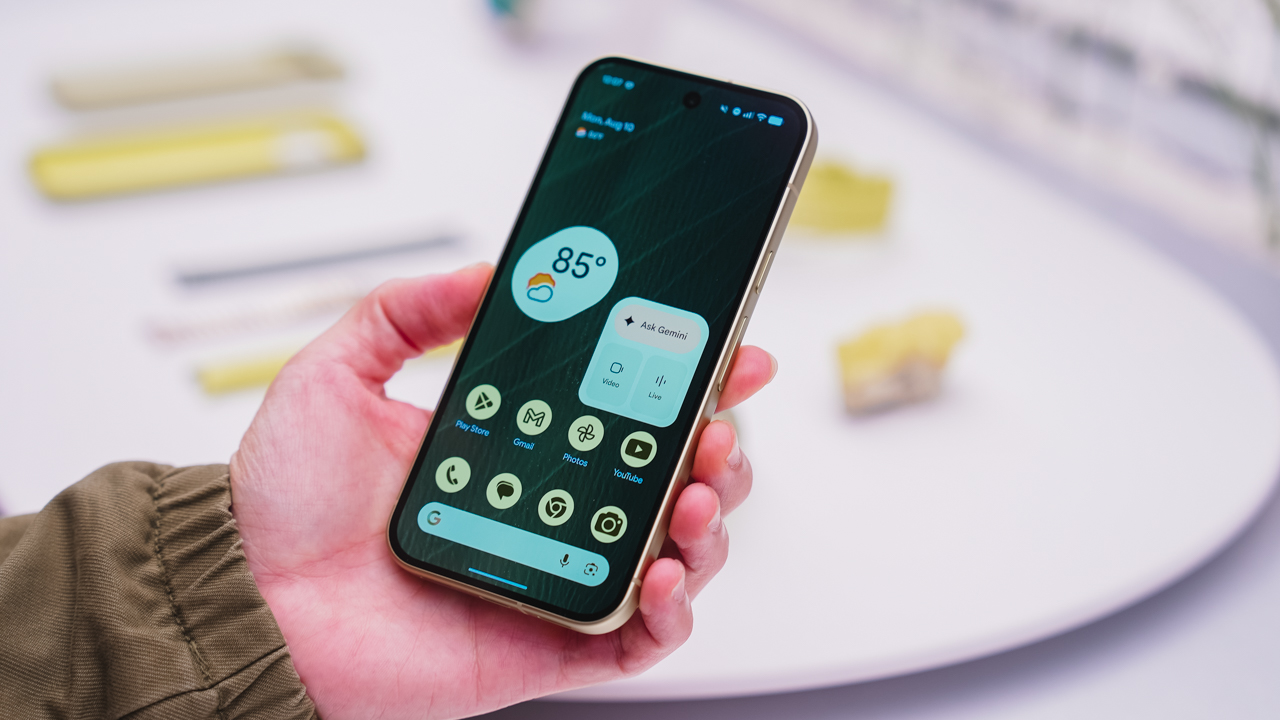
As an Android user, I’ve been jealous of iPhone users for a while now, but it’s not for the reason you might think. See, I’m ridiculously prone to motion sickness when I’m not driving. So, when I discovered that Apple has a software-based cure called Vehicle Motion Cues, I wanted it immediately. Now, Android does have third-party apps that do the same thing, but they’re not as good as a fully native version. Well, those dark, nauseating days are about to come to an end. Android 17 is finally getting a similar tool called Motion assist.
Before that, let’s rewind for a bit. What do these features do? How can they cure motion sickness?
Whenever you open Vehicle Motion Cues or Motion assist, the interface spawns a series of dots on the screen. These dots respond to movement. For example, if the vehicle turns to the left, the dots also go to the left, mimicking the movement. Without cues like this, the stationary nature of the screen clashes with our brain’s perception of movement. The disparity creates that feeling of nausea. Basically, our eyes are desperately trying to focus on the static screen, but our brains are telling us that we should be seeing motion. Having moving dots reorients our brain and places the phone inside our perception of movement.
Now, you can enable the same feature on your Android 17 device through Settings > All services > Motion assist under Personal & device safety. You can also set it so that the feature turns on automatically when the phone detects that you’re in a moving vehicle. Finally, you can also tweak the shape, color, and opacity of these dots.
Android 17’s Motion assist is rolling out now to compatible devices.
SEE ALSO: These are the best Android 17 features (if you hate AI)


Now Playing: ACE Combat 8: Wings of Theve
A refreshing change of pace


TECNO POVA 8 Pro Tonino Lamborghini review
Truly a rare gem in 2026


DJI Lito X1 review: Is this the best lightweight drone for creators?
Making a strong case as a travel companion and a capable B-cam!

BYD says that way better EV batteries are coming next year

Globe records fastest average download speed of 2026 in August
Now Playing: ACE Combat 8: Wings of Theve

Now Playing: Total War: Warhammer III – Lords of the End Times

Microsoft gives up on the Copilot+ PC

HUAWEI Pura X View is 2026’s first WIDE slab-type smartphone

The CAMON Slim 5G is TECNO’s latest ultra-slim smartphone

iPhone 18 Pro series: Price, availability in the Philippines

DJI Osmo 360 II review: Going all-in on the ecosystem

iPhone 18 Pro series: Price, availability in Singapore


-
 News7 days ago
vivo X500 Series launches with major imaging upgrades
-

 News6 days ago
OPPO Find X10 Pro Max is the first phone with a triple 200MP camera system
-

 Reviews2 weeks ago
REDMI Note 17 Pro Max review: A new breed born from AI greed
-

 Singapore1 week ago
Epson Lifestudio Grand Plus EH-LS970B with 4K projection, more launches
-

 News7 days ago
vivo introduces OriginOS 7 with smarter multitasking and AI features
-
Drones2 weeks ago
DJI Lito X1 review: Is this the best lightweight drone for creators?
-

 Gaming2 weeks ago
Valve unveils price of the Steam Frame
-
 Philippines2 weeks ago
REDMI NOTE 17 Series: Price, availability in the Philippines