
Apps
EMUI 10: Three features for a more intelligent system
An intelligent system for a smarter life


The recently held Huawei Developer Conference showed the world where Huawei is heading with its hardware and software. In terms of software, Huawei announced the latest iteration of its popular take on Android, the EMUI 10.
With EMUI 10, Huawei is developing a more intelligent system. The new UI is ready to tackle the needs that everyday users demand from their smartphones. Here are three features which make it a more intelligent system.
Dark mode, UI additions
EMUI 10 adds a system-wide dark mode that can be toggled in the settings. With the addition of dark mode, Huawei is following suit after Apple and Google which also introduced a system-wide dark mode. With dark mode activated, background is rendered black or dark grey while text and other content are rendered in white to make it legible. Aside from this, EMUI 10 also has a “forced” dark mode where third-party apps are forced to render contents in dark mode.
There will also be slight tweaks with the icons and UI elements and a new system-wide font. Plus, expect plenty of performance improvements along with AI and gaming related tweaks.
Distributed technologies
With EMUI 10, Huawei is also focusing on always connected smart devices. Video calls can now be shared between multiple devices. These would let users receive calls from their smartphones and continue with their smart TV, a drone, or other smart devices.
EMUI 10 is also adding a screen sharing feature. With the feature, users can display the screens of their Huawei smartphones to their PCs in real time. Such feature would allow for a real time drag-and-drop operation which is useful when working with lots of data.
All of these features would enable Huawei’s vision for distributed technologies, as it seeks to expand its ecosystem beyond smartphones.
Huawei is also making sure that its distributed technologies are secure. The company uses its own in-house hardware and software, as well as a chip system architecture and system kernel as foundation for its security. Only devices authenticated by the user can connect to other devices, and all data transmissions are encrypted end-to-end.
One time development for multi-device deployment
To streamline the app development process, EMUI is providing a UI programming framework which would enable developers to create an app that can run on any device. The framework would free developers from the problem of adapting their apps to multiple languages and devices.
EMUI 10 is proving to be an exciting iteration of the popular EMUI. On top of that, EMUI 10 will also bring Android Q to many Huawei users. More exciting features are on the horizon as the UI, in its current form, is still in beta phase.
EMUI 10 will be released first on the next generation of Mate series. Then after, it will be released to devices such as the P30 Pro, P30, Mate 20 Pro, Mate 20X, Mate 20, the Honor 20 series and the Honor Magic 2. The update might also arrive to these devices: Honor View 20, Honor 10 Lite, Honor Play, and Honor 8X.
EMUI is Huawei’s custom OS based on Android. While EMUI is fundamentally based on Android, it has evolved over the years to include features that are not on Android itself. Today, EMUI has more than 500 million daily active users in over 216 countries. This is a clear indication of how EMUI has grown ever since its introduction to the world in 2012.




Apps
Disney+ strengthens footing as go-to sports streaming app with UFC, NBA, more
ESPN on Disney+ brands itself as ‘new home ground for sports’


Disney+ is strengthening its footing as a go-to sports streaming app as ESPN on Disney+ is now available in the Philippines, one of its markets with a huge sports-loving fanbase.
The launch coincides with a brand new campaign, “Ito ang Homecourt Mo!” (This is your homecourt!), welcoming Filipino fans to a new home ground for games, stories, and moments.
Subscribers can access live events, on-demand replays, studio shows, documentaries and original programming together in one dedicated destination through ESPN on Disney+.
Production and coverage will be led by ESPN, delivering high-quality broadcasts, commentary and expert analysis across the sports season where available, alongside Disney+ general entertainment and family programming.
Following last season’s success, NBA returns to ESPN on Disney+ with matchups during NBA Tip-Off Week.
Christmas Day games will also be available to stream, including the NBA Finals rematch between the New York Knicks and San Antonio Spurs and the Philadelphia 76ers versus the Los Angeles Lakers.
Playoff games through the conference finals shall also be streamed live and on demand.
Meanwhile, the UFC is among some of the new regular sports programs Filipinos can watch on Disney+.
The action kicks off at UFC 333 in Abu Dhabi scheduled on October 25, where two world championship titles are expected to be on the line: UFC featherweight champion Alexander Volkanovski takes on undefeated No. 1-ranked contender Movsar Evloev, and UFC bantamweight champion Petr Yan defends against former champion and No. 1-ranked Merab Dvalishvili.
Alongside live UFC numbered events and UFC Fight Nights, fans will have access to a library of classic fights and curated UFC content.
There will also be the original and and behind-the-scenes programming, including UFC Countdown, UFC Connected, UFC Main Event, UFC Fight Flashback, UFC Reloaded, and ROAD TO UFC.
A new home ground for sports
Other notable sports programming will include the Formula E 2026/27 season, with practice, qualifying and main races across 21 rounds in 13 host cities.
Also available on Disney+ are NCAA events, including March Madness, and Australia’s National Basketball League (NBL), with all games live across the regular season and championship series.
ESPN’s popular 30 for 30 documentaries will continue to be available on the platform. The line-up also features ESPN studio shows, including ESPN FC and Pardon the Interruption.
Apps
GrabCar Group Ride now splits the fare automatically
Passengers stand to save up to 50% compared with booking a solo ride
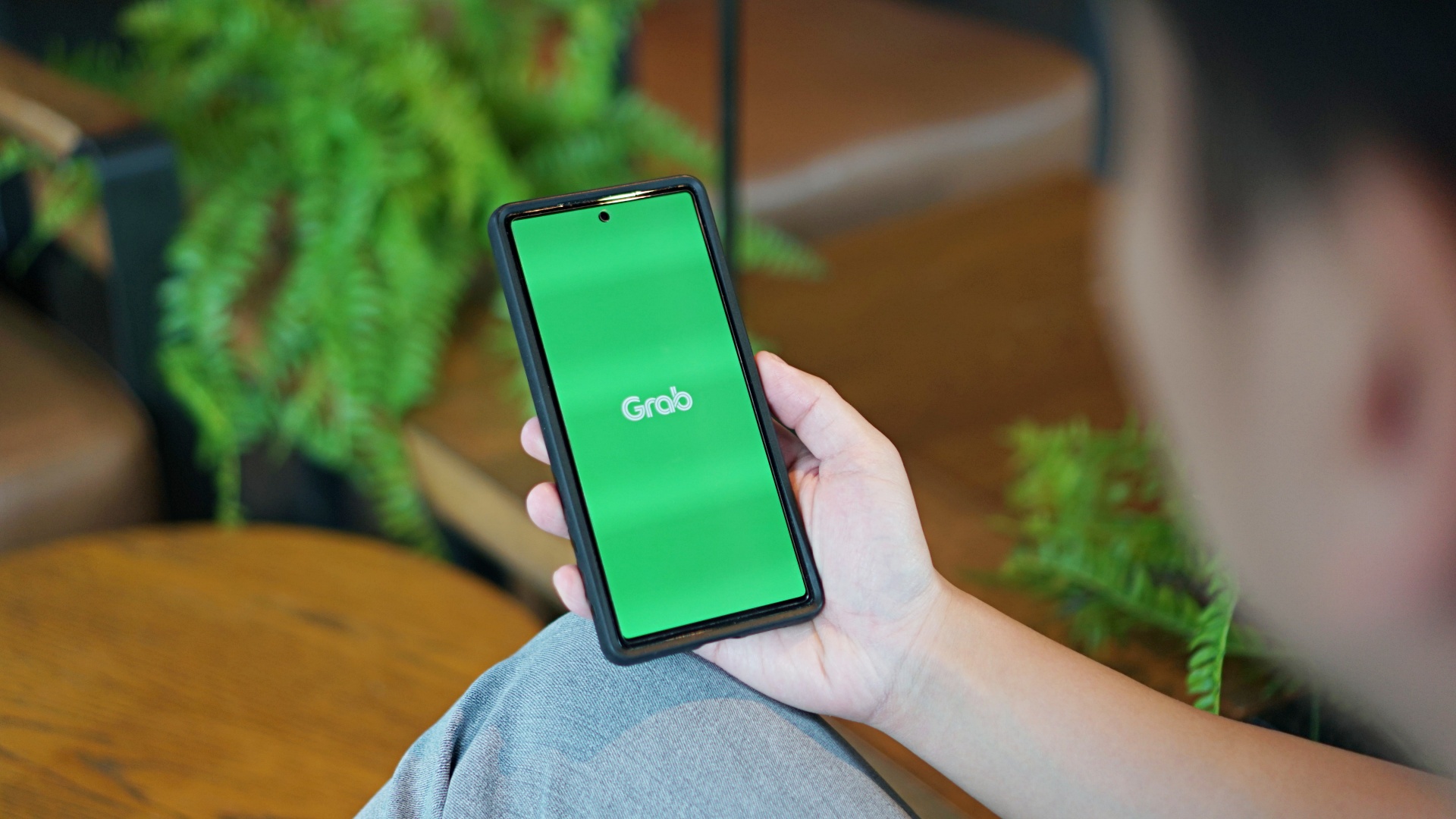
GrabCar Group Ride now splits the fare automatically among passengers, making it simpler to book such ride types.
Each rider can save up to 50% on fare as well when using a group ride, compared with booking a solo ride.
The ride type lets the ride host and up to two friends share one GrabCar, with up to three drop-off points along the way. The more people join, the more affordable the ride becomes for everyone.
Regular ride buddies can also be saved as a group, together with frequent pickup and drop-off pins. This way, repeat bookings take just a few taps.
Such a system is ideal for officemates headed the same way or friends coming home from a night out, as well as plenty of other scenarios.
To book a Group Ride, follow these steps:
- Open the Grab app, tap GrabCar, then select Group Ride
- Enter your pickup point and drop-off
- Share the invite link with up to two friends
- Your friends can add their own drop-off points
- Confirm the booking to split the fare automatically
The GrabCar Group Ride feature is now available in all GrabCar cities nationwide.
Apps
Google Photos can now censor your kid’s face better
The new Redact feature can censor sensitive information.


Censoring photos is heavy work. Either you stick on random emojis or draw an indiscriminate splotch of doodles to cover sensitive information. It’s an imperfect art but an essential one to protect privacy. Today, Google Photos is getting a Redact feature which can censor sensitive bits with pixelated blocks.
An addition to the Markup tool, Redact acts like a nifty pen that can hide information that you don’t want seen. Unlike a ghastly emoji or a splotch, the censored bar mixes better with the surrounding elements. In the example that Google used, a censored license plate blends well with the car it’s attached to, making the photo look more cohesive. Besides license plates, it’s the perfect tool for covering other information like phone numbers, addresses, and the faces of your loved ones.
Google Photos is also rolling out Moods, a set of filters that give photos a nostalgic look, including a 2000s night digicam vibe that’s popular today. There are also 15 new Remix templates to add more creation options.
Both the Redact and the Moods features will roll out to Android users starting today. The new Remix templates, however, will be limited to some countries on both Android and iOS.
SEE ALSO: Google will force Android users to use Gemini next month






OPPO Find X10 Series: Price, availability in the Philippines

MediCard’s MedGo app can scan your face for health risks

DJI Osmo Pocket 4P Pearl White now available globally

Cyberpunk: Edgerunners 2 now streaming, Cyberpunk 2077 update coming

ASUS ProArt P14, P16 laptops with NVIDIA RTX Spark now available

OPPO Find X10 Pro Max is the first phone with a triple 200MP camera system

TECNO CAMON Slim 5G: Price, availability in the Philippines

TECNO CAMON Slim 5G review: Slim on size, big on surprise

HONOR Magic9 Pro Max launches in China with ARRI-powered imaging

BYD says that way better EV batteries are coming next year


-
 News2 weeks ago
OPPO Find X10 Series launches globally October 21
-

 Wearables2 weeks ago
Garmin Enduro 4 promises up to 320 hours of battery life
-

 Gaming1 week ago
Dragon’s Dogma 2: Dark Arisen launches with new Official Pawns
-

 News6 days ago
vivo V80 debuts with ZEISS cameras
-
 Deals1 week ago
Score PhP 22,000 in guaranteed freebies when you pre-order the iPhone 18 Pro at Beyond the Box
-

 Wearables2 weeks ago
Garmin Approach S72 brings swing metrics, green reading to your wrist
-

 Philippines5 days ago
TECNO CAMON Slim 5G gets launch discounts, free MagBadge
-

 Laptops2 weeks ago
ASUS Zenbook 14 lineup expands with new colors and processors