



The Huawei Mate 20 is the simpler sibling in the Mate 20 lineup, and honestly… it simply works.
I’m an everyday normal guy, with normal demands from my smartphone. And when you’re like me, and you don’t have a specific thing in mind when choosing a phone, it helps to have a device that is just good in every aspect.
In real-world use, there’s nothing to complain about in terms of performance. It’s got a Kirin 980 processor, and it runs the way any flagship phone with the latest and greatest processor should.
A phone that’ll go perfect with your OOTD
When it comes to our phones, I’ll agree with Isa, our Lifestyle Editor, that they’ve become more than a gadget and are now also an accessory to show off.
This phone looks great! So much so that I’ve caught myself intentionally not putting it in my pocket, just so I can show it off.

And while there might also be many other good-looking options out there, the Mate 20 wins in my book because I can use it without a case and not have to worry about getting fingerprints all over it.

On our Midnight Blue review unit, I’ve loved the special glass texture that barely shows any fingerprints and how it makes the phone easier to grip.
Good display, but speakers need work
Flip the phone over and there’s the huge 6.53-inch screen that’s great for consuming media, but I will say that it was an adjustment having to get used to such a wide phone again.
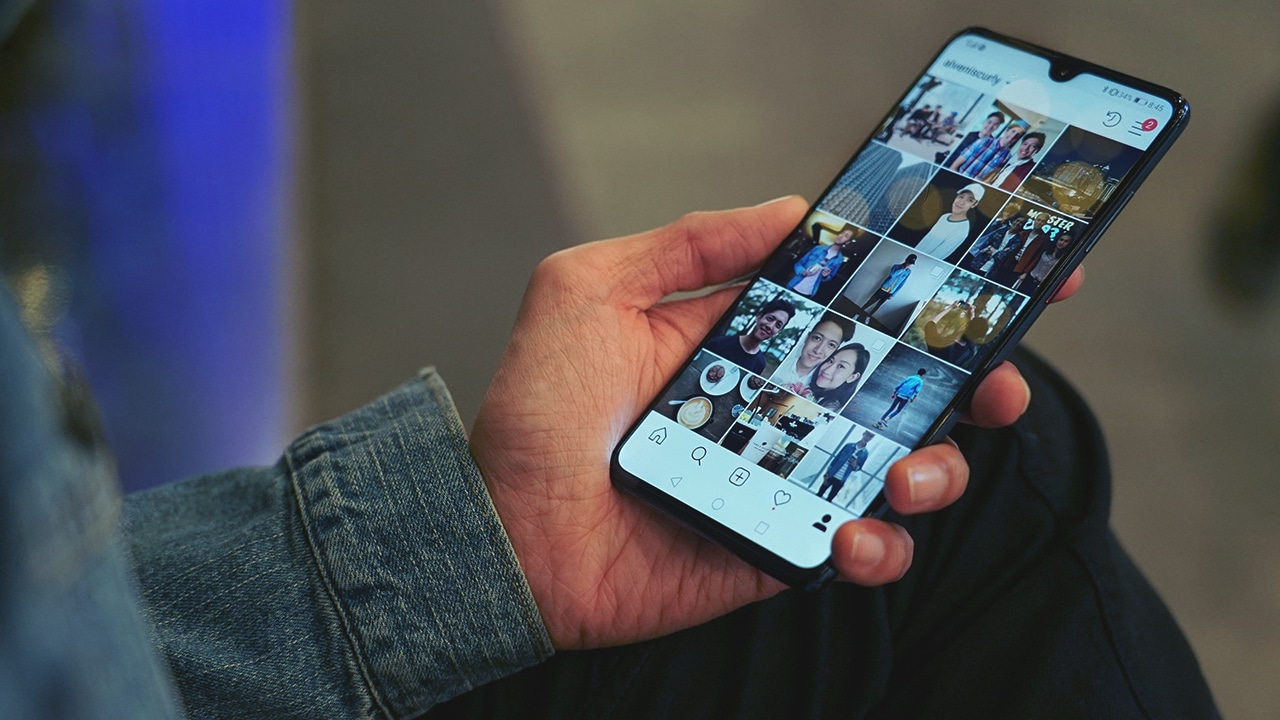
Now while I think it’s safe to say that we’ve all gotten relatively used to notches by now. It still must be said that the notch on the Mate 20 is tiny (much smaller than the notch on its Pro sibling) and easy to forget about when watching videos in full screen.
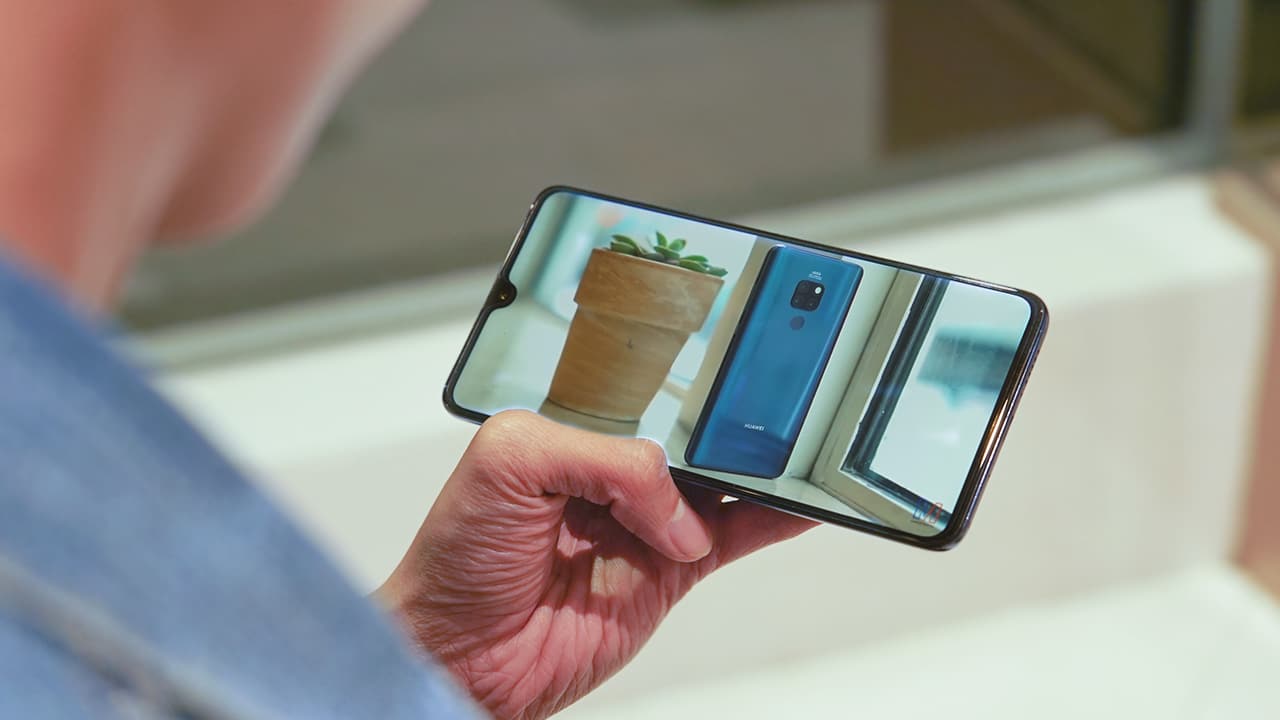
One thing I did notice in watching videos is that while the Mate 20 might have stereo speakers (from the earpiece and the bottom firing speaker), the sound comes out uneven and mostly from the speaker at the bottom. It would have been better if the sound were more balanced.
Battery for days… literally
Usually, I start my day at 8am and end at about 9pm. How has the 4000mAh battery capacity been for me? In using the phone for about two weeks, I’ve never ended my day with less than 35 percent left. It’s been such a joy not having to carry around a bulky powerbank with me!
In a day that usually includes social media, using maps for directions, watching YouTube, and Netflix, no longer do I have to tell myself to get off Instagram because I need to preserve battery.
It’s a phone that will last you a full day and then some. When you do end up needing to charge, it juices up quick — boost of about 50 percent in 30 minutes.
Typical Huawei cameras
Now, let’s talk about the cameras. There are three cameras on the back: Its main camera has 12 megapixels, the ultra-wide shooter has 16 megapixels, and the 8-megapixel telephoto camera goes up to 2x optical zoom.

To put it plainly, they’re good. And I can tell you they’re good all day, but I think it’s better if I just show you:




And of course something that Huawei has been amazing with is nighttime photography:




Plus, the addition of a wide-angle lens is great for getting more into the frame:


All these photos we’re taken with the Master AI setting on and shot completely in automatic mode.
Now, I don’t take a lot of selfies — we leave that to Isa at GadgetMatch — but if that’s your thing, the Mate 20 has a 24-megapixel selfie camera. Also, here’s a selfie of me with Jason Mraz:

Here are more selfie samples (I turned off the beauty mode for these):



Glad to see you headphone jack!
The regular Huawei Mate 20 doesn’t have the curved screen like the Pro does. It doesn’t have the in-display fingerprint scanner, either. What it does have that the Pro model doesn’t, is a headphone jack.

True story: When I was traveling around Singapore and my Bluetooth earphones died, it was a lifesaver to be able to plug in regular wired earphones so I could continue listening to music.
Is this your GadgetMatch?
This phone ticks all the boxes I needed it to. Good cameras? Check! Great battery life? Yes, sir! Is it good for watching Netflix? You betcha!
It isn’t as flashy as the Pro model, but the Mate 20 to me is meant for someone who doesn’t need any of the bells or whistles, and just wants a phone that’s going to work when you need it to.





Lifestyle
MediCard’s MedGo app can scan your face for health risks
AI-powered Face Scan previews your vitals, cardiovascular risks, and mental wellbeing in one go.

Most people know when they should be looking after their health. The harder part is acting on it.
AIA Philippines’ 2026 Rethink Healthy study found that 70% of Filipinos reject a “bahala na” attitude toward their physical health, yet 83% only act after a personal or family crisis.
MediCard, the healthcare arm of AIA Philippines, is aiming at that gap with MedGo, its upgraded digital healthcare platform.
Two features stand out for anyone interested in getting ahead of a health concern: Face Scan and the EASE mental wellbeing program.
Face Scan reads your vitals from your face
Face Scan uses AI to scan your face and pick up on the blood vessels beneath the skin, which works best with proper lighting. From there, it assesses your vitals, flags possible risks such as cardiovascular ones, and gives you a read on your mental wellbeing.
The results work as a preview of where your health might be heading, which makes the data useful even when the numbers look good.
Face Scan is a screening tool, though, and a good result is a reason to feel encouraged rather than a replacement for a regular check-up.
If a result raises questions, the feature includes a link to a teleconsult, so you can talk to a professional right after seeing your data. Face Scan is currently available for select accounts only.
EASE puts mental health support a few taps away
EASE is MediCard’s mental health and wellbeing program. It lets members quickly talk to a mental health professional, a dietitian, or a fitness coach.
It also comes with resources on mental health and wellbeing, so you can read up on your own before or after a conversation.

In photo: MediCard CEO Julian Mengual
The answer to the usual healthcare headache
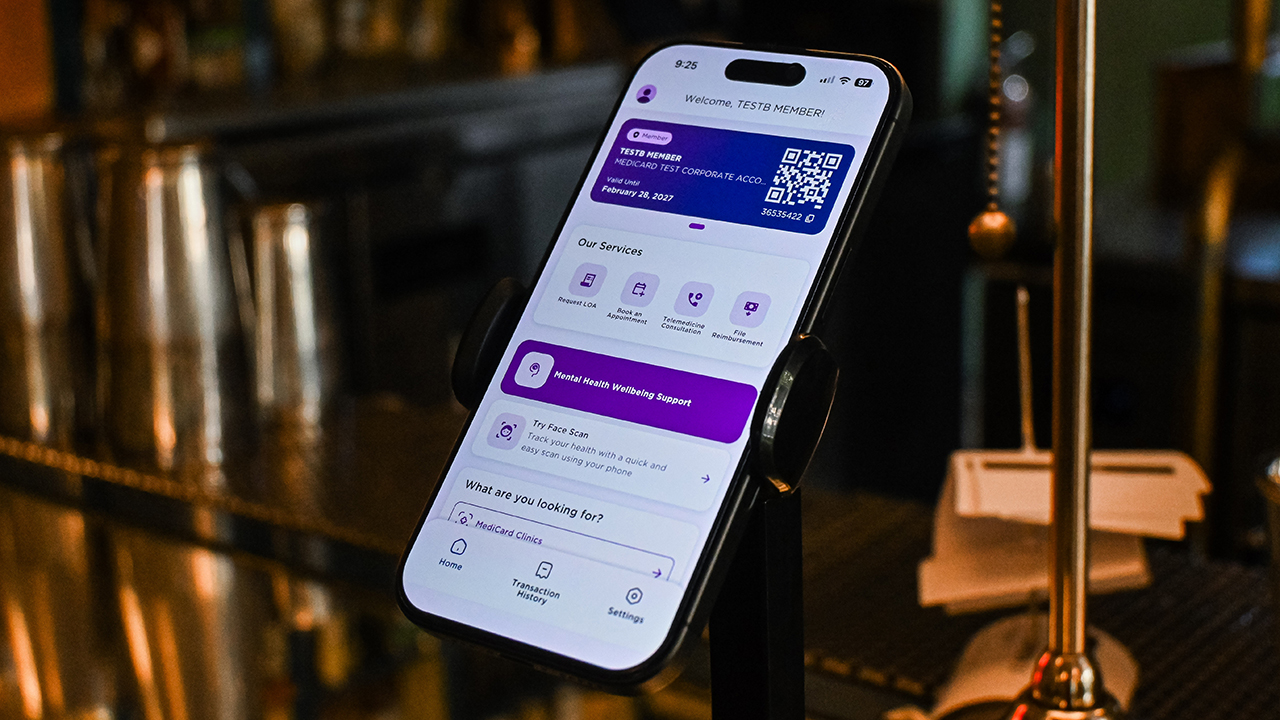
MedGo also covers the everyday tasks of being a MediCard member. You can pull up your Digital ID, check your benefits and coverage, request a Letter of Authorization (LOA), book appointments, and search for MediCard clinics, doctors, hospitals, and other accredited providers. Online consultation services are available as well.
Reimbursements follow a simpler path. Members can file a claim, upload the required documents, and follow the status of the request in the app. MediCard says this works through automated case creation and better tracking.
MediCard also says the redesign responds to common healthcare app complaints like downtime, login trouble, and slow performance.
On speed, the company says applicable automated LOA submissions now get a response in under three seconds. That figure comes from MediCard and covers only the submissions that qualify for automation.
Built around your existing doctors
MedGo works alongside the clinics, doctors, and hospitals members already use. MediCard’s physical clinics and nationwide provider network remain central to the experience, and the app is a more convenient way to reach them.
The platform was also built for easier integration with third-party partners, and MediCard says a dedicated team will keep expanding services through regular updates shaped by member feedback.
The launch is part of MediCard’s evolution since AIA Philippines acquired it in 2023.
Entertainment
Cyberpunk: Edgerunners 2 now streaming, Cyberpunk 2077 update coming
Edgerunners returns to Night City


Cyberpunk: Edgerunners 2 is now streaming on Netflix, with all 10 episodes available to watch. CD PROJEKT RED and animation studio TRIGGER have also announced a new update for Cyberpunk 2077, bringing content inspired by the anime to the game.
The Edgerunners 2 Update (Update 2.5) launches on October 22, 2026, for PC, PlayStation 5, and Xbox Series X|S. A Nintendo Switch 2 release will follow shortly.
Edgerunners returns with a new cast
Set in the world of Cyberpunk 2077, Cyberpunk: Edgerunners 2 tells a standalone story through an entirely new cast of characters. The series follows a veteran edgerunner, a young cinephile, a chrome-obsessed delinquent, and a Snake Nation netrunner as their stories explore vengeance and redemption in Night City.
Director Kai Ikarashi leads the new installment, with Kanno Ichigo serving as lead character designer. Masahiko Otsuka returns as a collaborator, while Bartosz Sztybor serves as showrunner, story writer, and producer.
Both Cyberpunk: Edgerunners and Cyberpunk: Edgerunners 2 are available exclusively on Netflix.
Cyberpunk 2077 gets a new update
CD PROJEKT RED announced the Edgerunners 2 Update alongside the anime’s premiere on October 20. The free update will introduce new items and features to Cyberpunk 2077, including content inspired by the new series.
The update launches on October 22 for PC, PlayStation 5, and Xbox Series X|S. CD PROJEKT RED has yet to announce the Nintendo Switch 2 release date beyond confirming that it will follow shortly.
The studio will reveal more details during a special episode of REDstreams on October 21. The broadcast will air on Twitch, YouTube, and Steam, with official patch notes scheduled for release on the same day.

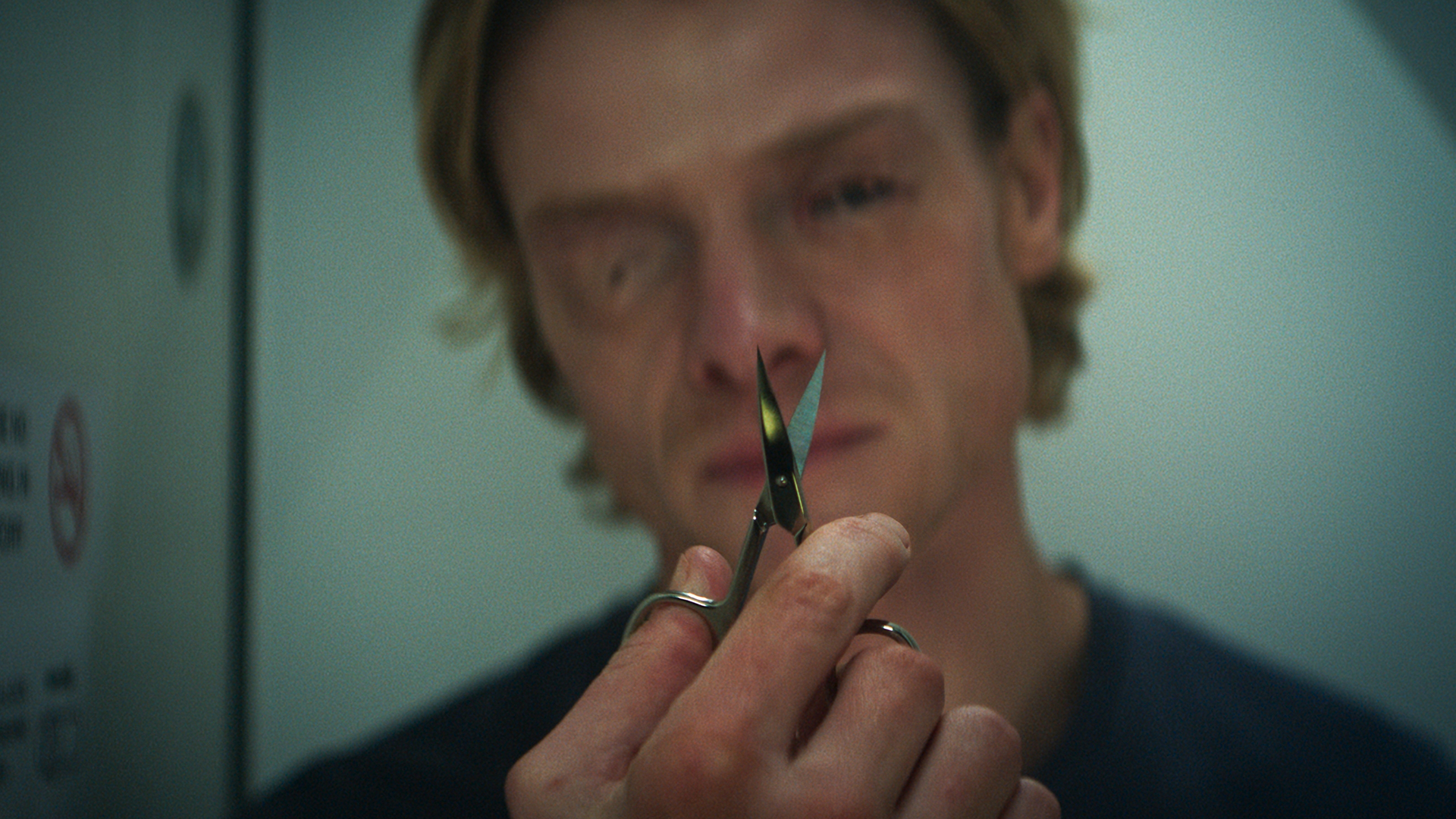
The thing about supervillain movies is that they rarely let their villain be a villain. From Venom to Kraven the Hunter, they’re contrarian dreck that reframe a mass murderer as a “misunderstood anti-hero” who’s overshadowed by a corny do-gooder. Boo hoo. Thankfully, Clayface got the memo to not do that, even if it came pretty close.
Clayface reimagines how rising actor Matt Hagen becomes one of Batman’s most (literally) monstrous enemies. Here, Matt is horribly disfigured by gangsters then abandoned by his friends. He finds hope in Dr. Caitlyn Corr’s genetic experiments, but loses his body, mind and soul as her miracle cure enables his worst impulses.
Basically, Clayface is everything Joker failed to be. It’s a sympathetic origin story for a twisted Batman villain, but it doesn’t make excuses for them. If Joker scapegoats Arthur Fleck’s madness and anarchy on the nebulous enemy that is Society the way an aimlessly rebellious teenager would, Clayface throws all the blame and consequences on Matt — and Matt alone.

I like how Matt’s story is a tragedy of his own making. He wasn’t always evil, and he really was wronged by scum. Worse, his identity is cracking, which is a bit of psychological torment that I wish the movie dwelled on more. And yet, he always had a way out. He just keeps choosing the cruelest and greediest options instead.
This is the kind of agency most supervillain movies — or any movie about a juvenile anti-hero fighting The System, really — lack, but Clayface has an abundance of. There was a moment I thought that the movie would still side with Matt despite everything he’s done, only for him to cross a line. In the end, he can only blame himself when he loses everything and everyone.
However, I was let down by Clayface’s violence. There’s blood and guts, alright, but they’re too inconsistent. For every morbidly satisfying disemboweling or close-up of a nasty scarring, there’s a moment where the movie cuts away from these too early. I lost count of how many times Clayface jumped to the next scene before really letting blades sink into flesh, or how many of Matt’s kills were done offscreen.

Minus the pivotal deaths, the kills are also not as diverse as I’d hope from a killer powered by Play-Doh and imagination. It’s just variations of stabbing and bludgeoning. My issue isn’t a lack of brutality, but that this reluctance to push it further or just show it gives the well-built tension a lackluster payoff. A movie about superpowered revenge in one of fiction’s vilest hellholes should be more depraved and creative.
To be fair, this is more the fault of the movie’s constraints, not a lack of skill or thought. Effects cost time and money that Clayface clearly didn’t have a lot of. This would also explain why Matt is limited to identity theft not by molding himself, but via clever camera work. For what it’s worth, I see and respect the smart workarounds the movie found to deliver the dread.
Still, I like Clayface. It’s the rare supervillain movie that’s self-aware and honest about its darkness. It humanizes its villain, but commits to their monstrosity while rejecting forced redemption. It’s also a grisly thriller that works on its own merits, yet complements DC Comics’ latest growing cinematic world. That said, Batman can’t arrive sooner to beat Matt’s melted face in.


HP OMEN Max 16 review: Gamer-maxxing in deep black
Peripherals deemed necessary to max this out


vivo V80 review: Good phone, tough sell
A capable travel companion


Ghost of Yōtei Complete Edition review: More of a great thing
Picking up where Atsu left off
HP OMEN Max 16 review: Gamer-maxxing in deep black

Google illegally destroys 250,000 trees for a single AI data center

FINAL FANTASY RESONANCE now available across major platforms

Bose acquires Skullcandy

Next Xbox might cost double the price of an Xbox today

TECNO CAMON Slim 5G review: Slim on size, big on surprise

TECNO CAMON Slim 5G: Price, availability in the Philippines

HONOR Magic9 Pro Max launches in China with ARRI-powered imaging

BYD says that way better EV batteries are coming next year

TECNO CAMON Slim 5G teases an ultra-slim design ahead of launch


-

 Wearables2 weeks ago
Garmin Enduro 4 promises up to 320 hours of battery life
-

 Gaming2 weeks ago
Dragon’s Dogma 2: Dark Arisen launches with new Official Pawns
-

 News1 week ago
vivo V80 debuts with ZEISS cameras
-

 Deals2 weeks ago
Score PhP 22,000 in guaranteed freebies when you pre-order the iPhone 18 Pro at Beyond the Box
-

 Philippines7 days ago
TECNO CAMON Slim 5G gets launch discounts, free MagBadge
-

 Wearables2 weeks ago
Garmin Approach S72 brings swing metrics, green reading to your wrist
-

 News7 days ago
Samsung: Galaxy Z Fold8 demand rose because of iPhone Duo
-

 Features1 week ago
I don’t want a phone that unfolds — the Galaxy Z Fold8 gets why