


It’s easy to forget that there are a total of four members in this year’s Huawei Mate lineup. We have the Mate 20, Mate 20 Pro, Porsche Edition Huawei Mate 20 RS, and finally, the Mate 20 X.
While we more or less have a grasp of what the first three can do based on our reviews, the last one — unassumingly considered the gaming choice of the bunch — is definitely the most peculiar.
For one, it’s priced between the Mate 20 and Mate 20 Pro, while having the notch design and audio port of the former and class-leading rear cameras of the latter. At the same time, the Mate 20 X has the biggest screen and battery of the series, pegged at 7.2 inches and 5000mAh, respectively.
It’s massive in every sense of the word, and is practically a tablet compared to every other phone in the market. To make it stand out even more, Huawei equipped it with the world’s first liquid multi-dimensional cooling system that has a vapor chamber and graphene film in a smartphone, as well as powerful Dolby Atmos speakers.
So, how exactly is this positioned below the Mate 20 Pro? Well, it doesn’t have the sought-after under-display fingerprint scanner — instead going for a rear-mounted placement — and the OLED panel’s edges aren’t curved. Plus, the Mate 20 X settles for a slower 22.5W SuperCharge adapter and can’t do wireless reverse charging.

Mate 20 X (left) and Mate 20 Pro (right)
It’s confusing, but at the same time exciting. This is Huawei’s first high-end gaming smartphone, even though it doesn’t really look like one. The ROG Phone and Razer Phone 2 share that crown. Instead, the Mate 20 X is simply big… and I mean really big.
I can’t overstate enough how massive this is in my hand. I’ve used huge phones before like the Lenovo Phab series and whatever Galaxy Note I had at the time, but nothing matches the sheer mass this adds to my young wrists. It’s hefty too at 232 grams or about 50 grams more than the smaller Mate 20 phones.


This is, however, offset by the excellent multimedia experience. Not only are these stereo speakers the loudest I’ve ever listened to on a smartphone — even beating the power of the Razer Phone 2’s output — the Mate 20 X comes with an audio port on top, something the Mate 20 Pro misses out on completely.
It also helps that the notch is much smaller. It’s so negligible on this large panel that I don’t really notice it while watching videos or playing games. Again, this is something the Mate 20 Pro and its obtrusive notch can’t offer.

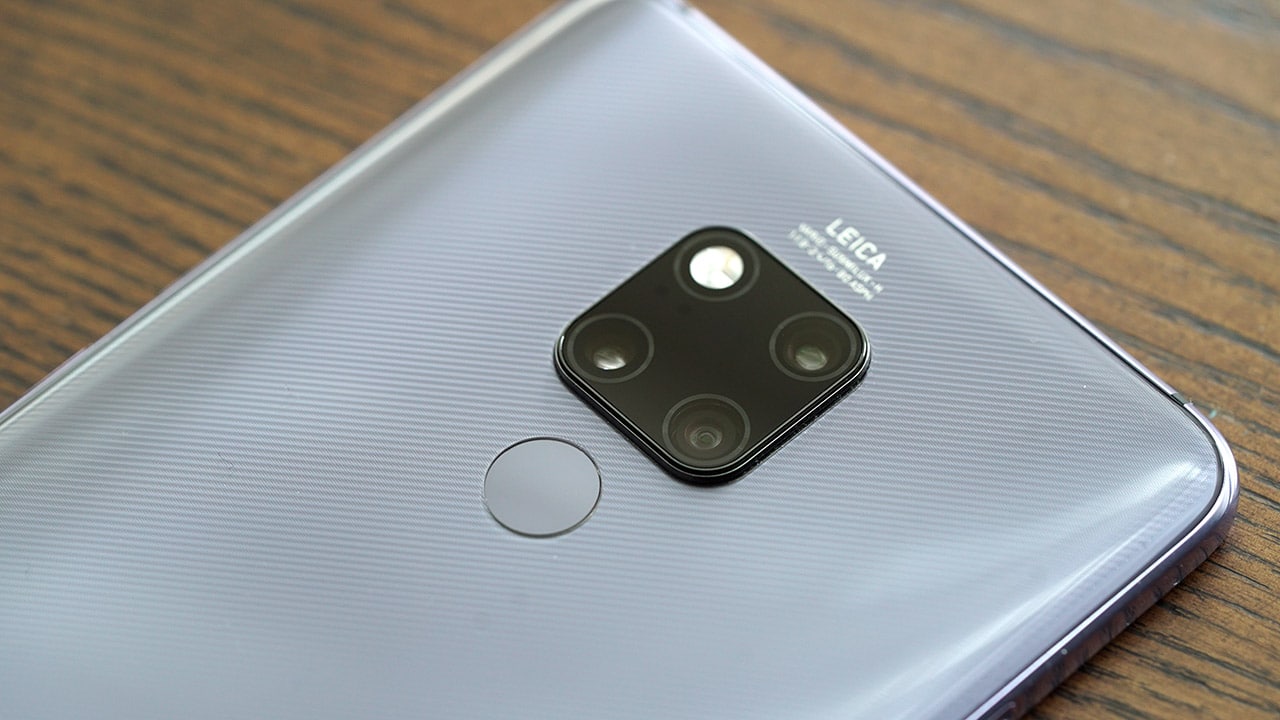
My only complaint pertains to the screen’s pixel density. While I normally prefer the 1080p standard for its sweet spot between sharpness and energy consumption, certain games don’t look that good when pixel peaking on such a wide display — more on this later.
Helping users grip the phone is a textured back similar to the regular Mate 20’s. The Mate 20 X comes in only Midnight Blue and Phantom Silver, the latter being exclusive to this specific model. Fortunately, a jelly case is part of the package for more grip at the expense of added bulk.

With all these details and differences out of the way, we go back to the question our title asks: Is this an underrated gaming phone? The short answer is yes. Longer answer: It depends on which games you play and how long you can handle such a large handset.
I played numerous games on the Mate 20 X, and the experience varied for each one, ranging from excellent to okay. Each title exposed the strengths and weaknesses of the phone’s gaming prowess.

Asphalt 9 is a perfect example of how ideal the Mate 20 X is for gaming. The 7.2-inch OLED makes each track feel so immersive, and the stereo speakers can cover an entire room when set to maximum volume, just as long as you don’t cover them accidentally with your palms. Since the phone is so wide in landscape orientation, it’s easier to press virtual buttons that are farther apart.

One of the challenges of Ragnarok M: Eternal Love is finding a phone that won’t skip frames while in crowded areas with lots of action, and making sure it won’t overheat at the same time. The Mate 20 X does this better than the Razer Phone 2 thanks to its cooling system and more efficient Kirin 980 chipset. I also liked how this Huawei phone got warm only in one small portion of the rear, to the left of the camera module.
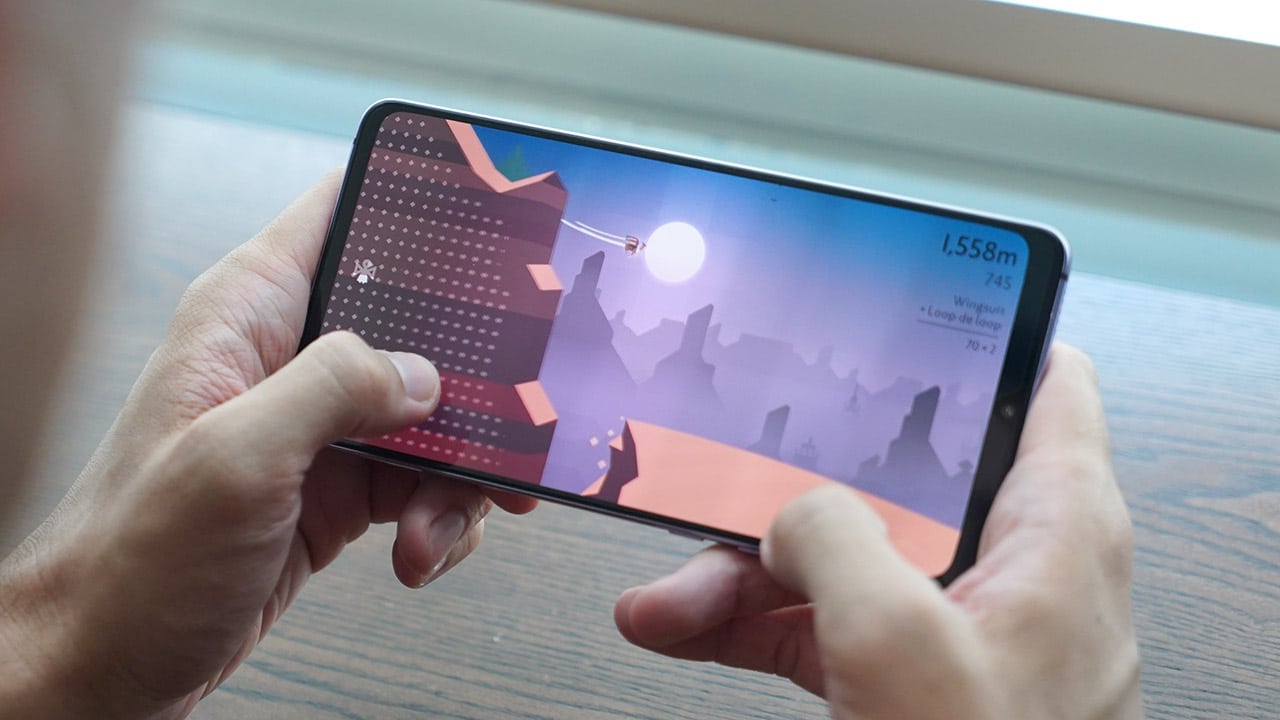
Alto’s Odyssey is nowhere near as resource-intensive as the previous two games, but it definitely demands a strong audio-visual phone to look good. However, one thing that prevents the Mate 20 X from offering the best-possible experience is its lack of a faster screen refresh rate. Unlike the ROG and Razer Phones, Huawei settled for 60Hz here, which is pedestrian for gamer standards. It’s apparent in games like Alto’s Odyssey, which benefit greatly from refresh rates of 90Hz or above.

Here’s another game that would’ve benefited from a faster refresh rate, as well as greater pixel density. Because the display is so large and there are only 2244 x 1080 pixels, I could see lots of jagged edges on Pokémon Go. You could also blame the developer for not optimizing it on larger screens, but this is something the Mate 20 X should’ve anticipated, as well.

Another minor quibble happens while playing in vertical orientation. When doing so, I often cover the speaker on the bottom with my pinkie finger, as shown above. If I avoid placing any part of my hand underneath, I then have a tough time keeping the phone stable for games like Dragon Ball Legends, which require lots of tapping action.
As for battery life — a vital factor for any situation — the Mate 20 X lasts like it’s made out of batteries. The 5000mAh capacity is plenty and goes for over a day even with lots of video watching and gaming. I could play ten hours straight on this thing and it’ll still have over 20 percent left to call my mom and send that last Slack message of the day.
Does it take forever to charge, though? Not at all. Despite having a slower 22.5W SuperCharge adapter compared to the Pro’s 40W charger, I could still take the Mate 20 X from zero to full in one hour and 50 minutes, with the first 80 percent happening in the first hour alone. It’s just that last 20 percent that takes an additional 50 minutes.

From here on, everything else is pretty much like the Mate 20 and its Pro variant, from the processing power of the brand-new Kirin 980 chip to the class-leading cameras. You can read all about them in our dedicated Mate 20 and Mate 20 Pro reviews.
Here are some photos I took in between my gaming sessions. As you can see, they’re easily on the level of the more expensive Mate 20 Pro:




Is this your GadgetMatch?
As great as the Mate 20 X is in multiple aspects, its sheer size is enough of a deal-breaker to deter potential customers. I have relatively large hands but I literally can’t fully grasp this smartphone. Bigger isn’t always better.
However, if you must have the closest thing to a tablet that can handle any game with ease and kinda fit in your pocket, it doesn’t get much better than this. The loud speakers alone are worth the effort of carrying this beast around.
At the same time, the Mate 20 X squeezes itself into a tight spot. At SG$ 1,148, you may be better off getting the cheaper Mate 20 for its more pocketable dimensions; you could also add a little more for the curvier goodness of the Mate 20 Pro along with its faster charging and more convenient under-display fingerprint scanner.
Comparing it to other gamer-centric smartphones, the Mate 20 X has the clear advantage of having the best cameras of them all. Nothing else comes close, making this the best all-around device for both gaming and photography — a rare feat in the current market.
Editor’s note: Not mentioned in this review is Huawei’s newly released M-Pen. It turns this phone into a Galaxy Note competitor, although you’d have to carry the stylus with you since the Mate 20 X doesn’t have a dedicated slot for it. We didn’t get to test this, however.








The trifecta is complete. Almost a year after announcing their new hardware, Valve has finally unveiled the price tag of the Steam Frame, complementing the Steam Machine and Steam Controller revealed a few months ago.
Whereas the Steam Machine is a console of its own, the Steam Frame is a traditional VR headset with a pair of controllers for both hands. Unfortunately, despite being in a different segment, the headset is not immune to the rising prices of technology. The Steam Frame will start at US$ 1,059 for a 256GB model and can go up to US$ 1,299 for the 1TB model. On the plus side, each box will come Half-Life: Alyx packaged along with the headset.
Here’s a more detailed rundown of what you’re getting. The Steam Frame will ship with the Snapdragon 8 Gen 3 chipset, paired with 16GB of RAM. Each eye comes with a 2160 x 2160 LCD screen, putting out images at up t0 a 144Hz experimental refresh rate. As mentioned above, the headset will start with 256GB of storage but can go up to 2TB. It will come packaged with SteamOS 3 and a rechargeable 21.6Wh battery.
This might be a hard buy for some. The industry currently has more affordable options, for one. Also, virtual reality isn’t the most thriving segment of gaming today.
If you’re still decided on buying one, however, Valve is using its lottery system. Interested customers can sign up from now until September 17. The company will then randomize the purchasing order. Those who draw the first ones in the lottery can get a purchase email as soon as September 18. Meanwhile, anyone who registers after September 17 will automatically be put at the back of the queue.
SEE ALSO: Valve announces its own console called the Steam Machine
Gaming
BlizzCon 2026 announces World of Warcraft: Forever and Diablo V
StarCraft, Overwatch, Hearthstone, and more also get news


Blizzard Entertainment kicked off BlizzCon 2026 with a packed Opening Ceremony featuring new games, major expansions, updates, and other announcements across its biggest franchises.
Blizzard Entertainment President Johanna Faries opened the event at the Anaheim Convention Center, celebrating the community behind the company’s games and the teams that bring its worlds to life.
World of Warcraft: Forever and Diablo V
The biggest announcement was World of Warcraft: Forever, a new World of Warcraft experience launching November 5 AEDT, with its beta beginning September 18 AEST. The new experience will feature three zones, more than 1,000 quests, nine dungeons, two raids, and a new Skyborne race.
Blizzard also officially announced Diablo V, marking the next era of the franchise. The game is set to launch in North America in Spring 2029, with Sanctuary having fallen and Diablo having won.
StarCraft is also returning with a new story-driven, open-world shooter. The game is currently planned for a Spring 2030 release in North America.
Beyond games, Blizzard revealed that an animated series set in the Diablo universe is in development with Netflix. The company says this is only the beginning of its plans to expand its universes beyond gaming.
For Warcraft III Reforged, the new Forsaken Kingdom campaign is available today. It marks the Warcraft RTS series’ first new storyline in more than 23 years and explores the fall of Lordaeron and the origins of the Undercity. The accompanying 3.0 update also brings graphical improvements and a revamped World Editor.
Heroes of the Storm is adding Xal’atath as its newest Hero. She arrives in the Nexus on September 29 AEST, with her PTR release scheduled for September 15 AEST.
Existing games updates
Meanwhile, Diablo IV is preparing for its next major content drop. Season of Hell’s Legacy begins September 16 AEST and celebrates the franchise’s 30-year history with the return of the Prime Evils and Deckard Cain, alongside themed rewards and gear.
The legendary Amazon class will also arrive in the first half of 2027 as part of Diablo IV’s first class pack. The Diablo IV: Age of Hatred Collection is additionally coming to Nintendo Switch 2 on September 16 AEST with cross-platform play and cross-progression.
For World of Warcraft, Blizzard teased the next major update for Midnight. Eclipse (12.2) will see Xal’atath move closer to her goal of claiming Azeroth’s Worldsoul. Blizzard also offered another look at The Last Titan, the next expansion in the Worldsoul Saga and a major culmination of more than two decades of Warcraft storytelling. More information is coming early next year.
Overwatch is getting a major update with Season 5. The season introduces new Support Hero Doctrine, reworks for Sombra and Roadhog, and the new Watchpoint: Grimsvötn map. It will also conclude The Reign of Talon, Overwatch’s first year-long narrative arc.
LE SSERAFIM & YOASABI
BlizzCon also featured performances from YOASOBI and LE SSERAFIM. YOASOBI will perform during the first-ever esports halftime show at BlizzCon, while LE SSERAFIM will return to the Main Stage to close the weekend. A new LE SSERAFIM in-game collaboration is available now, with another Overwatch Spotlight scheduled for February 2027.
Finally, Hearthstone is getting its first new class in more than six years. The Monk arrives in 2027, while the upcoming Reign of the Black Empire expansion takes players back to the earliest age of Azeroth. It introduces the Assemble keyword, which combines two cards into a new one. Battlegrounds is also adding Aberrations as a new minion type.
BlizzCon 2026 is now underway, with Blizzard promising more announcements and details throughout the weekend.
Gaming
Just Dance: Decades of Hits to launch on October 13
All-new Just Dance experience that brings every generation together

Just Dance: Decades of Hits will launch on modern consoles on October 13, Ubisoft has announced.
This will offer fans of the franchise a new experience across eras of music. The game will be available on PlayStation5 , Xbox Series X|S, and Nintendo Switch on the launch date.
Nintendo Switch 2 users, meanwhile, will be able to enjoy the title by November 10, 2026.
Just Dance: Decades of Hits brings together every generation to one dance floor with 25 iconic songs across six different decades:
- Mamma Mia by ABBA
- Uptown Girl by Billy Joel
- It’s Tricky by Run-DMC
- No Scrubs by TLC
- Wannabe by Spice Girls
- Bye Bye Bye by *NSYNC
- Feel Good Inc. by Gorillaz
- Turn Down for What by DJ Snake and Lil Jon
- Danza Kuduro by Don Omar feat. Lucenzo
- Manchild by Sabrina Carpenter
- NUEVAYoL by Bad Bunny
- And more!

Bringing every generation together
Songs, visuals, and an all-new Adventure Mode are all designed to immerse players in the spirit that made each decade unforgettable.
From the funky ’70s disco floors and the electrifying ’80s rock scene to the glossy 2000s pop and beyond, travel through time and share the joy of rediscovering iconic moments with friends and family.
In Adventure Mode, follow Lyra, Dr. Gigavolt’s daughter, in a playful journey through time to rescue her father.
Explore the decades through six themed worlds, enjoy fun mini activities, and unlock exclusive rewards.

For unpredictable, chaotic fun where the rules change every round, players can jump into Party Mode. Or they can get moving with the Workout Mode, which tracks calories burned with each dance.
Up to six players can dance locally in the game, with no extra accessories needed.
In addition those who own Just Dance: Decades of Hits as well as Just Dance 2023-2026 editions will be able access all their songs in one place on the same console without having to switch games or separate menus.
This also includes songs from purchased Music Packs and songs available through an active Just Dance+ subscription.


DJI Lito X1 review: Is this the best lightweight drone for creators?
Making a strong case as a travel companion and a capable B-cam!


REDMI Note 17 Pro Max review: A new breed born from AI greed
Welcome to the new normal


Marvel’s Wolverine review: When the claws come out
A brutal, cinematic superhero adventure

vivo introduces OriginOS 7 with smarter multitasking and AI features

vivo X500 Series launches with major imaging upgrades

Manila turns up the volume at COVE

Epson Lifestudio Grand Plus EH-LS970B with 4K projection, more launches

Jackery Explorer 300D: Power and portability in one

realme 16T 5G with 8000mAh battery, IP69 Pro rating launches in PH

HUAWEI Pura X View is 2026’s first WIDE slab-type smartphone

REDMI reveals the refreshed Note 17 and Note 17 Pro series

REDMI Note 17 Series: Price, availability in Singapore

The CAMON Slim 5G is TECNO’s latest ultra-slim smartphone


-

 News2 weeks ago
iPhone 18 Pro series: Price, availability in the Philippines
-

 Singapore2 weeks ago
iPhone 18 Pro series: Price, availability in Singapore
-

 News2 weeks ago
iPhone Duo: Price, availability in the Philippines
-

 News2 weeks ago
vivo introduces refurbished versions of X300 FE, X300 Ultra for less
-

 News2 weeks ago
iPhone Duo: Price, availability in Singapore
-

 Accessories2 weeks ago
CASETiFY upgrades iPhone 18 cases, teases iPhone Duo lineup
-

 News2 weeks ago
HONOR teases Magic9 Pro Max at Venice
-

 Editors' Choice2 weeks ago
GadgetMatch Awards: Best of IFA 2026