
Features
OPPO, Vivo make noise at MWC Shanghai: Weekend Rewind
They continue to innovate


Here are the top stories on GadgetMatch this week.
1. OPPO’s Under-Screen Camera tech is promising
After being teased on Twitter, we finally got our first glimpse of OPPO’s under-display camera tech at MWC Shanghai.
They’re calling it the Under-Screen Camera or USC. The prototype at the venue was barely a phone but it showcased the future of what full-screen devices can be.
OPPO pulled this off by using a highly transparent material on top of where the camera module is placed. The camera module itself had to have a larger aperture, a bigger sensor, and greater pixel size.
They then paired that hardware with a set of algorithms in the service of providing images that they say is “on par with mainstream devices.”
OPPO didn’t say when USC will hit a retail unit but promised that it will come in the near future.
Vivo Super FlashCharge 120W | GadgetMatch
2. Vivo makes strides in fast-charging, 5G, and AR
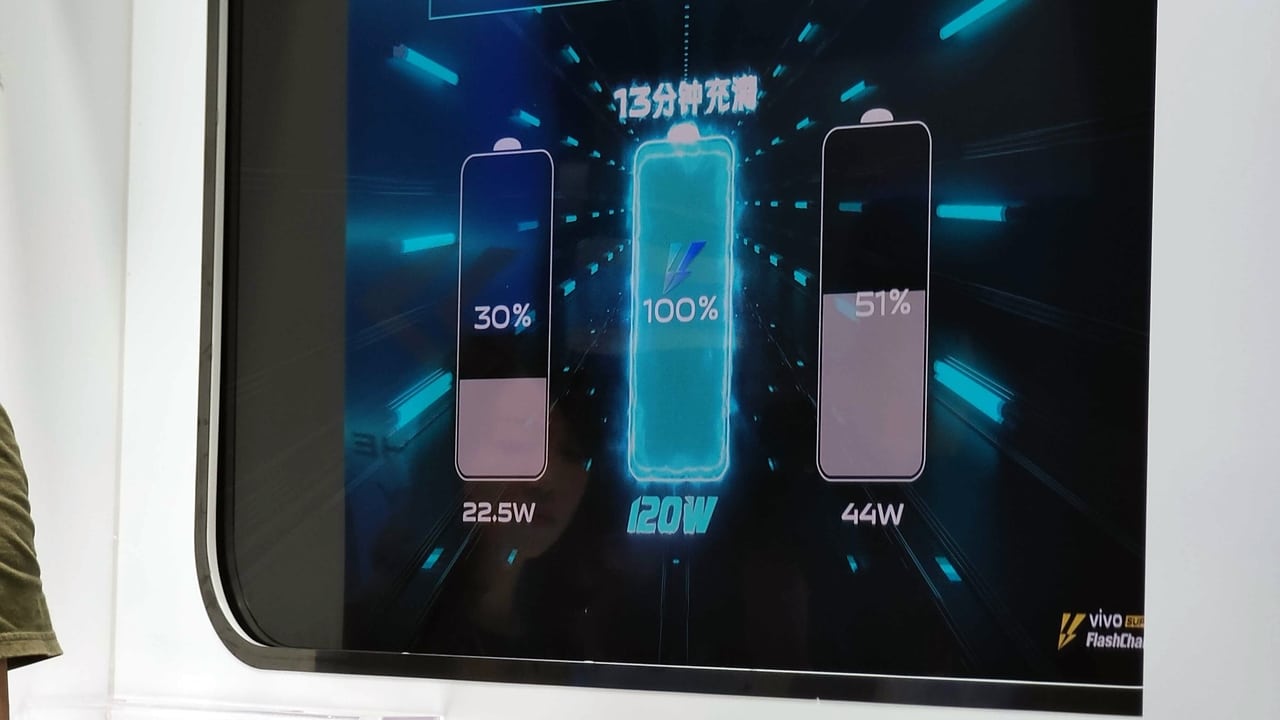
Vivo may have solved everyone’s phone-charging woes with their latest tech — the Super FlashCharge 120W.
The tech promises to fully charge a phone with a 4000 mAh battery in just 13 minutes. That’s insanely fast.
By comparison, most fast charging technologies that are available in the market today deliver around 10 percent charge in five minutes, while a 100 percent-charged battery will take about an hour.
The company also showcased the various tech they have around 5G which include cloud gaming, 5G screen mirroring, instant file transfers, and many others.
They also showcased an AR device. Aside from being able to play games, it also has this nifty feature where it can tell you a product’s details by looking at it. They showed it off in a store-like setting and it makes you feel exactly like Iron Man with how the info was displayed on the AR device.

3. Huawei launches Mate 20 X 5G
Despite facing a ban by the US government, Huawei continues to go strong in other markets and now they’ve launched their first commercial 5G smartphone — the Huawei Mate 20 X 5G.
The Mate 20 X was launched alongside the rest of the Mate 20 series and was initially billed as a gaming smartphone with its massive display and huge battery capacity (4200mAh).
It’s now equipped with the world’s first 7nm 5G multi-mode chipset Balong 5000. This allows the user to experience high-speed connections no matter the infrastructure maturity of their mobile network operator.
4. Bill Gates admits greatest mistake is Microsoft losing to Android
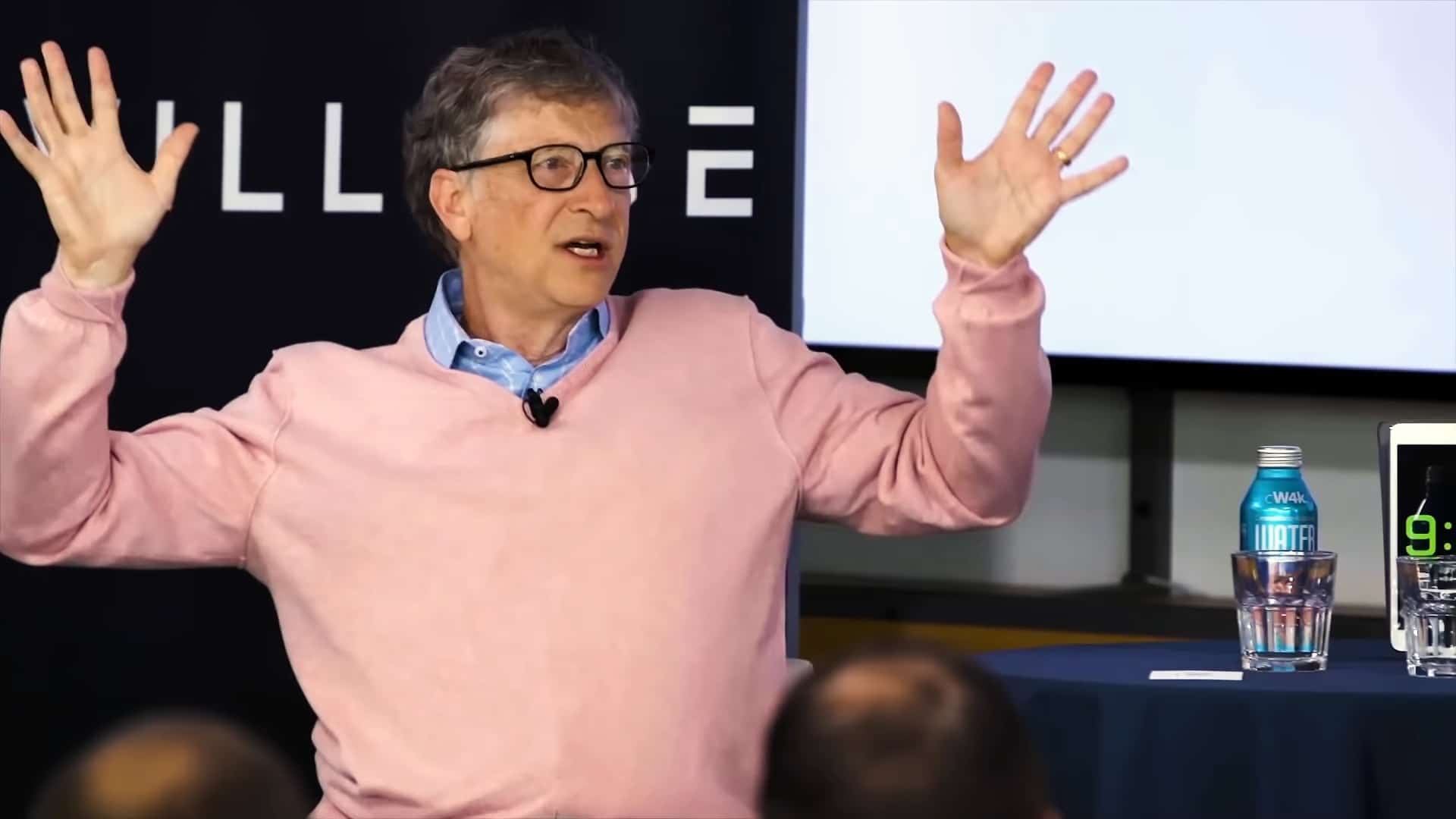
In a talk with venture capital company Village Global, Bill Gates owned up to not being able to take Microsoft to mobile the way Google did with Android.
Gates said “the greatest mistake ever is whatever mismanagement I engaged in that caused Microsoft not to be what Android is. That was a natural thing for Microsoft to win.”
This comes as a surprise as many credit former CEO Steve Ballmer as the one who didn’t see the future in touchscreen devices. Microsoft eventually launched Windows Mobile but it didn’t have the app support that iOS and Android enjoyed and thus ultimately failed.

5. Harry Potter: Wizards Unite makes your wizarding dreams come true
Niantic — the same company that gave us Pokemon Go — is back it. This time though, they’re asking us to put down our pokeballs and pick-up wands!
Harry Potter: Wizards Unite is also a location-based game that uses augmented reality. In the game you get to choose a profession, cast spells, and anything else a wizard does.
If you’re not sure where to start, we put together a beginner’s guide so you know how to properly use your wand.
Weekend Rewind is our roundup of top news and features you might have missed for the week. We know the world of technology can be overwhelming and not everyone has the time to get up to speed with everything — and that includes us. So sit back, relax, and enjoy the rewind.



Features
Spotlight: HUAWEI WATCH GT Runner 2 Racing Legend Edition
A marathon coaching system wrapped in the lightest titanium running smartwatch.

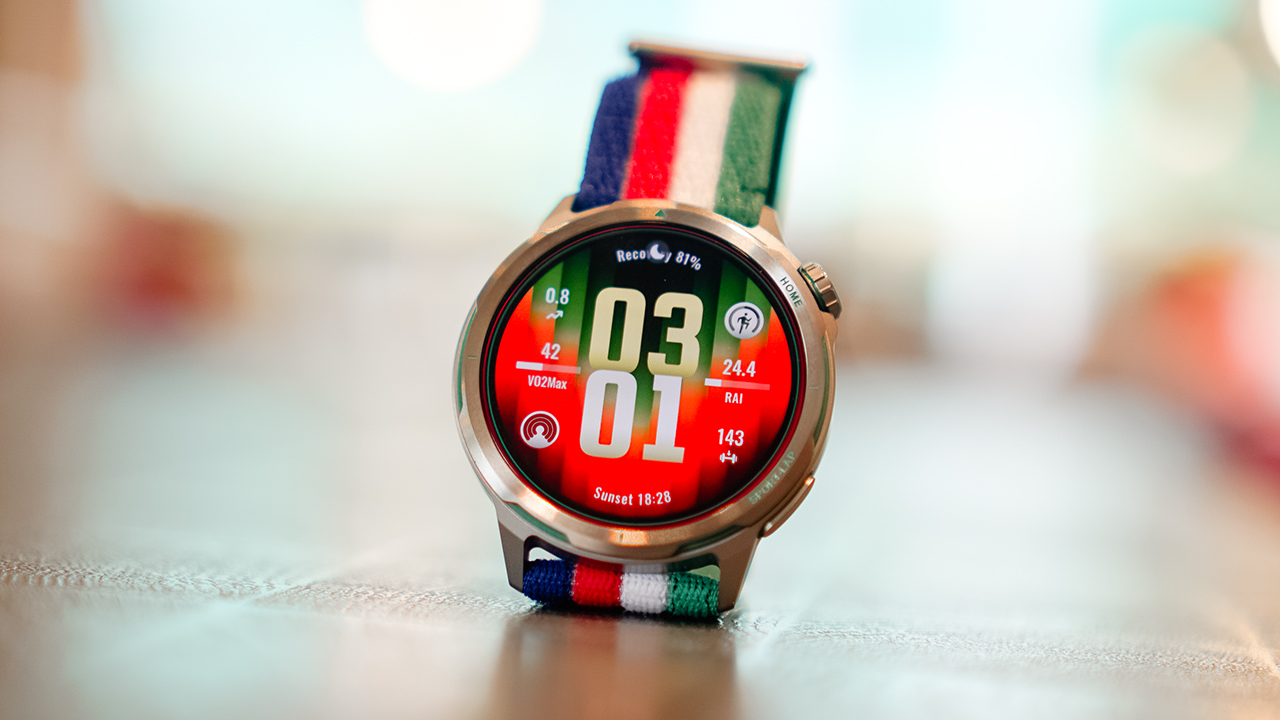
@gadgetmatchEliud Kipchoge, the world’s greatest marathon runner, helped design this watch. The HUAWEI WATCH GT Runner 2 Racing Legend Edition is the lightest titanium smartwatch built for runners, featuring the most accurate GPS in its class. It packs an AI-powered marathon coaching system alongside comprehensive health and fitness tracking built right into your wrist. #HUAWEIWATCHGTRunner2RacingLegendEdition HUAWEI Online Store – https://tinyurl.com/479ee4zk Shopee – https://tinyurl.com/yex4dvp9 Lazada – https://tinyurl.com/yu47bktt TikTok – https://tinyurl.com/yxsjsyhw♬ original sound – GadgetMatch
Eliud Kipchoge ran a marathon in under two hours. That’s not a marketing line. It’s one of the most significant feats in the history of human endurance.
So when Huawei says the HUAWEI WATCH GT Runner 2 Racing Legend Edition was designed with his input, that detail deserves more than a passing mention. It shapes what this watch actually is, and more importantly, what it’s trying to do.
The GT Runner 2 isn’t a smartwatch that happens to track runs. It’s a running tool built from the ground up, wrapped in titanium, and finished in a colorway that carries Kipchoge’s energy in its gradient and clean lines.
Lightest titanium watch
The first thing you notice when you put the GT Runner 2 on is how little you notice it.
At 43.5 grams for the watch body, it’s Huawei’s lightest metal running watch to date. For reference, that’s roughly the weight of a small packet of sugar.
On paper that sounds like a marketing metric. On a long run, it’s the kind of thing you actually feel — or more accurately, the kind of thing you stop feeling, which is the point.
The case is aerospace-grade titanium alloy, the same material used in aircraft construction. It’s strong without adding bulk, and at 10.7mm thick, it slides under a long sleeve without a second thought.
The display is a 1.43-inch AMOLED panel with 3,000 nits of peak brightness, enough to read clearly under direct sunlight mid-run, which is where it needs to perform.
The Racing Legend Edition colorway is the visual anchor of the whole package. It doesn’t read as a sports watch in the traditional chunky sense.
The strap situation is thoughtful, too. The in-box AirDry woven strap is designed to breathe.
There’s also a Fluororubber quick-release strap included for race days when you want something more locked in against your wrist.
Accurate GPS
This is the centerpiece of the GT Runner 2, and Huawei has invested the most engineering effort here.
To understand why the GPS on this watch is different, you need to understand a basic problem with how most GPS watches work.
Satellites broadcast signals in a circular, spiral pattern. Most smartwatches are built to receive signals linearly, meaning they’re only catching part of what’s being sent. The result is data loss, and data loss means inaccurate tracking.
The GT Runner 2 addresses this at the hardware level with what Huawei calls a 3D Floating Antenna Architecture. The titanium bezel and metal middle frame of the watch itself function as external receivers, which expands the antenna surface area significantly.
More of the watch is actively listening for satellite signals, which means it captures more of those spiral broadcasts. Huawei positions this as a 50% improvement in antenna performance.
Then there’s the software layer, which is arguably more interesting for anyone running in an urban environment.
Anyone who’s tracked a city run knows the problem: you go under an overpass, cut through a tunnel, or run between towers, and your GPS trace goes straight. The watch gives up and draws a line where your route should be.
The GT Runner 2 has an AI system — Huawei calls it the XDR Inertial Navigation AI Algorithm — that fills that gap intelligently.
It learns your movement patterns: your stride length, your arm swing, your pace. When satellite signal drops out, it uses that accumulated knowledge to estimate your route accurately. When the signal returns, it stitches the two together seamlessly.
Marathon mode
The Marathon Mode on the GT Runner 2 was co-developed with Eliud Kipchoge’s team. That partnership matters because it means the feature set was shaped by people who actually race at the highest level, not just engineers working from data.
The system covers the full race cycle. Before your event, the watch builds you a personalized training plan and tracks your lactate threshold in real time, the point at which your body starts accumulating fatigue faster than it can clear it.
Knowing where that threshold sits is how serious runners train in the right zones and avoid hitting the wall during a race. The GT Runner 2 brings that metric to your wrist without requiring a lab visit or a coach.
During a race, the pace guidance isn’t a static target you set and follow. It adjusts in real time based on how you’re actually performing. The watch also sends smart refueling alerts — not based on a generic timer, but on your personal health data and international nutrition guidelines. So when it tells you to eat or drink, it’s working from your numbers, not a one-size-fits-all schedule.
After the race, it gives you dynamic recovery guidance and exports your full session automatically to Strava and Komoot.
Health tracking that actually goes beyond the basics
The GT Runner 2 tracks your health around the clock, and a few of its features stand apart from what most smartwatches offer.
Heart rate accuracy is rated at 98%. For a wrist-worn device, that’s a serious number. The watch achieves this through Huawei’s TruSense system, which uses an upgraded NPU and advanced algorithms to pull more precise readings from the sensor.
The ECG monitoring is CE-certified, which means it meets the regulatory standard for detecting early signs of irregular heart rhythms.
More importantly, the GT Runner 2 does this in the background — passively, while you’re awake or asleep — without requiring you to manually activate a check.
Sleep tracking includes breathing awareness to flag potential signs of sleep apnea.
HRV — heart rate variability, one of the most reliable indicators of how recovered your body actually is — gets tracked across 24 hours.
There’s also a stress and emotional wellbeing tracker that categorizes your state in real time. When you’re deep in a training block and everything feels harder than it should, this is the kind of data that tells you something concrete rather than just confirming that you’re tired.
Battery life that doesn’t ask you to compromise
Running watches live or die by their battery, and the GT Runner 2 doesn’t disappoint here.
Continuous GPS tracking lasts 32 hours. To put that in running terms, that’s enough to cover five to six full marathons without stopping to charge. Enable Trail Run mode and that extends to 35 hours. Under normal daily use, you’re looking at up to 14 days on a single charge. When it does need power, it charges wirelessly.
Storage comes in at 64GB, which holds thousands of offline songs and heavy map data simultaneously. You can leave your phone behind on a long run and still have music and navigation on your wrist. It works with both Android and iOS, and syncs automatically to Strava and Komoot after every session.
For users in the Philippines, there’s one more practical addition worth calling out: GCash Watch Pay. You can pay at any GCash QR terminal directly from your wrist. For anyone who stops mid-run to refuel, this removes the friction of digging through a bag or pocket to complete a transaction.
Is the HUAWEI WATCH GT Runner 2 Racing Legend Edition your GadgetMatch?
The HUAWEI WATCH GT Runner 2 Racing Legend Edition was built around one clear premise: give runners access to the kind of data and guidance that previously lived inside expensive coaching programs and professional setups, and put it on a wrist that doesn’t feel like it’s carrying anything.
The titanium build, the GPS architecture, the Marathon Mode co-developed with the world’s greatest marathon runner — none of these are incidental features. They’re the point. And the way the watch surfaces all of that information keeps it accessible.
Every purchase comes with a complimentary three-month HUAWEI Health+ membership, which unlocks professional coaching videos, custom sleep music, and personalized nutrition and training plans.
The HUAWEI WATCH GT Runner 2 is available at HUAWEI Experience Stores nationwide, the HUAWEI Online Store, and Huawei’s official stores on Shopee, Lazada, and TikTok Shop.
Purchases made from June 30 onwards come with an exclusive bundle worth up to PhP 11,384 — including a free fluoroelastomer strap, a free pair of HUAWEI FreeArc earphones (on a first-come, first-served basis), the three-month Health+ membership, and a two-year warranty with accidental damage protection.
There’s also a PhP 2,000 trade-in token for buyers coming from an older device.
This feature is a collaboration between GadgetMatch and Huawei Philippines.
Explainers
Everyone’s angry at PlayStation’s new no-disc policy, and this is why
It’s a tragedy for nostalgia, ownership, and preservation.

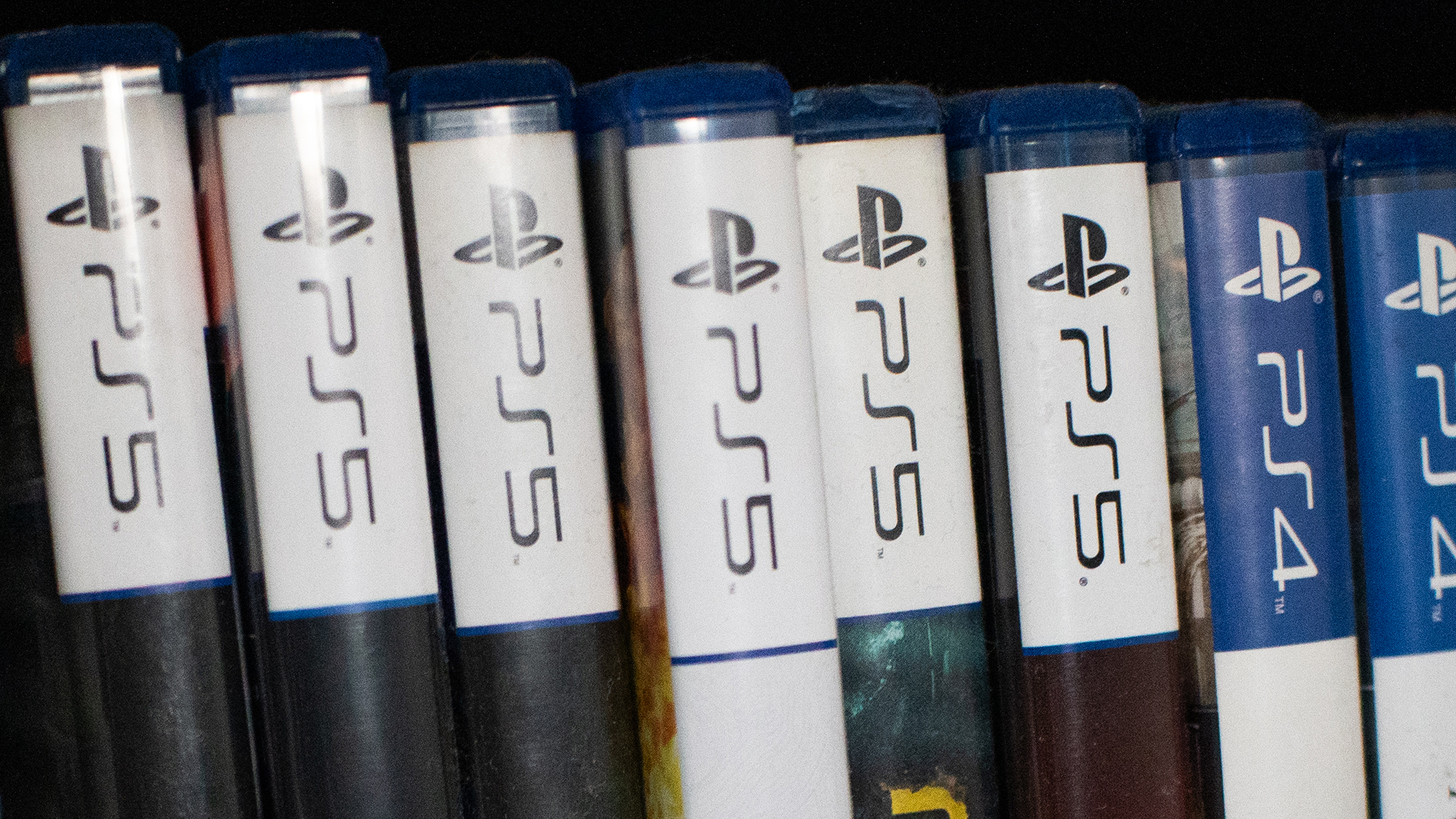
Check in with your gamer friends today. Today, a lot of gamers are up in arms over Sony’s decision to kill the physical game disc starting in 2028. But, if you’re a digital-only gamer or just not a gamer yourself, you might not understand the anger. If you want to understand the ire or just want to relate with your gamer friends, here’s a primer for you.
Ending the era of the physical media
Last year, Nintendo launched the Switch 2. Though the console still has a slot for physical cartridges, the Switch 2 also introduced the Virtual Game Card as a way to digitize your library of games.
Of course, the feature wasn’t positioned as a way to eliminate physical cartridges. In fact, Nintendo just wanted to add the flexibility of physical cartridges to the digital world. In the end, the feature strangely coincided with less cartridges. For example, Pokémon Pokopia, one of the most popular games this year, does not come with a cartridge even if you buy a “physical” copy in a brick-and-mortar store. It was a portent of things to come.
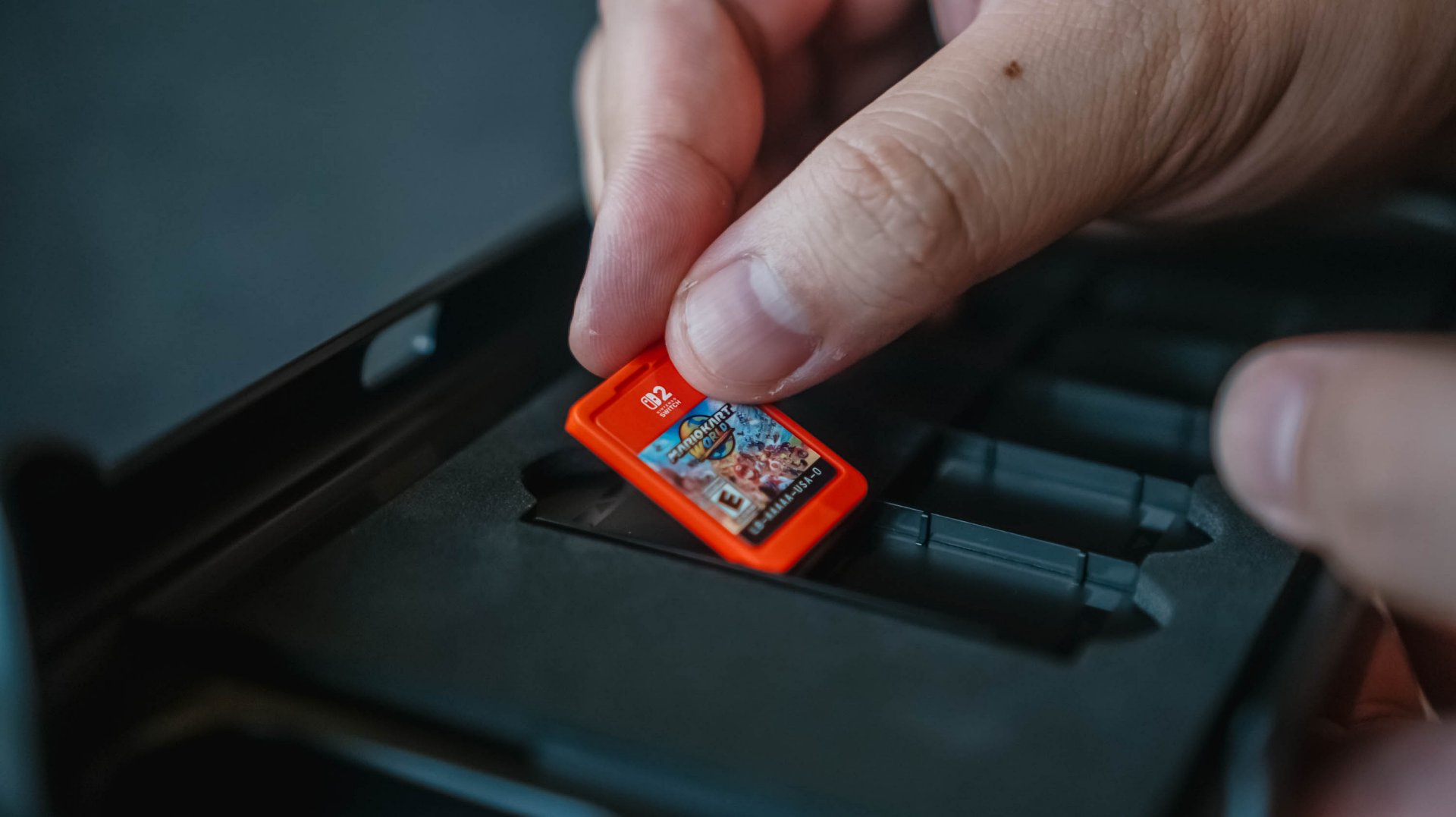
Fast forward to today, Sony has made the monumental decision to stop producing physical game discs starting in 2028. The PlayStation’s future is completely digital.
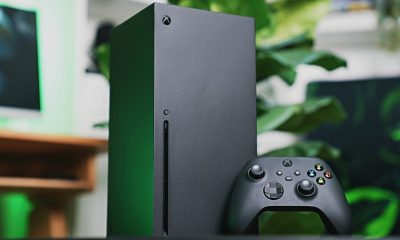
On a similar note, Microsoft is also experimenting with a disc-to-digital feature. Much like the Nintendo Virtual Game Card, the experiment will digitize libraries and attaches the digital copy to the physical game disc. It sounds awfully like a prelude to killing off the game disc.
Why this matters
The physical disc is synonymous with a simpler time. It represents a time when gamers camped out stores to anticipate midnight releases, when gamers can learn more about their games through an in-box manual, and when gamers can show off their fandom through a beautifully stocked shelf of games.
And yes, that’s part of why this situation sucks, but it’s not the only reason.
If you’re an outsider looking in, this nostalgia factor is the easiest to see. Then again, it’s also the most difficult to relate with, especially if you’ve never had the history of buying physical games.
The more crucial reason — and the one that most people will relate with — is media ownership. By not having a physical copy, you will no longer have ownership of what you bought digitally.
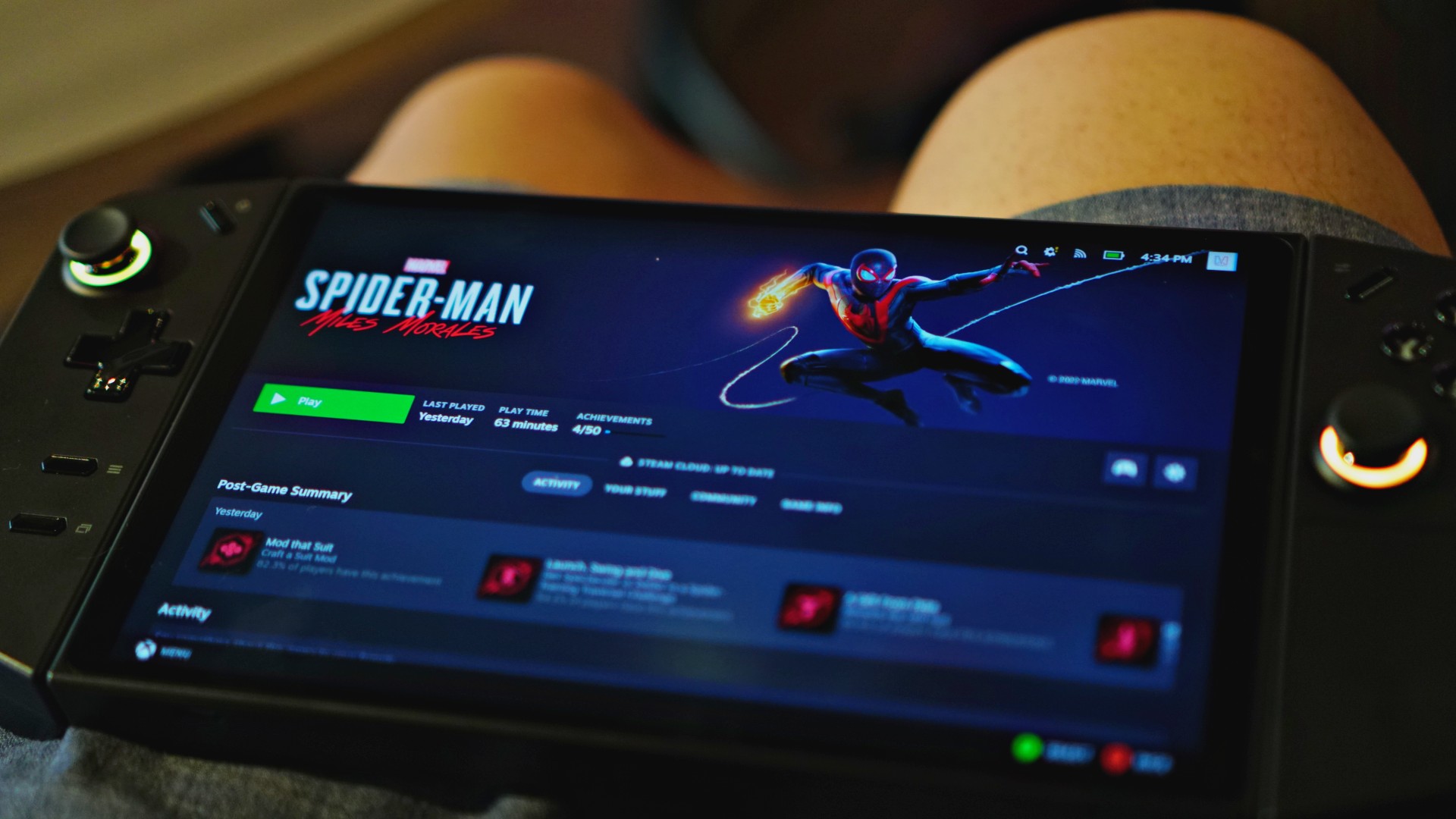
And it’s not an imaginary issue. In 2024, Steam amended its policies to reflect that players do not own the games they buy. Rather, they simply own a license to play the game.
In the same year, Ubisoft delisted The Crew, a sure sign that the new policy means business. Though Steam itself has a relatively good track record of prioritizing its customers, publishers and developers can get rid of games if they choose to.
That limitation doesn’t exist with a physical copy. As long as you have a working disc drive, you can install a game whenever you want, even if the publisher decides to pull it from stores.
Therein lies how much this is a touchy topic. Should you own digital goods in the same way as you own physical ones? If the answer is yes, then selling only the license for the good doesn’t make sense. But if it’s a no, we shouldn’t pay full price for something we don’t own anyway.
Will PlayStation actually delete games?
Now, just because they can, does it mean that they will?
Right now, it’s hard to say. You can certainly go by the optimistic hope that PlayStation would never do something as anti-consumer as that. And yes, there are times when you’d be right.
Plus, there is a good chance that governments, especially those in the European Union, will protect consumers if PlayStation even thinks about deleting a game that others have paid for. Governments have been known to intervene in the past, such as when the EU forced Apple to adopt USB-C as a standard. There are checks and balances available.

Then again, Sony has had recent history of deleting media from a user’s library.
Only a few days ago, PlayStation made headlines for deleting over 500 titles from their library. Starting September 1, users can no longer access movies distributed by Studio Canal, due to licensing agreements. Sony was unapologetic about unceremoniously deleting this content. No refunds, no apologies; just 500 movies, which you thought you bought, gone for good.
No matter how you angle it, Sony’s recent decisions just don’t bode well for media ownership.
You can argue that this is the price we’re paying for not buying enough physical games. Still, losing PlayStation discs, even as an option, is tragic for nostalgia, ownership, and preservation.
The world we live in
Unfortunately, this all comes with precedent. Unless you buy physical games and movies, we already don’t own anything in today’s world.
Outside games, Netflix and Disney+ remove the ownership of movies and shows from us. It’s already common practice for these platforms to remove titles regularly. Some platforms even give you a last chance to catch these titles before they go away. Moreover, they can even restrict access, like with Disney+, if you travel abroad.
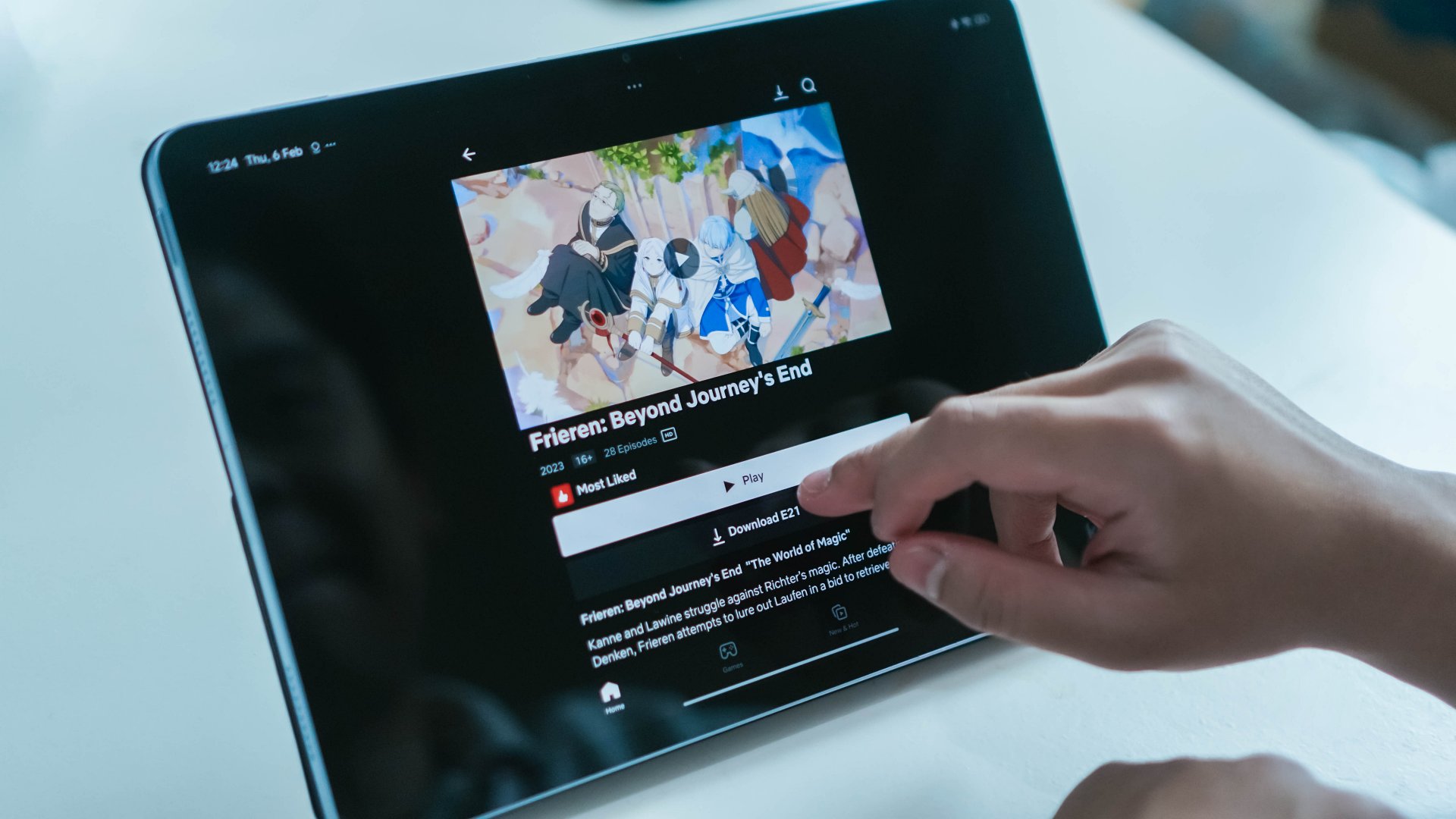
In exchange for convenience, subscription services and digital storefronts have made it all too comfortable to not own media. With a rental service like Netflix, that’s all expected, but we’re now at the inevitable stage when even bought games and movies are at the behest of our corporate overlords.
This is where the fury comes from. Companies are getting more brazen about taking more options from us. Between this and the increasing prices of RAM, it’s getting harder and harder to live as a tech-savvy citizen in today’s age.
Features
Why I stopped chasing grid-worthy and started eating peso-worthy food
Grab’s 5-Star Eats saved me, and I’ve been ordering smarter ever since
La Union has always held a complicated kind of real estate in my chest. I wrote about it early, before the bagnet boom and before I’m Drunk, I Love You made it a pilgrimage site for broken hearts.
The piece went viral and tourism spiked. I’ve quietly felt a little responsible for that ever since.
Three years ago, I went back to reconcile with someone who had broken mine. We rebuilt things the only way I know how: through food and sunsets, slowly and without any real plan.
It didn’t work out. He was gone two years later. And this year, I drove up again with my friends who’ve seen all fourteen years of me, specifically to replace those memories with better ones.
What I didn’t expect was to need saving from the food. The coffee I used to swear by tasted like warm brown water. A restaurant I’d always loved wouldn’t extend basic hospitality on a quiet, off-peak afternoon.
One of our watermelon shakes had a fly in it, and we genuinely spent a minute debating whether it was tapioca. Even my go-to dish from the place I’d been hyping for years landed completely flat, and I ate it quietly thinking I could cook better than this at home.
It stings when a place you loved starts coasting on its own legend.

When the ratings know better
Halfway through the trip, I gave up on memory and opened Grab. I let the star ratings decide where we’d eat, because I was tired of being let down by places I’d been vouching for.
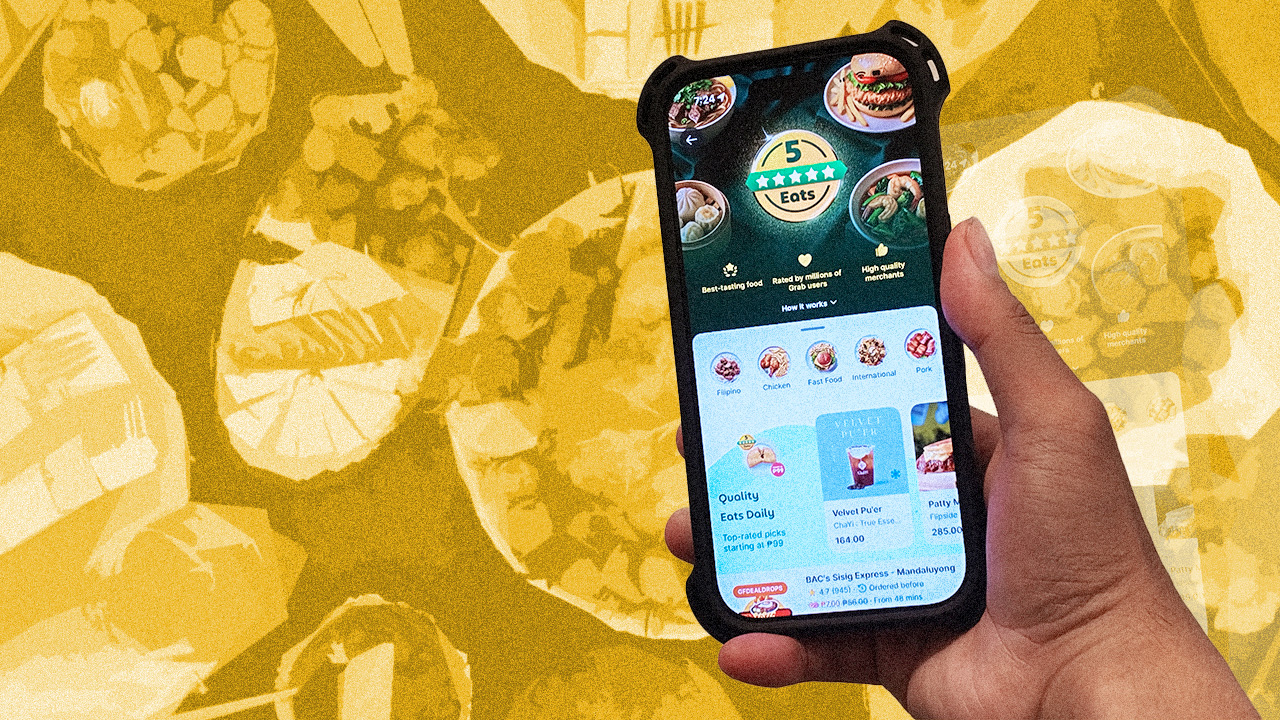
That’s how we found Grab’s 5-Star Eats, a curated list that runs on real diner reviews, not sponsored placement or algorithm luck. To make the list, a restaurant has to prove itself at volume — a handful of glowing testimonials won’t move the needle.
Service gets weighted too: prep time, order accuracy, whether what arrived actually matched what was ordered. And food quality is measured the most practical way possible, where what the photo promises, the plate has to deliver.

We dined in at one place and ordered delivery to our stay from another. None of them were photogenic, and they certainly weren’t the posh spots making rounds on TikTok and Instagram.
They looked like roadside canteens and family-run eateries, the kind you’d drive past on the way to the beach without a second glance. Every single one was excellent.
After the trip, I reached out to a former mentor who, like me, had spent enough summers in La Union to feel like it belonged to us a little. He said the best restaurants there have always been away from the beach and the hype, and away from the content.
The list I didn’t know I was already following
When I got home to Kapitolyo, I had a quiet revelation that I probably should’ve had a lot sooner. The neighborhood is a well-known food hub, and I’ve been ordering and dining out here on instinct.
When I pulled up the 5-Star Eats list after La Union, I realized that many of the places I already rotate through were already on it. I’d been eating well by accident, and the list had been validating my choices the whole time.
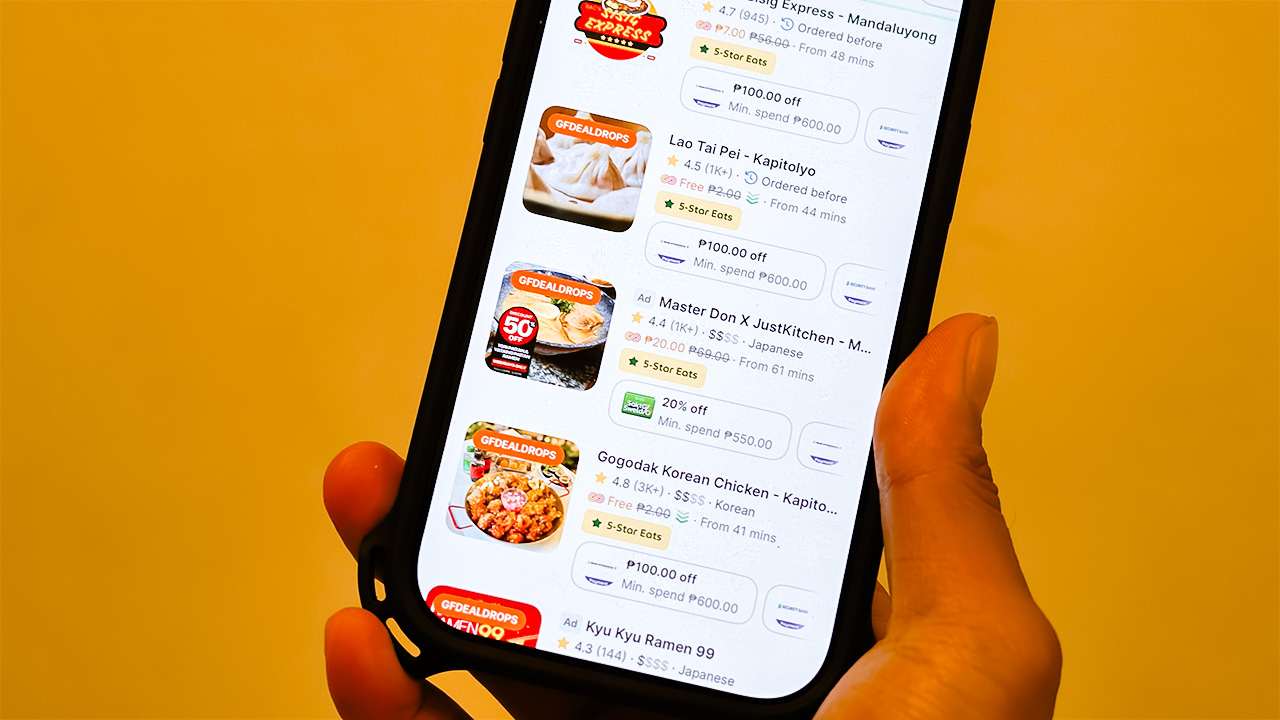
BAC’s Sisig Express, where I get my silog fix on mornings I can’t be bothered to cook, turns out to be one of the top-ranked spots on the local list.
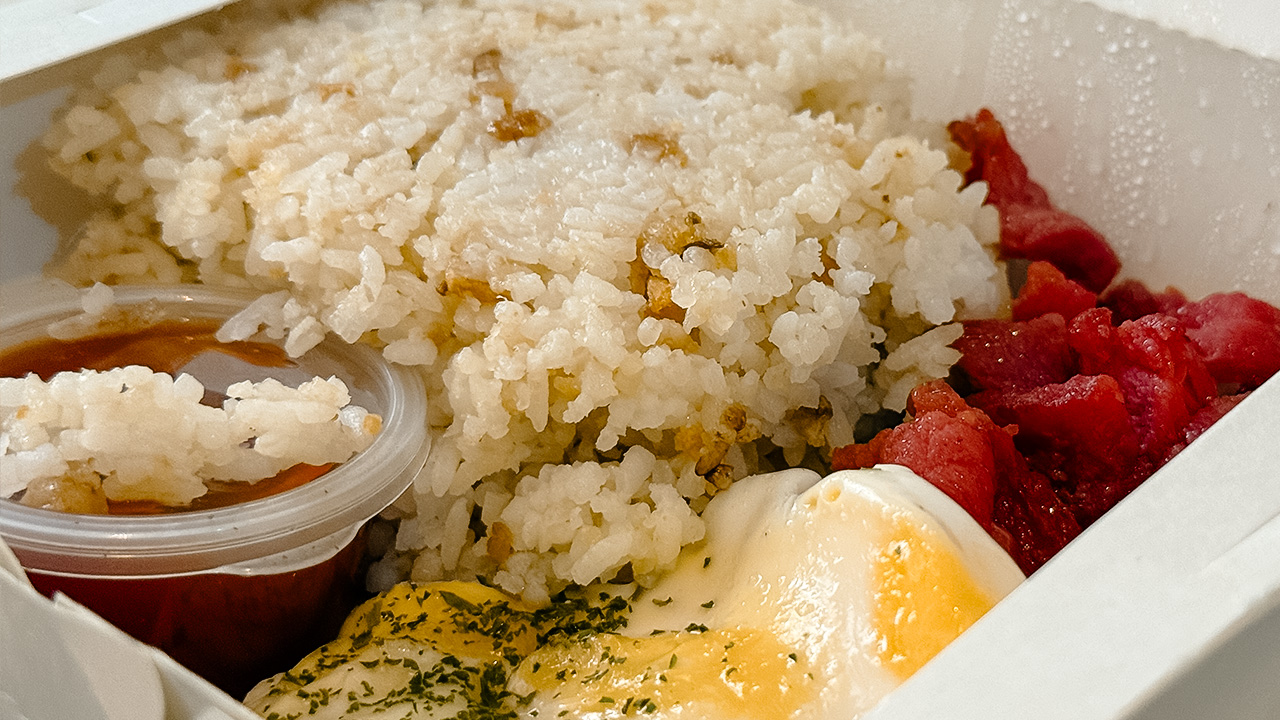
I found that out during the busiest week I’ve had this year, when a sudden shift at work sent everything sideways and I ordered the sisig, the Shanghai rolls, and the tocilog to get through the day. It delivered, as it always does.
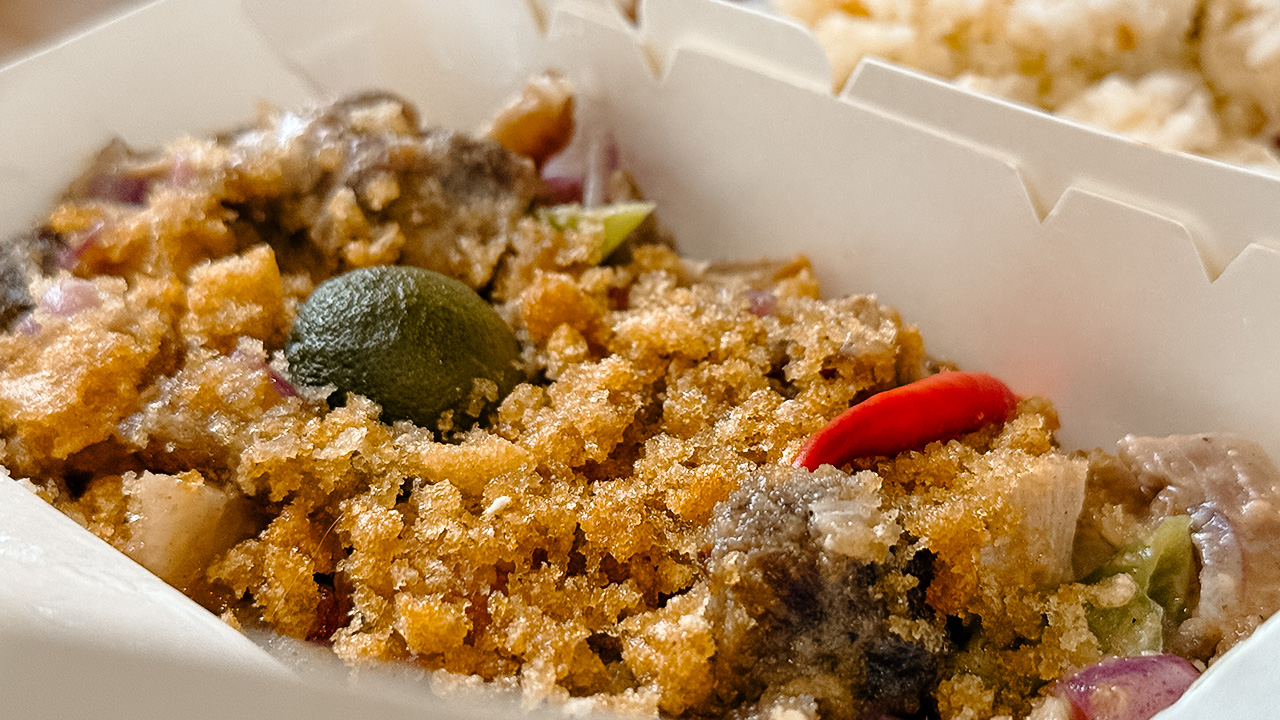
And Lao Tai Pei in Kapitolyo, my go-to for dinner dates with the people I actually want to spend time with, the place I’ve been half-gatekeeping because it feels too good to share — it’s on the list too. Ranked exactly where it deserves to be.
I wasn’t surprised. I was glad that more people would finally find their way there through something more reliable than a viral reel.
Peso-worthy over grid-worthy, every time
Here’s what I’ve come to understand about food content: it’s beautiful, and it’s largely useless.
Social media gave small restaurants a real shot at finding an audience, and that part is genuinely good. Somewhere along the way, though, people confused visibility for quality.

Now, every café has a grid, a vibe, and a color palette. You can’t actually tell what’s worth your money until you’re already sitting there, 300 pesos poorer, eating something that looks stunning in natural light and tastes like nothing.
I spent years chasing the aesthetic: the plating and the whole production of a well-styled meal. I still eat with my eyes, but I’ve gotten older, and I’ve learned that the experience has to match what I paid for. That’s not a small thing to ask for.
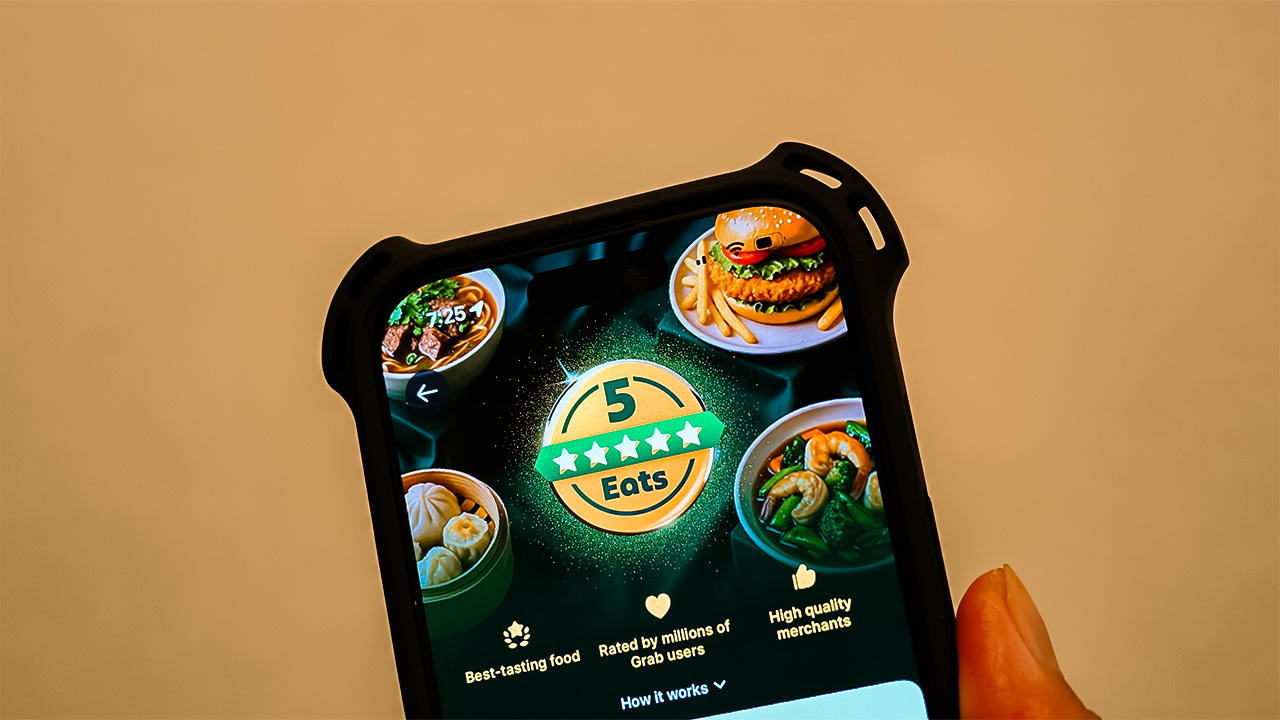
What I appreciate most about Grab’s 5-Star Eats is that it doesn’t trade in aesthetics. It trades in accountability.
The ratings reflect what diners actually experienced, from the accuracy of the order to the quality of what landed on the table, and the list only holds restaurants that can sustain that standard over time.
Grid-worthy is easy to manufacture. Peso-worthy has to be earned.

realme C100: Enduring and durable in spite of entry-level realities
Enough power but needs more agility


The ASUS ExpertBook Ultra wins you over
The laptop sneaks up on you


vivo X300 Ultra review: A “Whole Different Animal”
Got the beast (finally) unleashed!

Cebu Pacific becomes 1st SEA low-cost carrier with Starlink Wi-Fi

Going ‘back to school’ as an adult with the HP Smart Tank 580

Samsung introduces Flex Titanium tech for foldable displays

Plot twist: Starbucks PH is letting you actually pick your reward now

GoTyme Bank grows to 10 million users in the Philippines

Buyer’s Guide: TECNO SPARK 50 Pro vs SPARK 50 5G

TECNO’s SPARK 50 Pro is the latest budget smartphone battery beast
vivo X300 Ultra review: A “Whole Different Animal”

DJI Osmo Pocket 4P launches with dual lenses and a 1-inch sensor

New York becomes first state to ban smart glasses


-
 News5 days ago
New York becomes first state to ban smart glasses
-
 Singapore4 days ago
Sony launches IER-M500 in-ear monitors
-
Laptops2 weeks ago
The ASUS ExpertBook Ultra wins you over
-

 Gaming2 weeks ago
PlayStation goes all-digital in 2028
-

 Computers6 days ago
GIGABYTE releases new AORUS RTX 5080 INFINITY graphics cards
-

 Gaming5 days ago
Microsoft dictates that a new Fallout game is coming
-

 Laptops2 weeks ago
ASUS launches the ExpertBook Ultra
-
 Gaming2 weeks ago
Xbox might get rid of physical discs too