
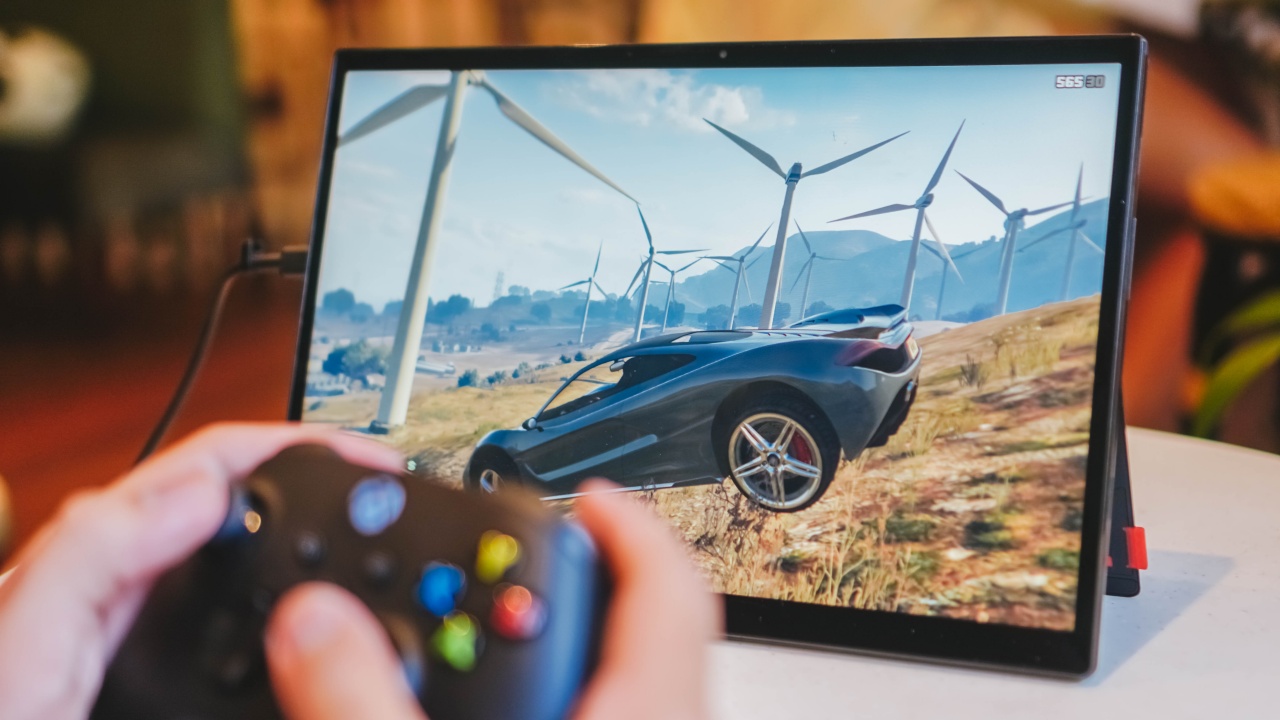

Gaming
ROG Flow Z13 review: A tablet powerhouse like no other
There’s more than just powerful gaming

Throughout my four years of working in GadgetMatch, I haven’t actually tried using any gaming laptop (or even a tablet) of some sort. Let alone a device like the ROG Flow Z13. That’s mainly because I’m not as invested as our in-house gamers like Rodneil, Luigi, or Gab.
But what if you wanna hear thoughts from a casual gamer? And how does it perform from the perspective of a creative professional?

Without further ado, let’s proceed with this much-awaited review of the world’s first Windows 11-powered gaming tablet.
(Un)usual tablet
Up front, it might look like the same glass slab as other tablets. This particular model has a 13.4-inch Full HD+ glossy display with a 16:10 aspect ratio. That’s an unusual ratio for most games that only support either 16:9 or 21:9 gaming.

But it becomes a real game-changer when you flip its back side.

Unlike regular tablets with an ultra-sleek and minimal design, the ROG Flow Z13 stands out from the crowd.

Other than the usual Intel and GeForce stickers, what stands out the most is its see-through glass window that shows the tablet’s internals.
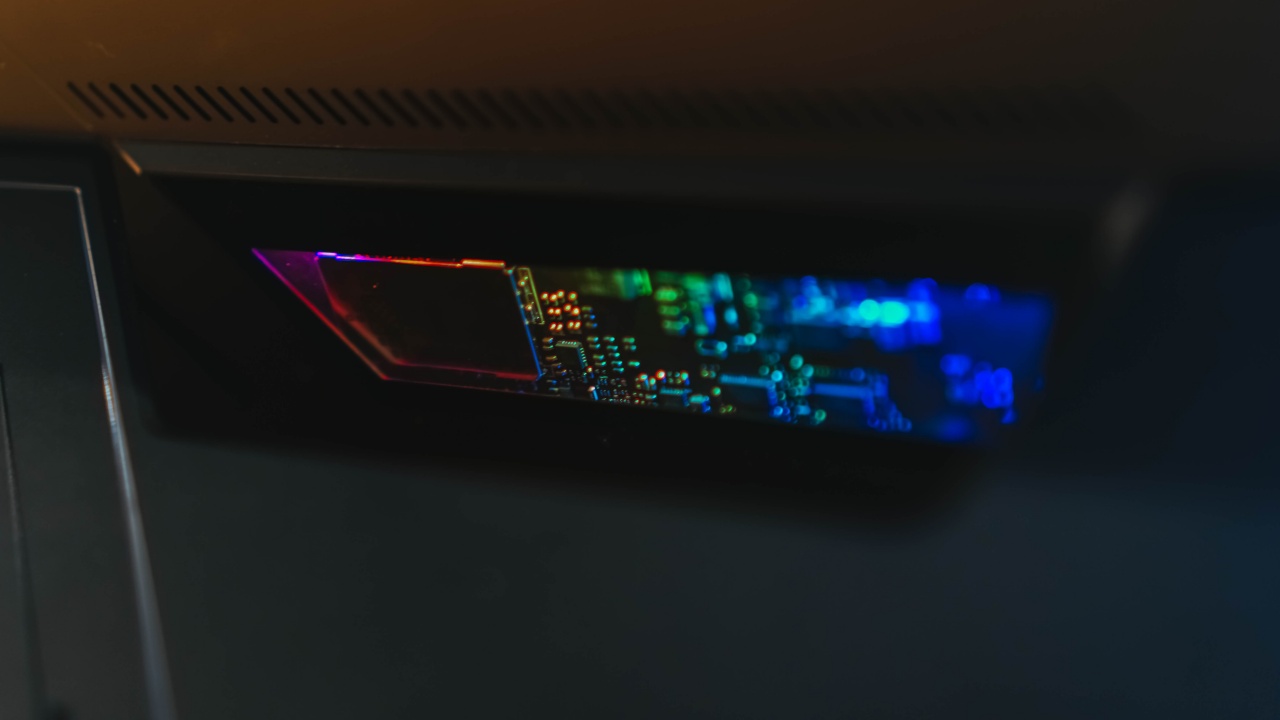
When turned on, the window will illuminate with ROG’s signature RGB lights…
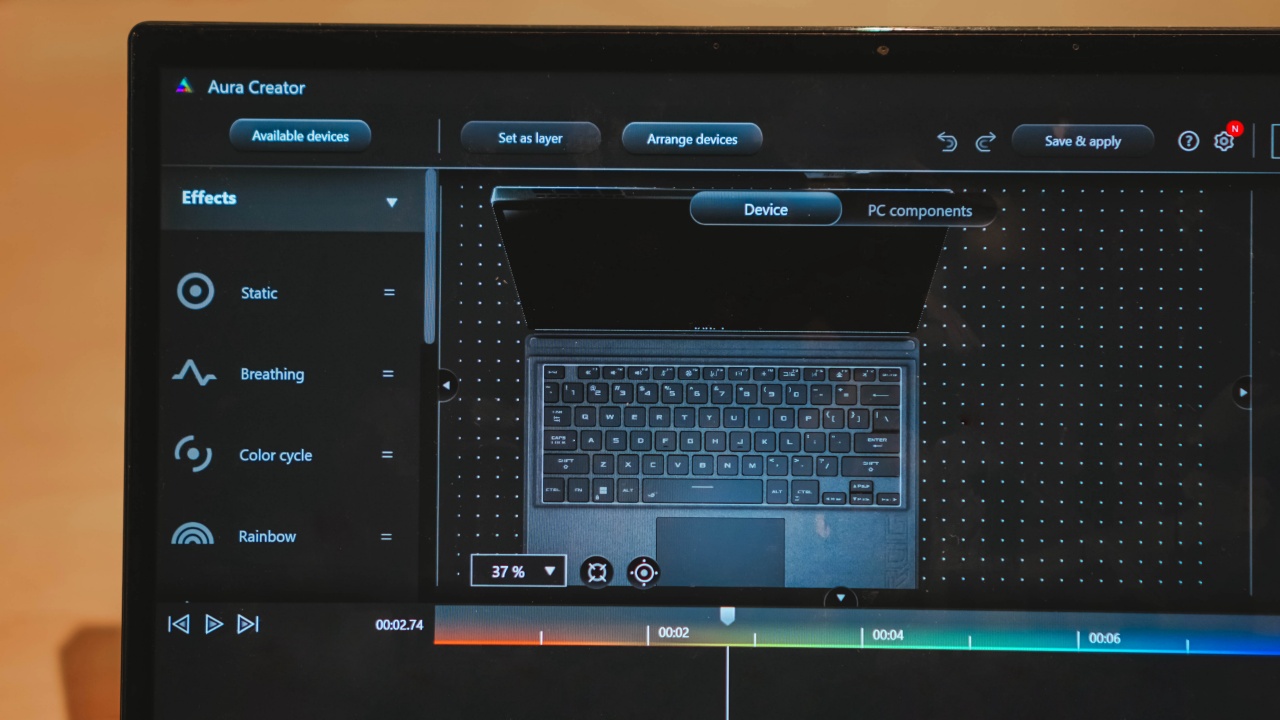
…that can be controlled via ROG’s Aura Sync software.
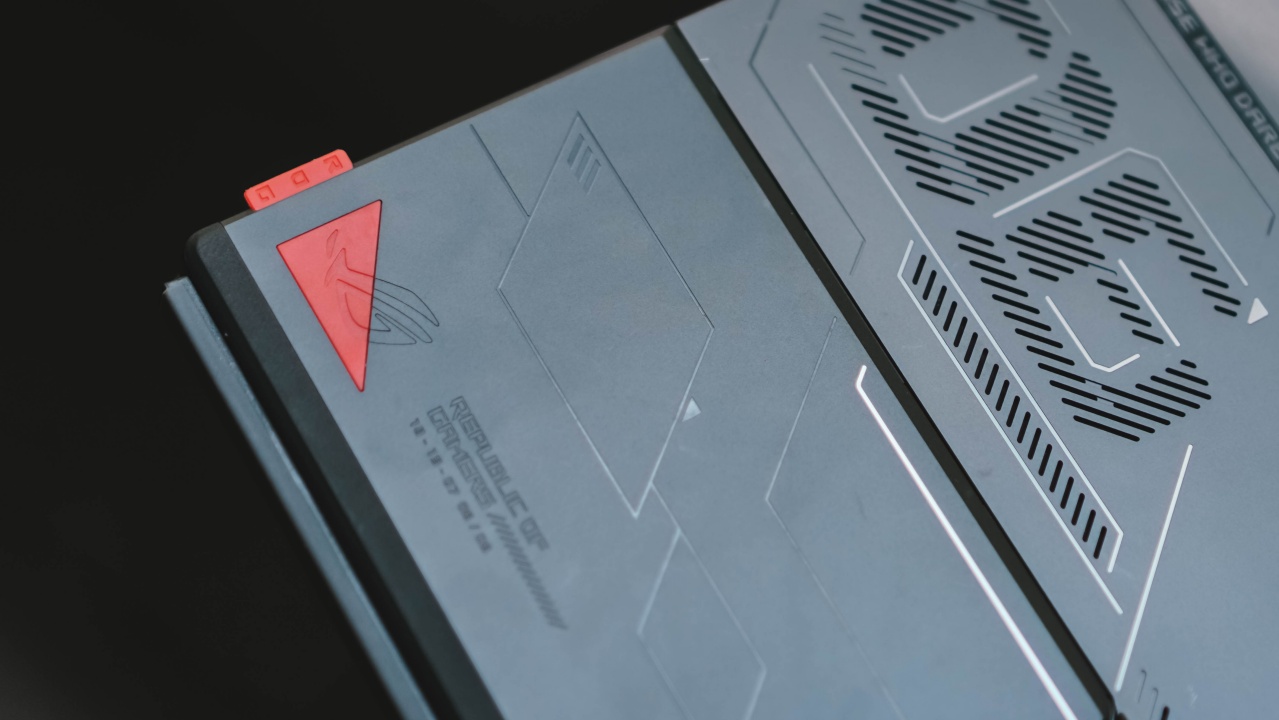
With some ROG-branded texts, etchings, and rubber plugs..

…this is a sophisticated-looking, retro-futuristic tablet truly meant for gamers in mind and heart.
And as some bonus, here it is side-by-side with last year’s ROG Flow X13. Surprisingly, the X13 is thinner despite the Z13 looking more of the “portable” device.
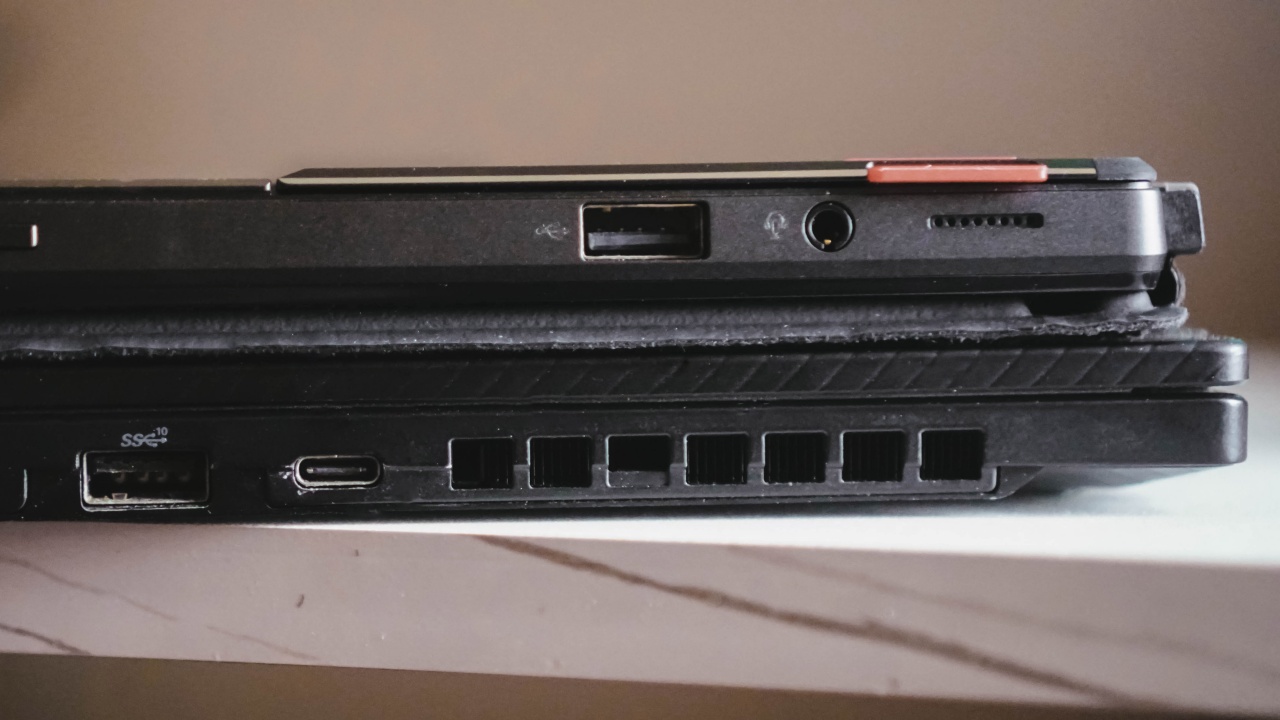
For specifics, the X13 is 15.8mm thick and 1.34kg in weight. Meanwhile the Z13, although thinner at 12mm and lighter at 1.1kg, attaching its detachable keyboard actually makes it thicker and heavier at 17.6mm and 1.53kg.
Plentiful ports
If you care about ports, the ROG Flow Z13 has plenty to provide.
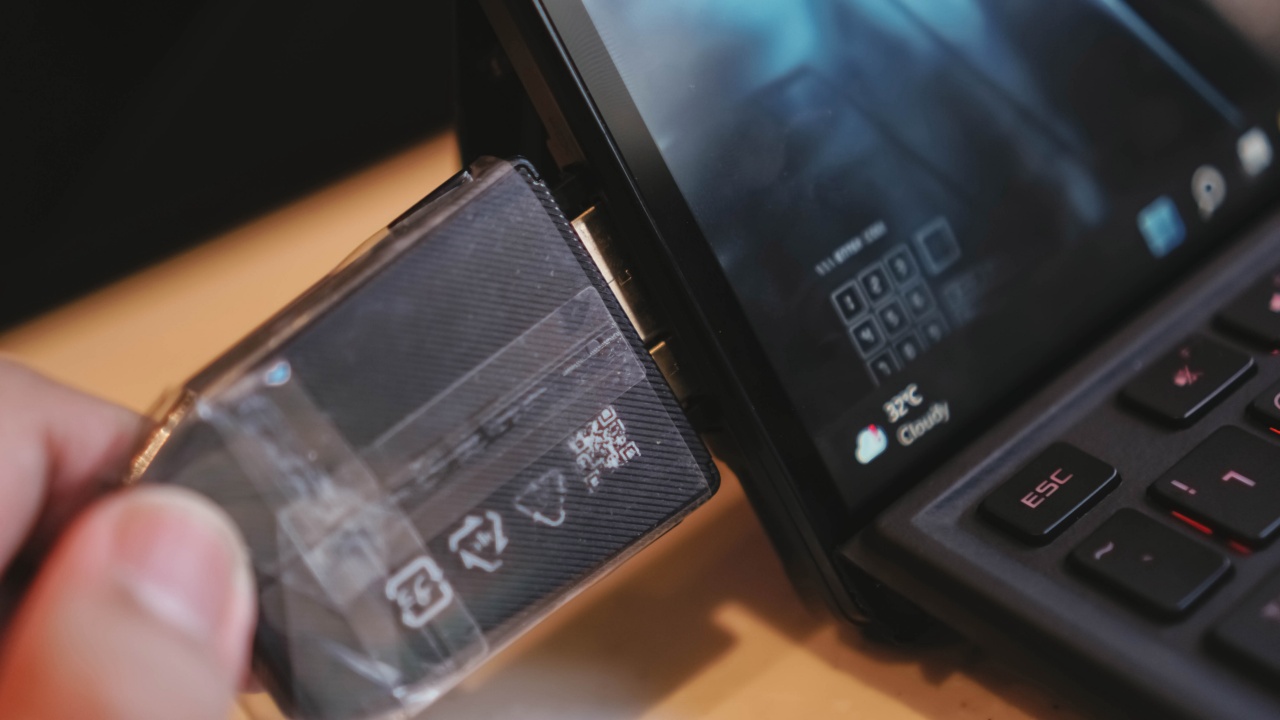
Other than its proprietary XG Mobile port (which also has a USB-C Thunderbolt 4 port in it), there’s also another one at top, making it a total of two USB-C ports on the left side.

One (or both) port/s support DisplayPort and G-Sync for external 4K displays and monitors…
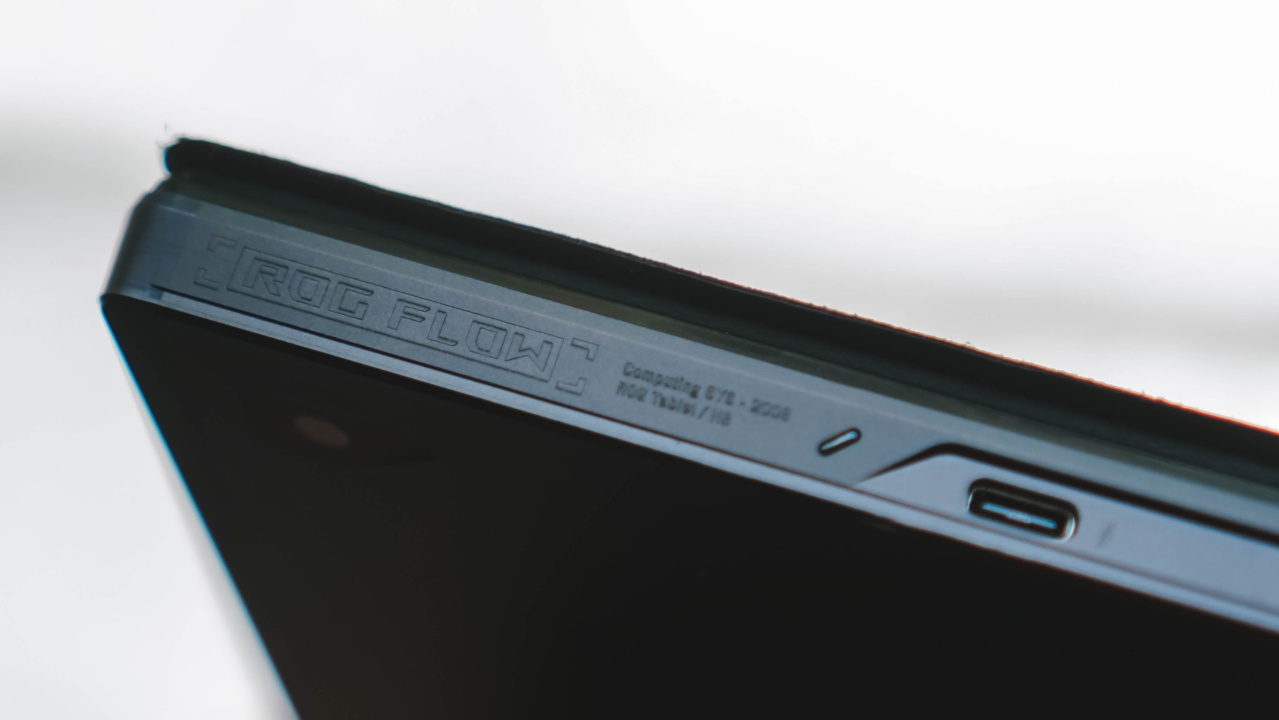
…as well as Power Delivery (PD) for faster charging speeds.
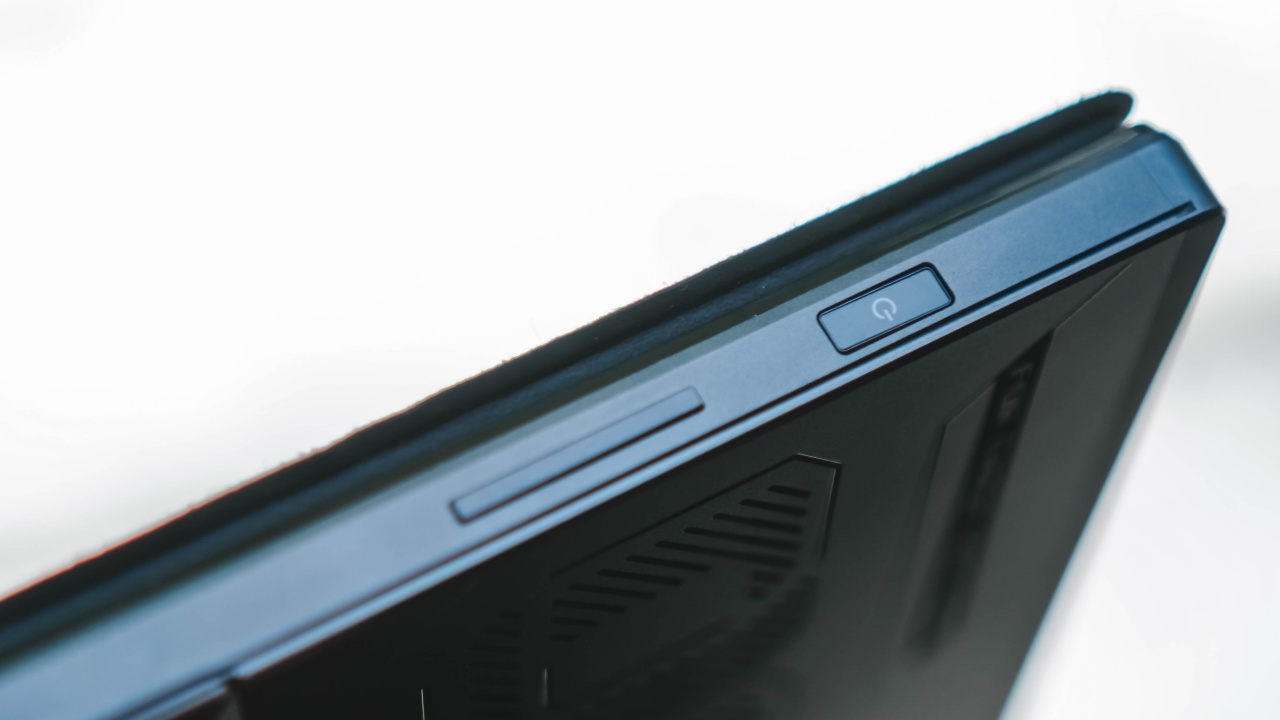
Looking at the right side shows the power button that also doubles as a fingerprint scanner.

Moreover, there are the volume buttons, a single USB-A port for other peripherals, and a 3.5mm audio jack for hi-fidelity audio experience when gaming or working. There’s even a microSD card slot hidden behind the tablet’s leg stand when opened.
Both sides mean it also has stereo speakers with Dolby Atmos support as well as a 3-microphone array for voice calls.
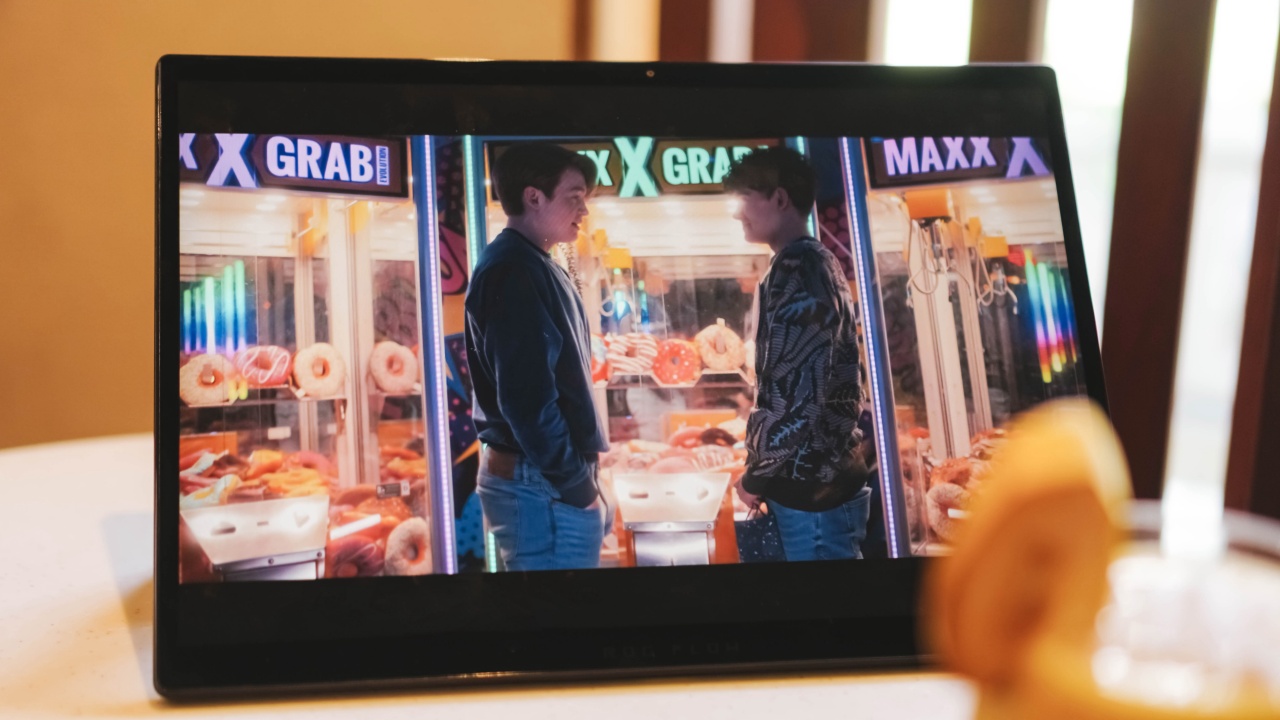
LF: my Nick Nelson
For connections with less latency, it has a Wi-Fi 6E modem for faster online gaming and streaming. It also supports Bluetooth 5.2 for better connectivity when connecting to earbuds, headphones, controllers, and more.
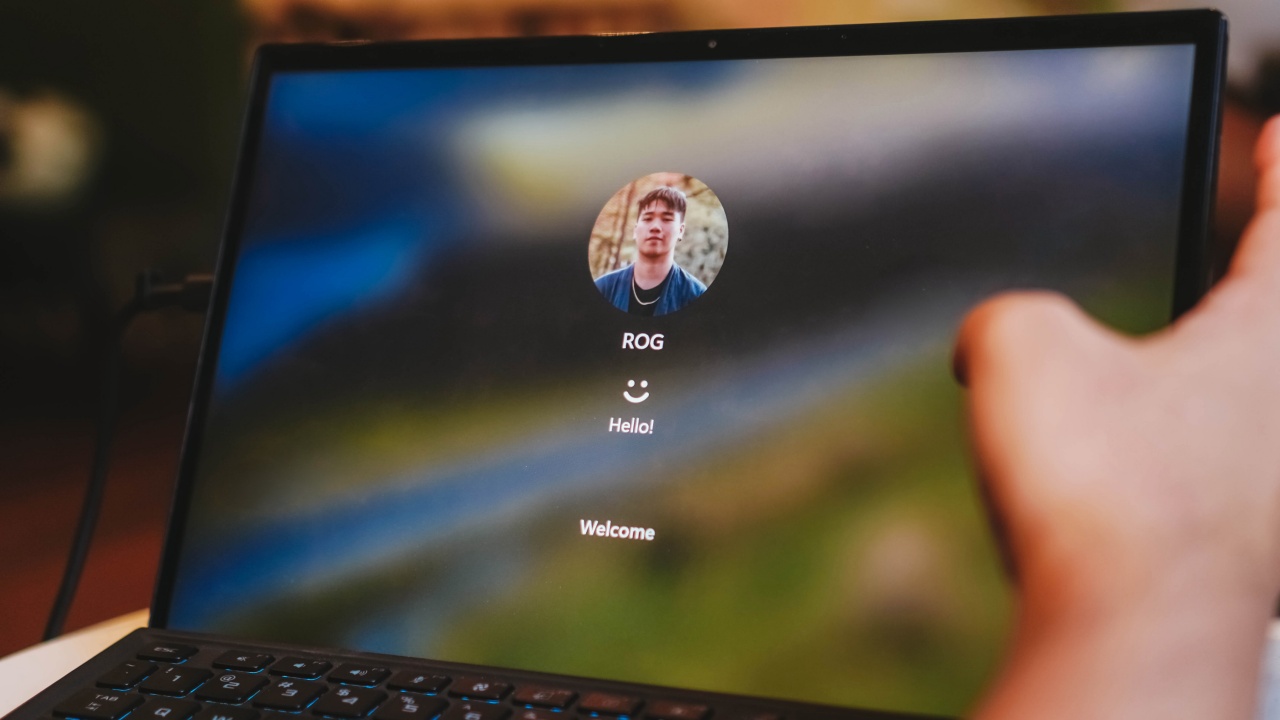
Lastly, there’s a 720P webcam at the top of the display for usual video calls via Zoom, Duo, or Meet. Unfortunately, it doesn’t support the Windows Hello Face Unlocking as it doesn’t have IR sensors built-in for a more secure authentication.
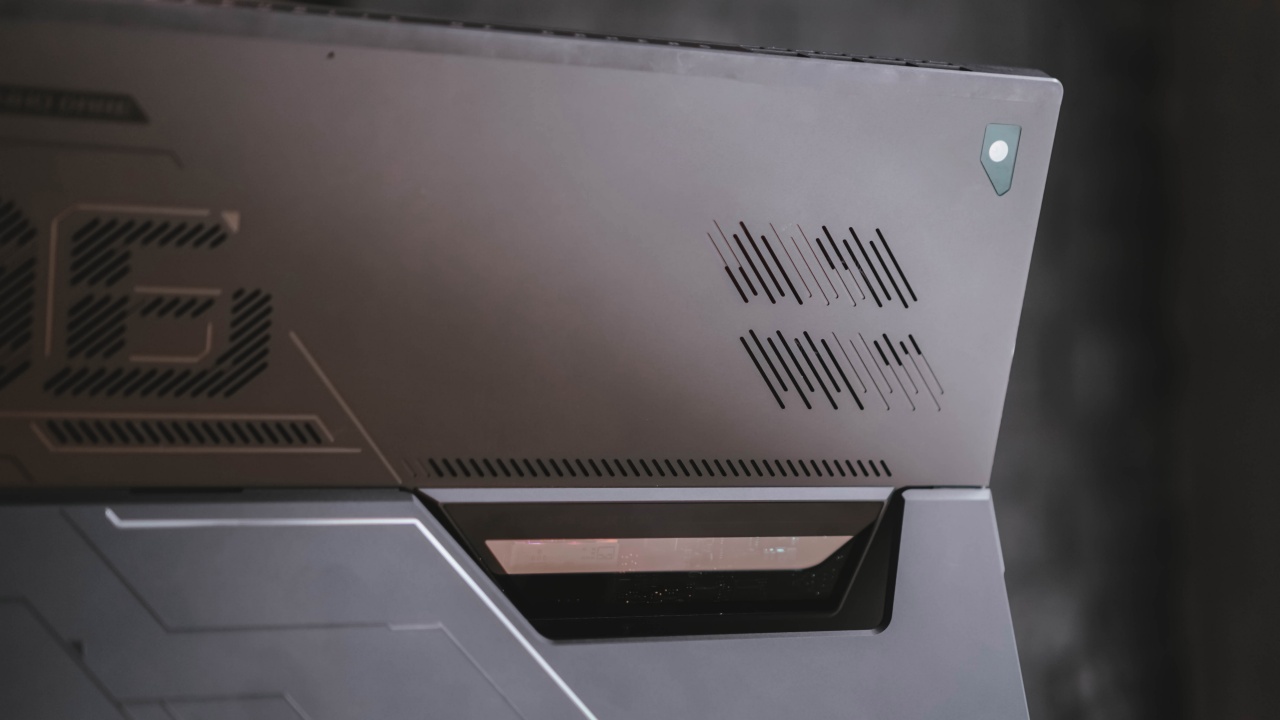
It’s also equipped with an 8-megapixel camera at the back with an okay quality.

Two things that don’t go well together: Vegetable lasagna and Nala the doggo
Bundles and extras
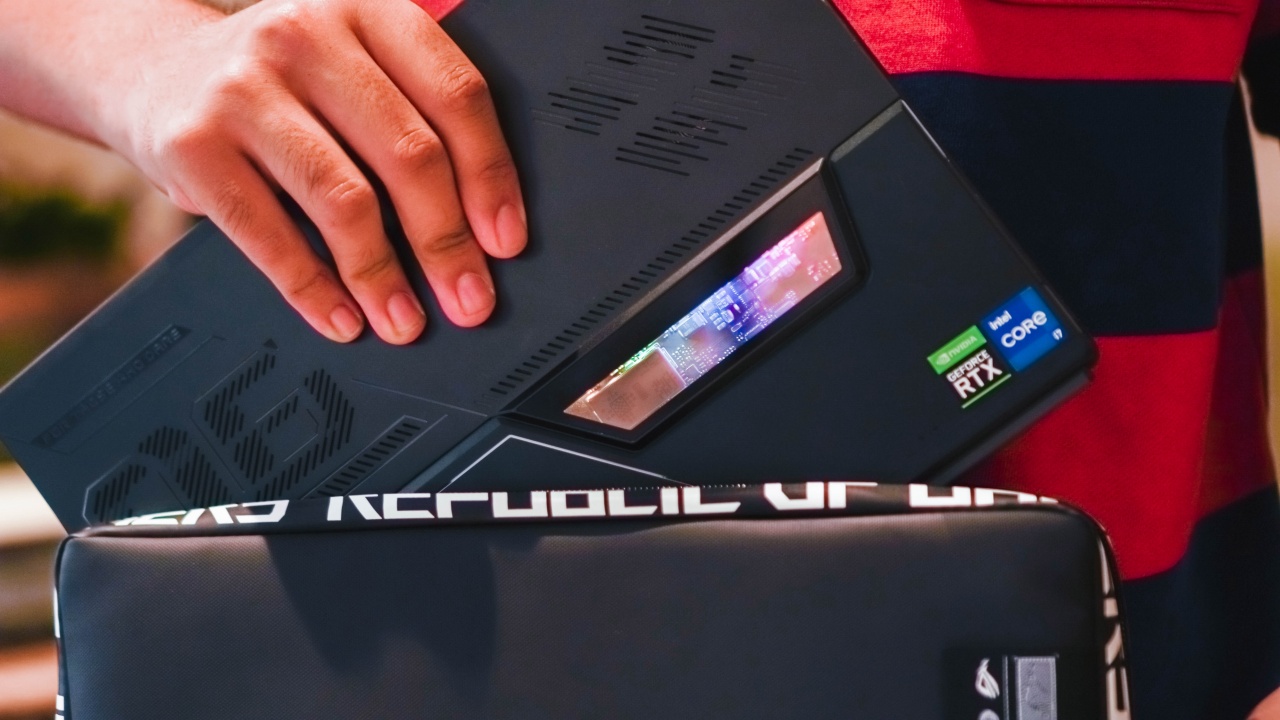
Whenever you purchase the ROG Flow Z13, you’ll have this handy sleeve pouch to protect the tablet from unwanted scratches and bumps inside your bag.

There’s also this clip-on keyboard a la Microsoft Surface that connects through ROG Flow Z13’s smart connectors at its bottom. This is better instead of going through the hassle of connecting via Bluetooth.
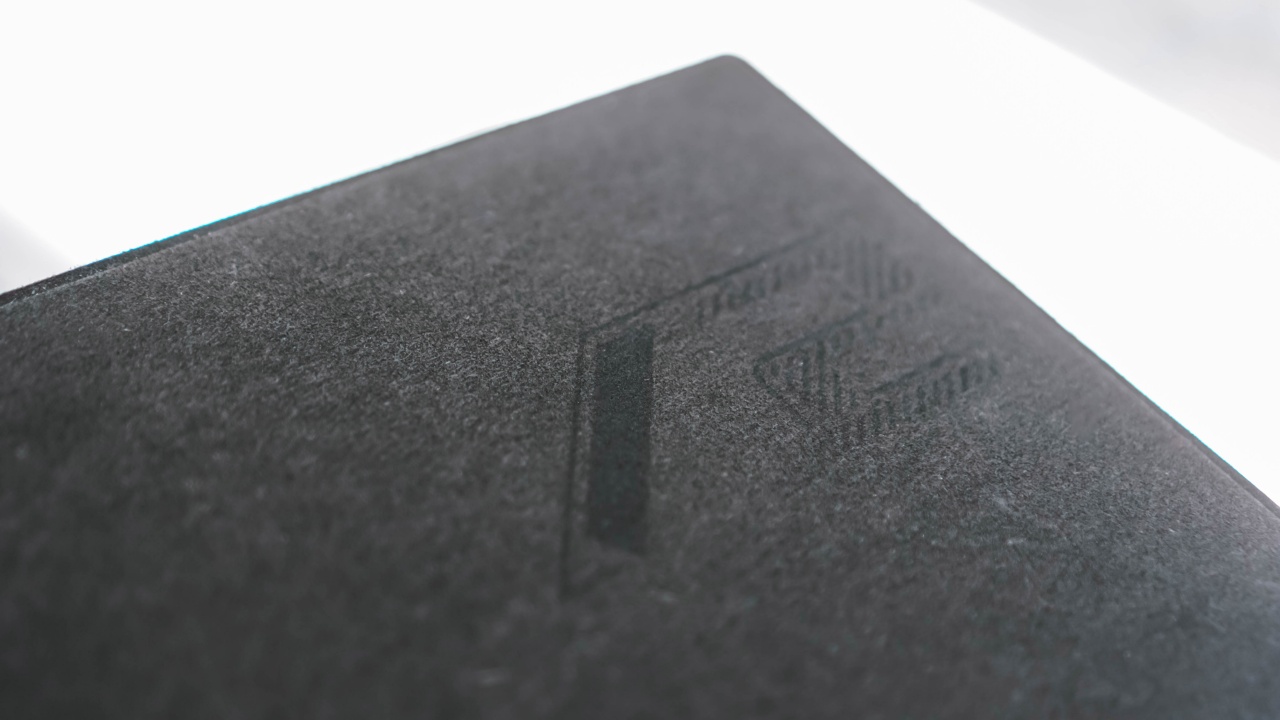
Attaching the detachable keyboard folio with a felt-like texture also protects the Z13’s precious glossy display from scratches and smudges.

Moreover, there’s also the ROG Impact gaming mouse that you can carry around. It’s well-suited for shooter games that require faster clicks instead of relying to the Z13’s touchpad. The bundled mouse depends on where you’ll buy your ROG Flow Z13 though.
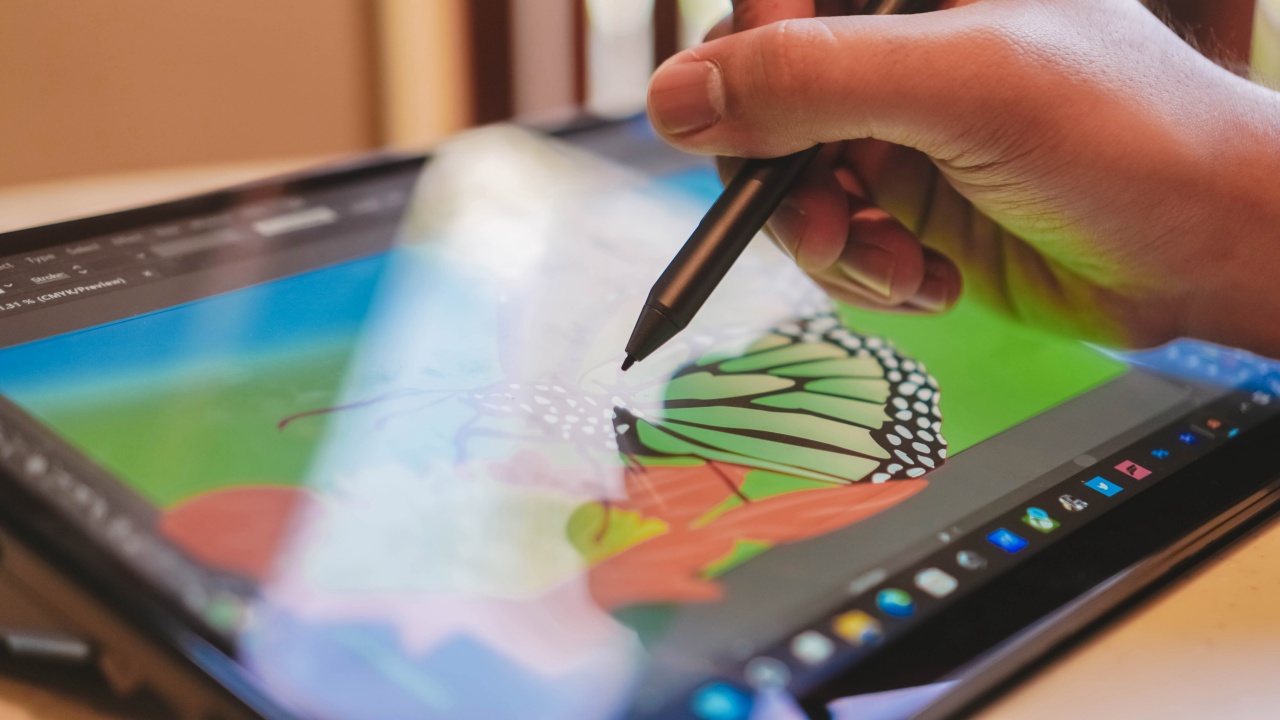
Lastly, there’s also the ASUS Pen for those who want to use it for note-taking, scribbling, sketching, or even illustrating.

Two downsides with this specific pen? First is the use of a rare AAAA battery instead of relying on magnetic charging. Second, you can only attach it magnetically at the bottom part of the tablet (where the smart pins for the keyboard are also connected). This basically means you can’t place the pen once the keyboard is attached in its place.
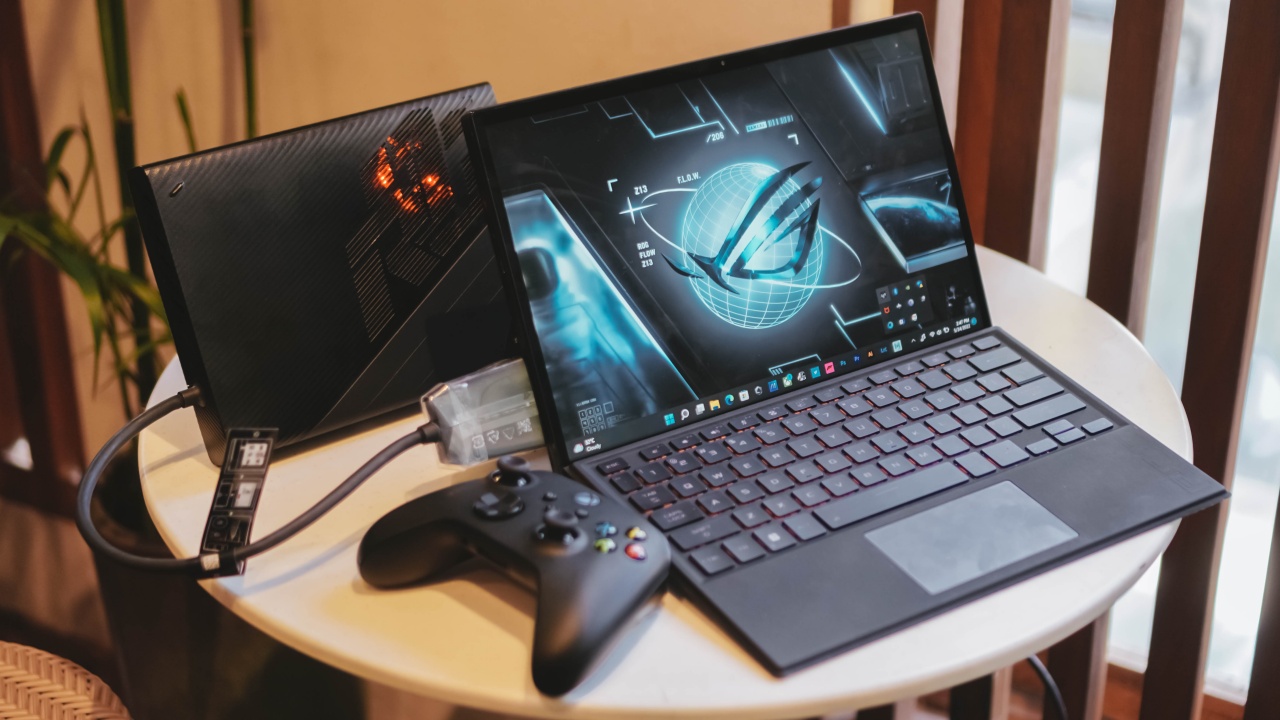
For additional purchases, the ROG XG Mobile eGPU is a great extension to an already amazing gaming tablet. It provides more gaming power just in case you needed that maximum oomph when you play hardcore games.

And while we’re already under this specific section, gaming would be more fun with the Xbox Wireless Controller in mind — especially when the game supports it (mostly games from Xbox PC Pass).
Game mode
I’m not a professional nor a hardcore gamer, but this doesn’t mean I don’t play enough games to entertain myself when bored.
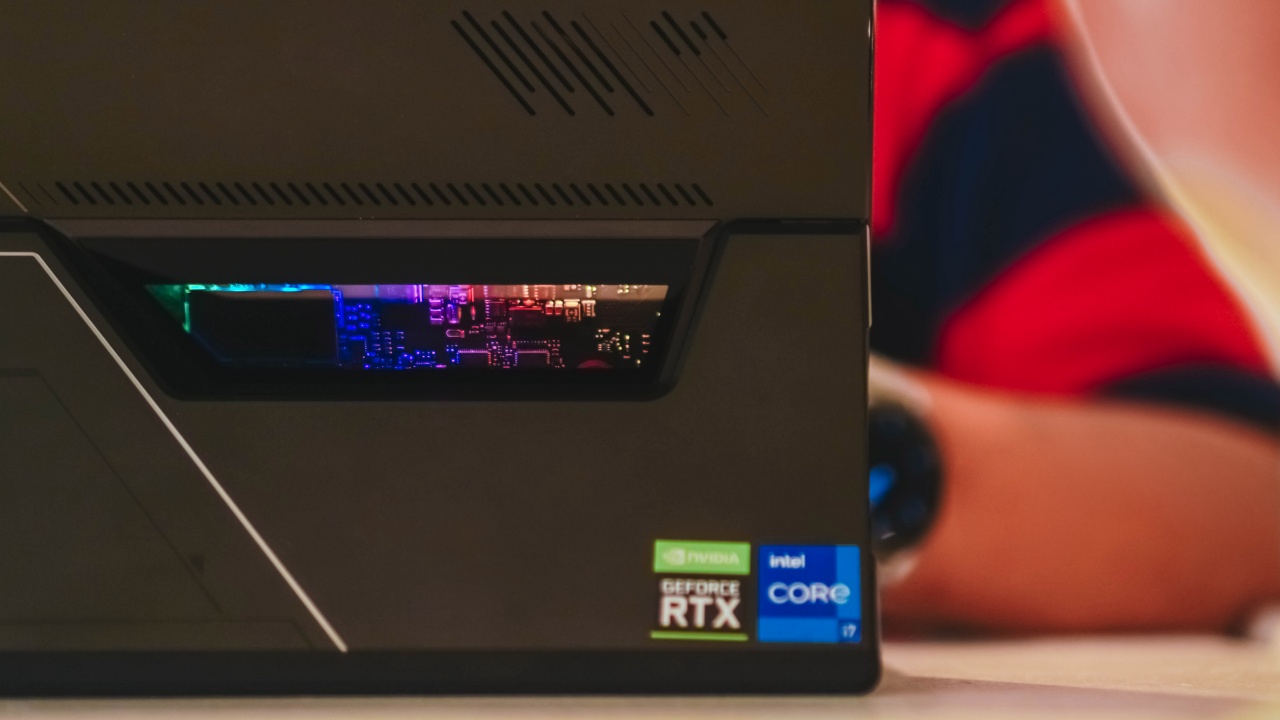
While I don’t have the maxed-out Core i9 model (that’s not in the Philippines but available elsewhere), it still has one of best specs for a tablet (or any gaming device for that matter): a 12th-gen Intel Core i7-12700H, a total of 16GB LPDDR5 RAM, and 512GB of SSD. To make it suitable for more graphics-intensive games, it runs NVIDIA’s GeForce RTX 3050 with 4GB of GDRR6 memory.
We don’t provide boring and lengthy game benchmarks, but I can attest that the Z13 can run most games in max settings — regardless if you change gaming profiles in the Armoury Crate app.

Whether that’s the ever-popular Grand Theft Auto V...
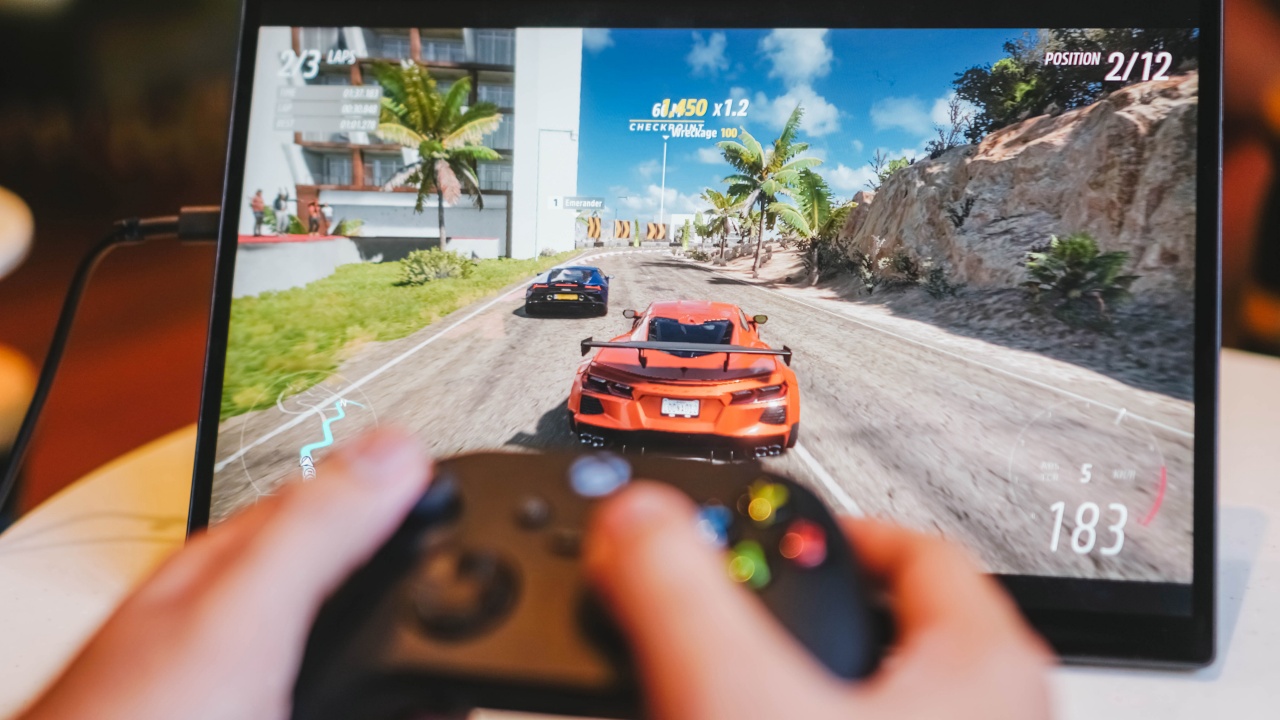
Forza Horizon 5 through Xbox PC Pass…
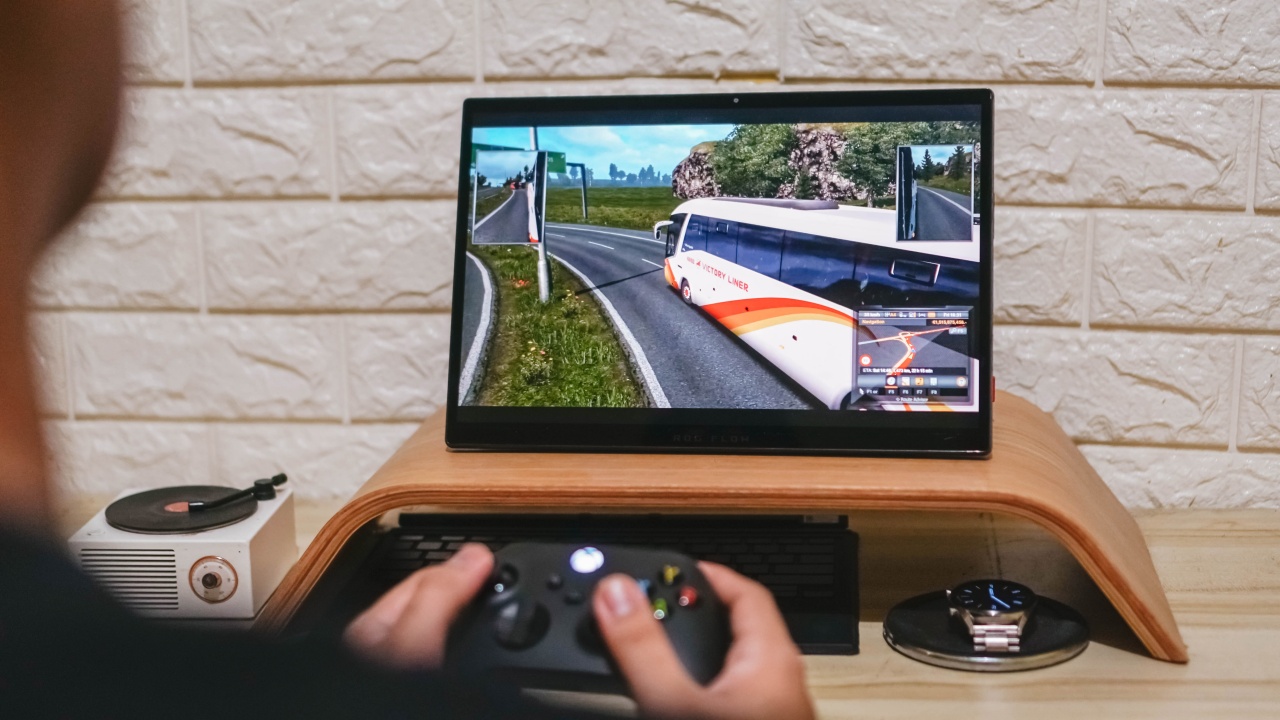
realistic truck and bus driving with Euro Truck Simulator 2…
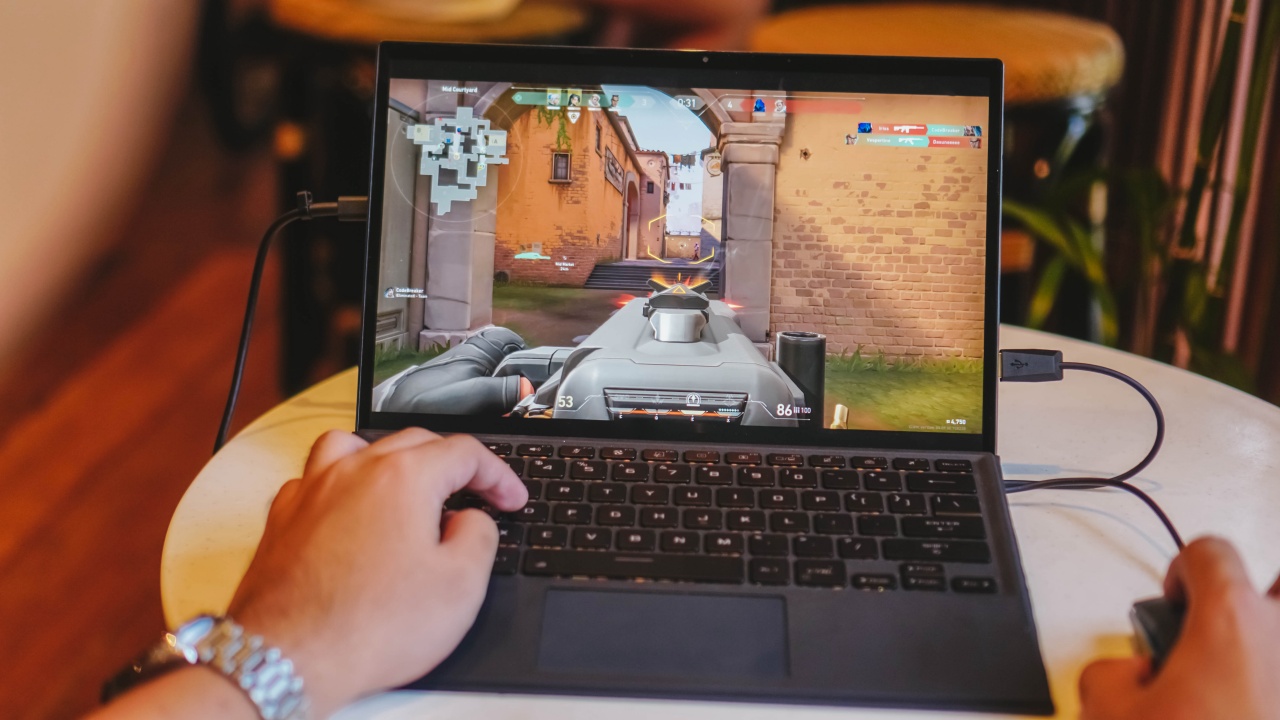
5v5 FPS game such as Valorant…
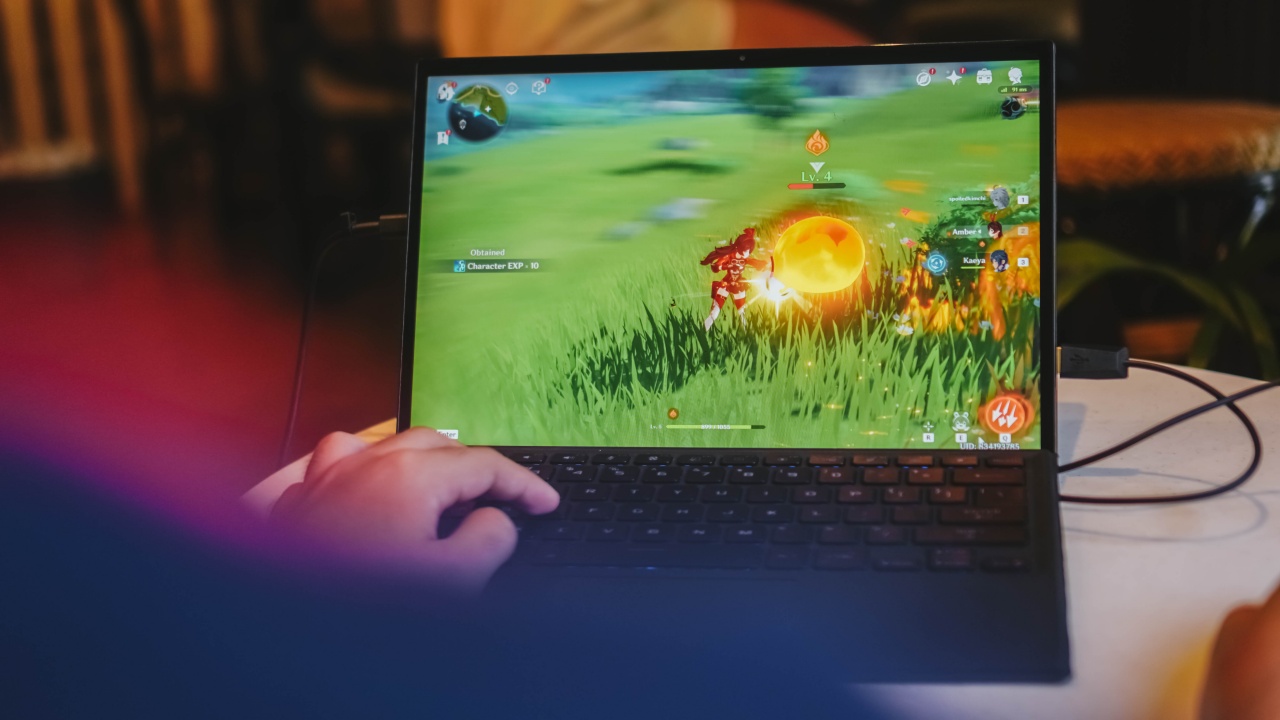
and even the ultra-demanding open-world action RPG Genshin Impact, the Z13 is no slouch at all.
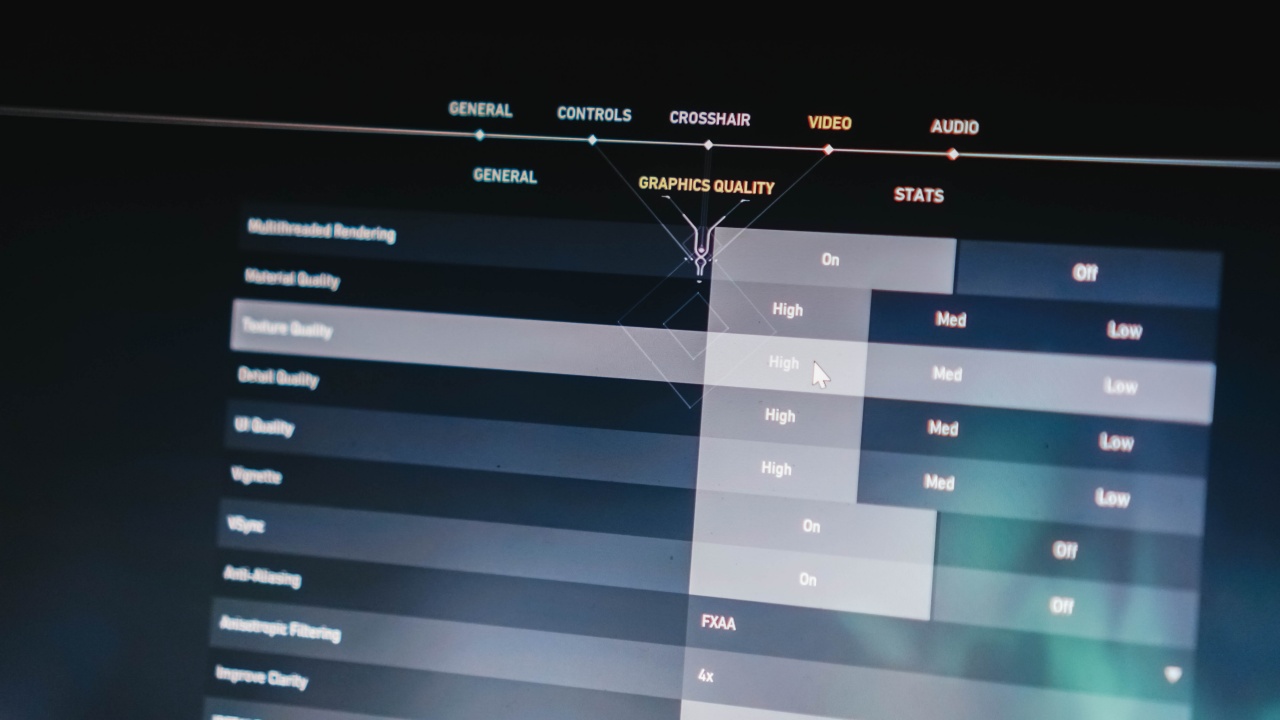
With the games mentioned earlier, I was able to bump up graphics settings in either high, max, or ultra utmost with most (or all) of the boxes ticked. Even with hours of gaming, it never slowed down.

Unfortunately, running Cyberpunk 2077 even in medium settings through Z13’s RTX 3050 doesn’t do much help. The only way to play it in its highest settings possible is to bring out the ROG XG Mobile.
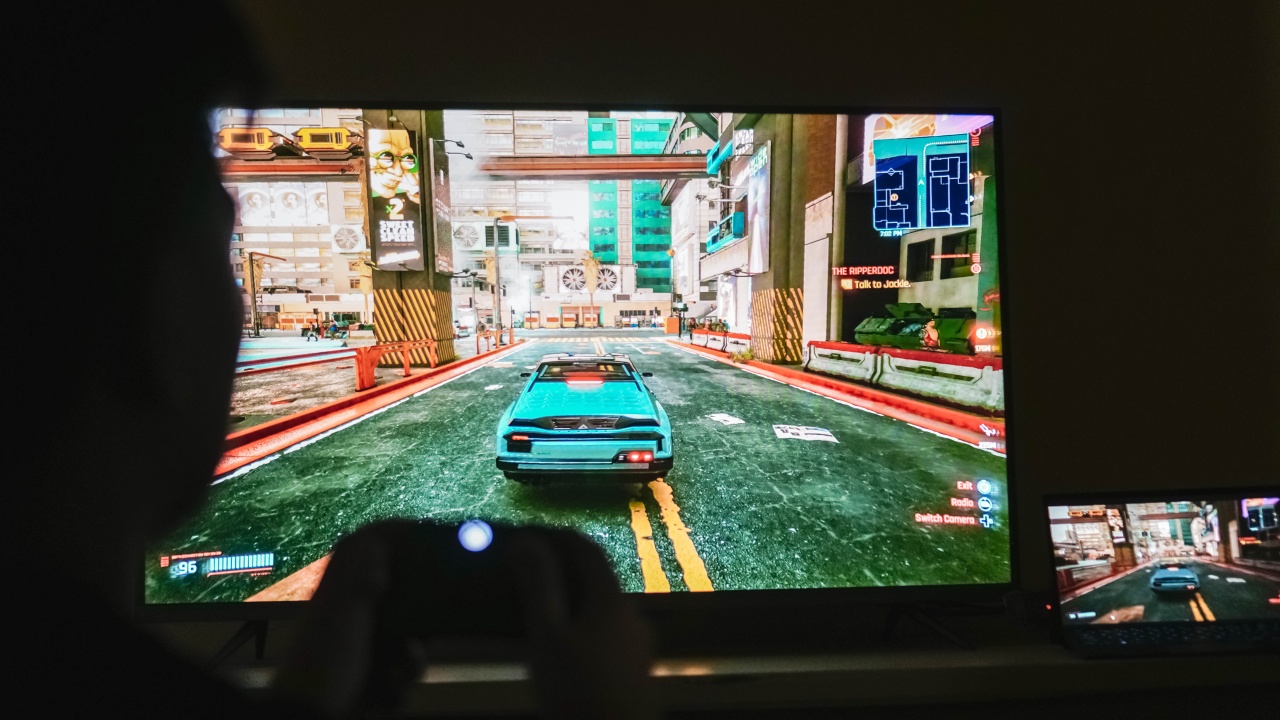
With its more powerful GeForce RTX 3080 graphics card, it should run a lot better without worrying about gaming lag and stutter.
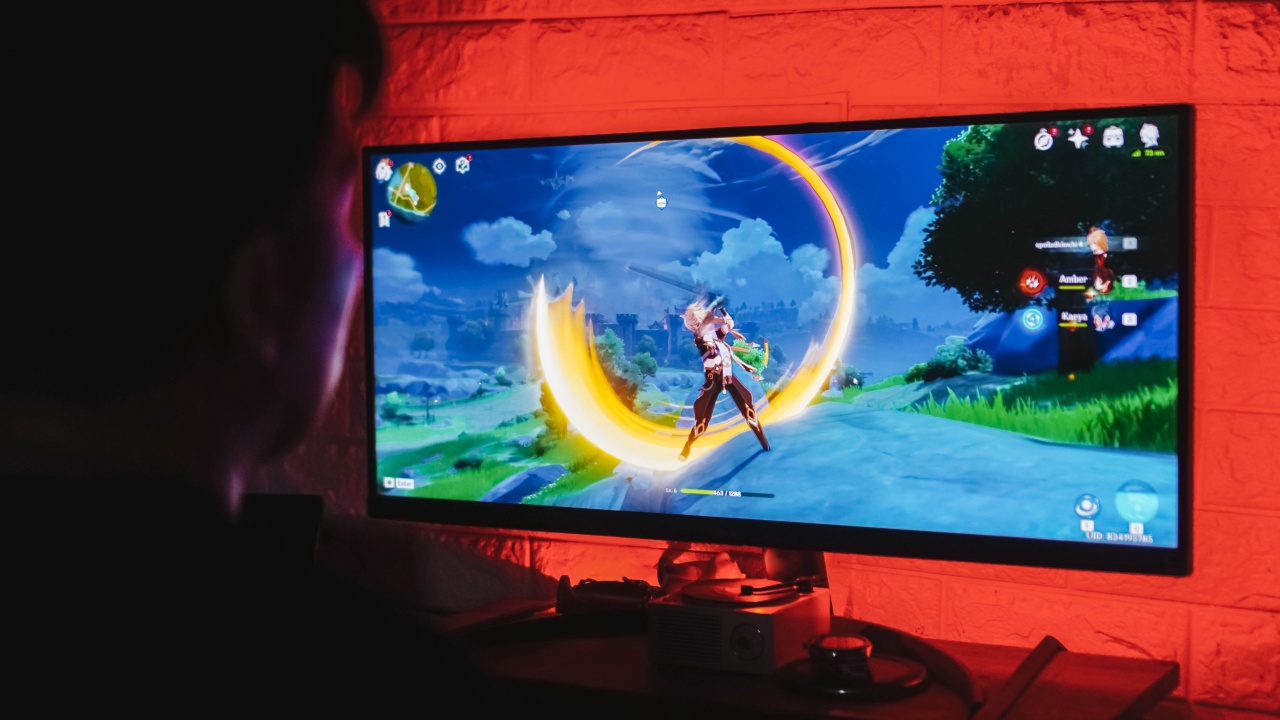
Plugging in the XG Mobile eGPU is also another way you can attach any 4K TV or monitor through HDMI and DisplayPort (well aside from USB-C).
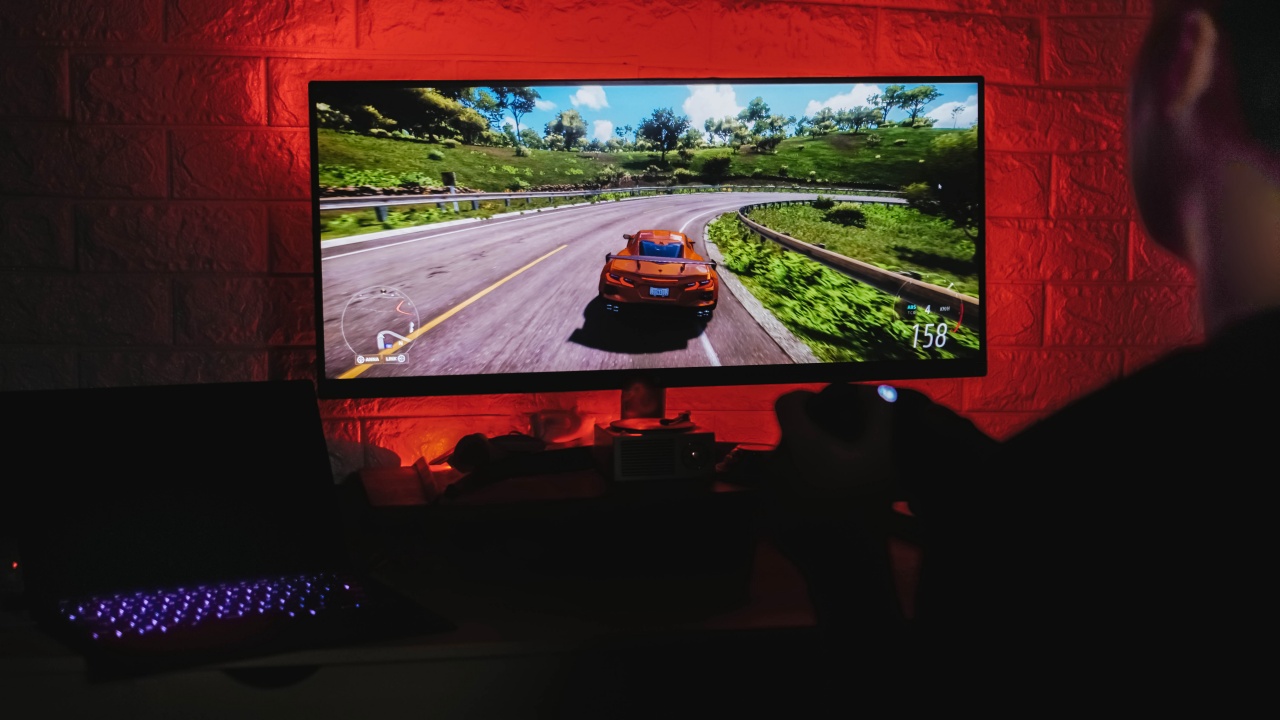
Playing Forza Horizon 5 on my ultra-wide monitor made my gameplay more immersive. Sadly, I wasn’t able to do the same driving experience with ETS2 as it has issues continuing the game when the eGPU is connected.
SEE ALSO: LG 29WP500 UltraWide Monitor review: Bang for your buck
Laptop Mode

As of this writing, I’m using the ROG Flow Z13 as my primary device when typing this review article.

While the keyboard isn’t close to how I type on my MacBook (or any other mechanical keyboard), the key travel is enough to make typing satisfying.

If I’ll explain the exact feeling, it’s in the middle of being clicky and mushy — not that it’s a bad thing. The precision trackpad feels nice as well. Gone are the days when Windows devices have clunky plastic trackpads for navigation.

Opening apps like Microsoft Edge (yes, not Chrome), Netflix, Twitter, Slack, Telegram, and among others in the list should be a breeze.

I’m just halfway 30 yet I can already feel Yeom Mi-Jeong’s life sentiments in My Liberation Notes
When it comes to the creative apps I use such as Adobe’s Creative Suite, the gaming tablet doesn’t falter either.
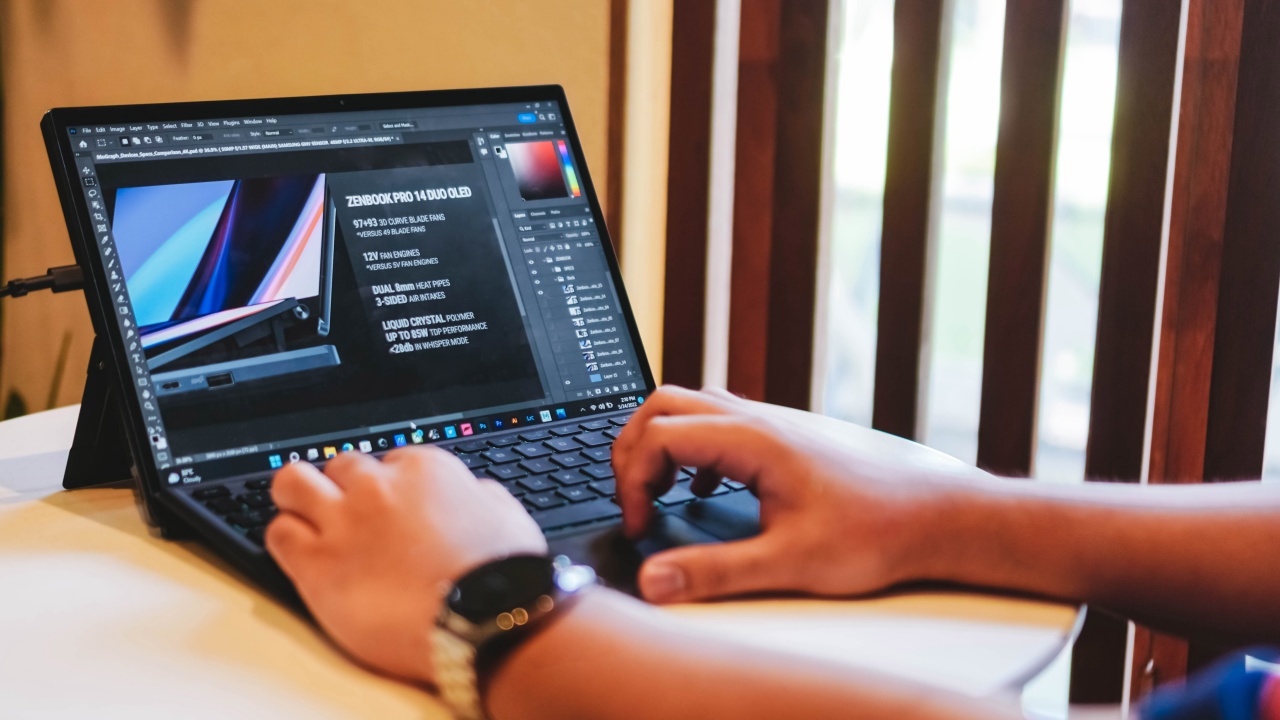
Opening Adobe Photoshop was fast and snappy. Being able to scroll through several layers without any hiccups is a breeze.
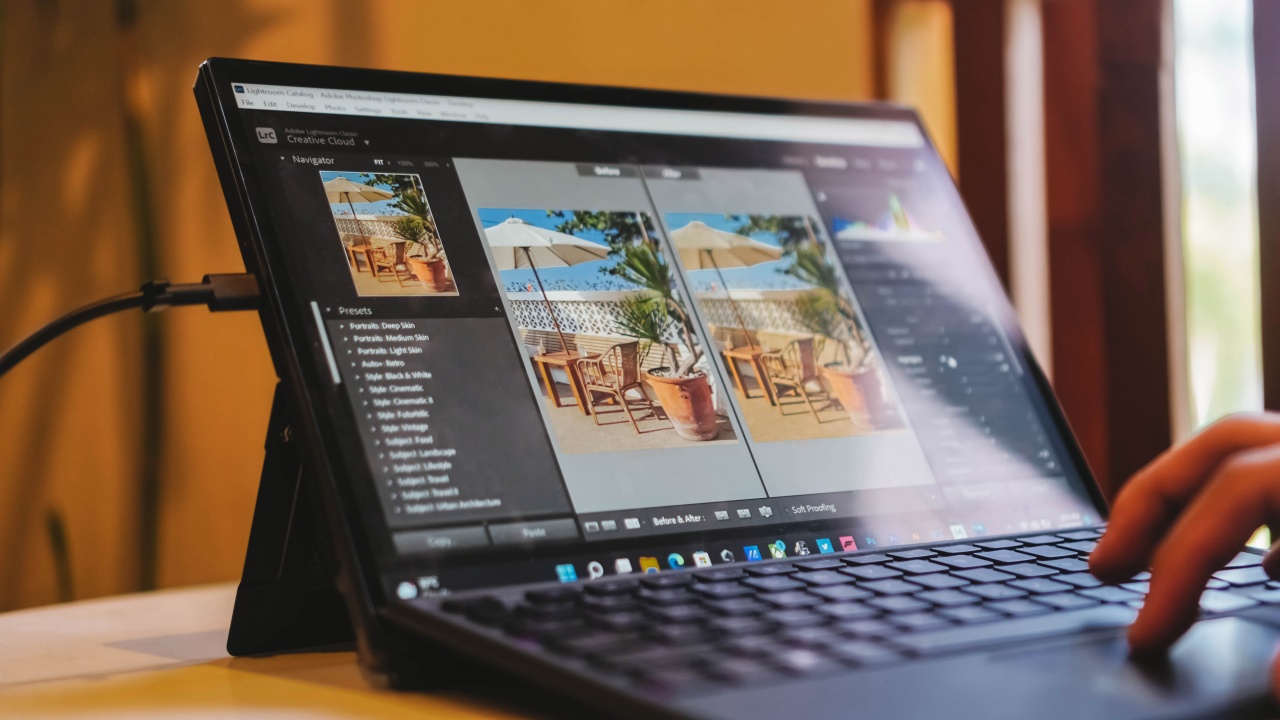
Adobe Lightroom should perform the same. While the best Z13 model has an 85% DCI-P3 wide color gamut coverage, the 100% sRGB color accuracy is enough for color grading and post-processing that other gaming laptops can’t even achieve.
Meanwhile, running Adobe Premiere Pro and After Effects vary depending on how heavy or light your workload is.
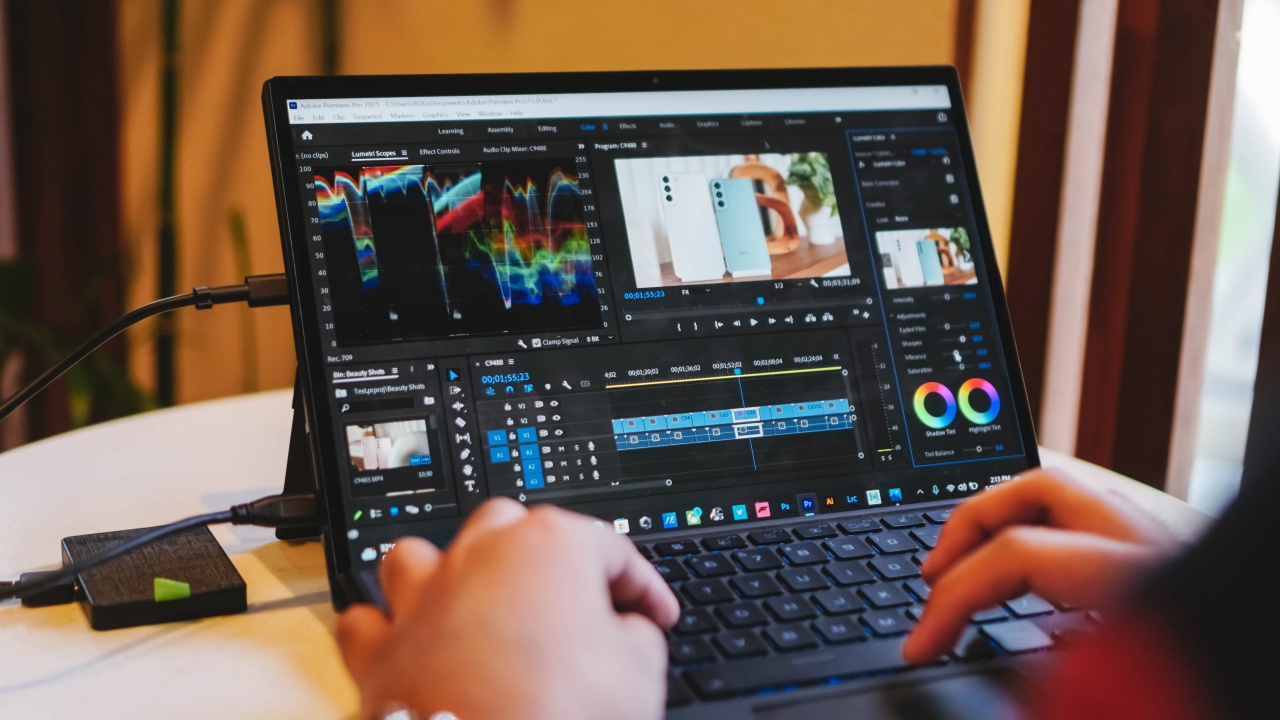
Let’s say you’re editing a 4K video or a 15-second 4K MoGraph (Motion Graphic), it will obviously render slower than your projects with the usual Full HD resolution. But for the most part, it renders faster than ever.
However, you might want to invest on an external SSD or replace its NVMe M.2 SSD with a larger 1TB capacity for storing these large project files and footage without sacrificing read and write speeds.
SEE ALSO: Seagate Ultra Touch SSD: 5 reasons why you need this external SSD

And while I haven’t opened Autodesk Maya for years, I still tried running this 3D-modeling software and was still able to render the heavy 3D project file of a 2016 MacBook Pro I did way back in college.
Tablet Mode

“I’M FEARLESS“ even when LE SSERAFIM’s Sakura decides to step on my whole existence (P.S: I miss IZ*ONE so much what if umiyak na ako)
Other than gaming or using it for professional work, the ROG Flow Z13 can also serve as your entertainment device — just like any other tablet being offered in the market today.

Please ‘Tell Me Now‘ that LOONA will win Queendom 2
Watching flicks on Netflix or vibrant K-Pop music videos and live performances on YouTube all looked great on this device regardless if this Z13 doesn’t have the top-of-the-class panel.

That being said, its display still supports HDR, Dolby Vision, and is Pantone-Validated as well — making it enough for most users to enjoy its crisp and ViViD visuals (just like LOONA’s Heejin and her debut song 😘).
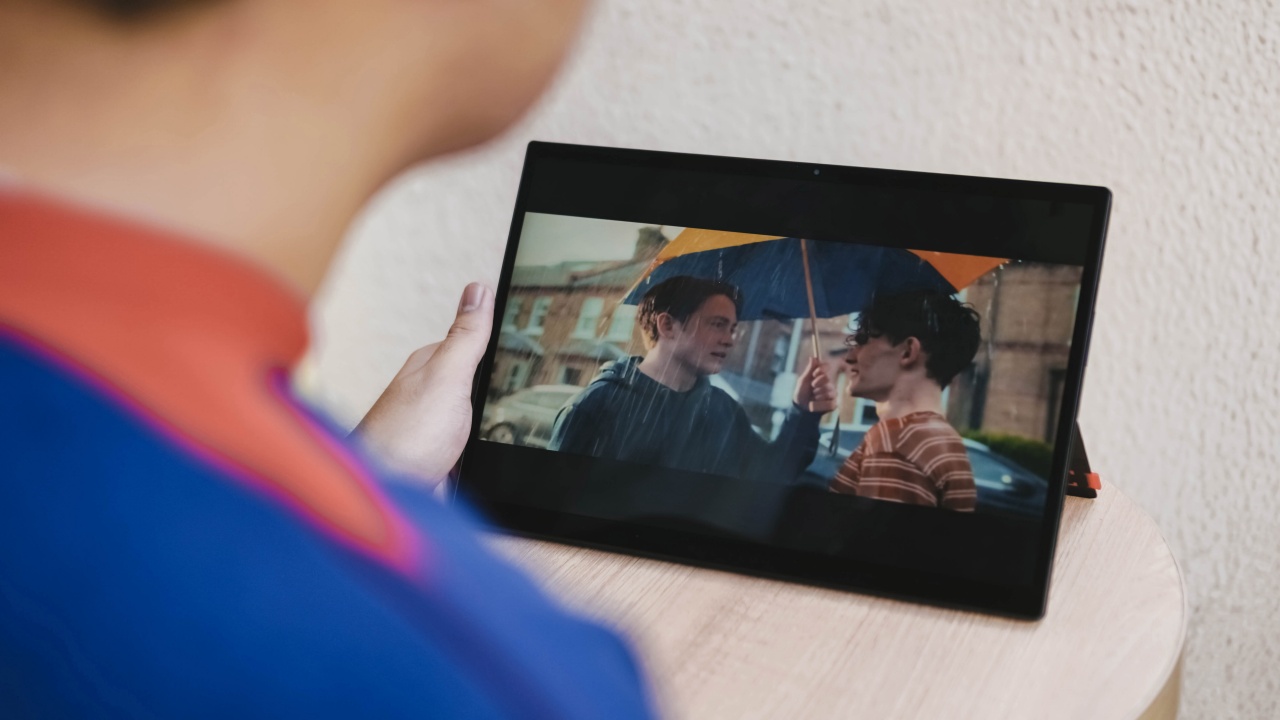
Not all gays suck at gaming. Charlie is a proof of that one can be a hardcore gaymer 😇
While it doesn’t have the max 4K resolution of the other model, I prefer this one as it should preserve the tablet’s overall power consumption.

Also, having the Full HD+ panel means you can switch between 60Hz and 120Hz depending on your preference for that ultra-smooth navigation and stutter-free gameplay. The 4K variant is only stuck at 60Hz.
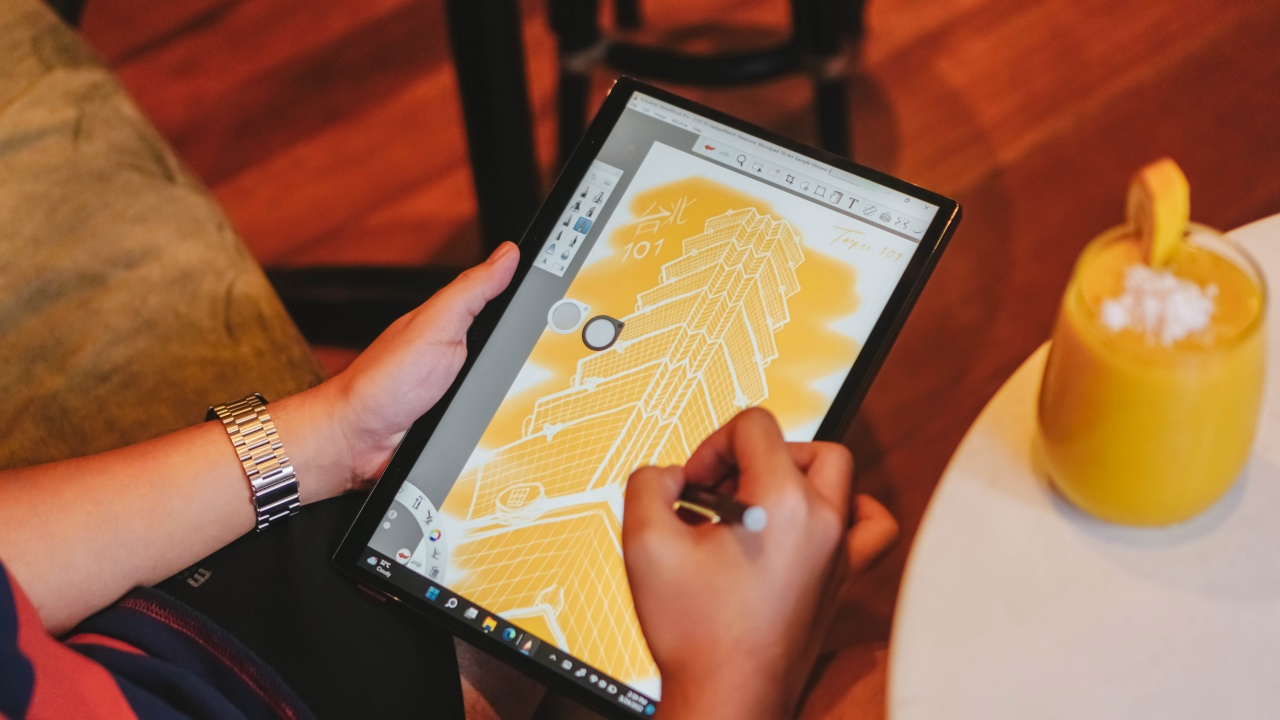
Having a faster refresh rate also means the pen input delay (or latency) should be more realistic. Using the bundled ASUS Pen felt enough for note-taking or some lousy sketching.
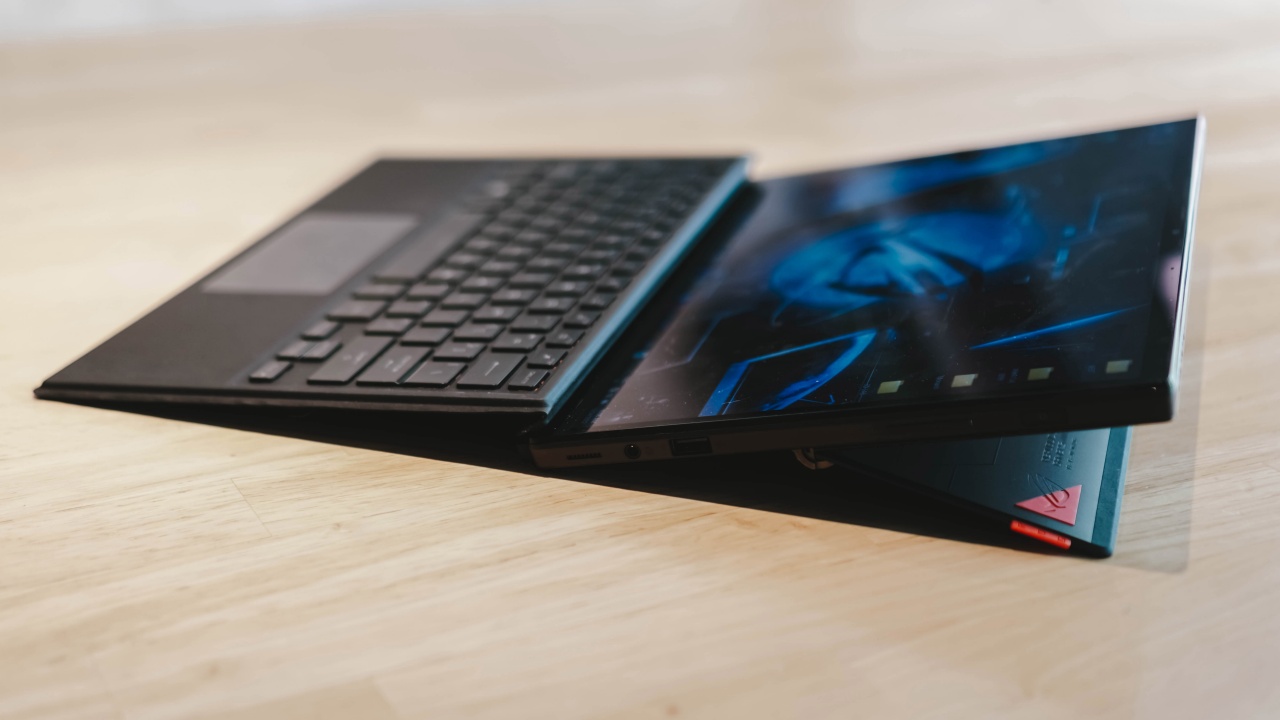
Although this isn’t the most ideal tablet for any digital artist, it can still hold up as a decent graphic tablet. For better use of its graphic tablet functionality, you can turn its stand all the way to its tilting limit.

With Windows 11 in mind, there are apps you can use such as Adobe Lightroom, Paint Tools SAI or Autodesk’s Sketchbook Pro just in case you want to experiment with your hidden artistic talent.
Ultra-portability has its compromises
Despite being equipped with the latest and greatest tech, the ROG Flow Z13 admittedly can’t quite stand on its own. And by that, with drawbacks while using the tablet alone.
1. Underwhelming battery
Remember when I said a while ago that having a less denser display means being able to save battery life? Well, that’s not the case in this tablet.
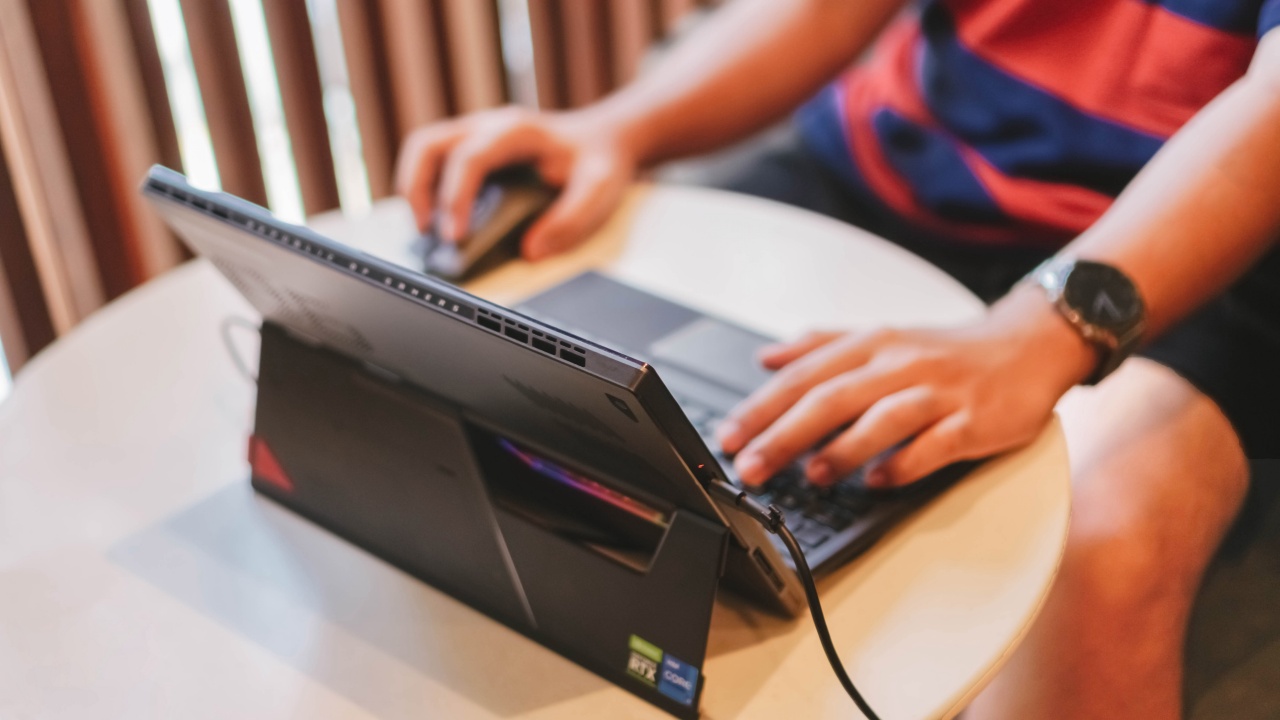
Not that it’s surprising since ROG tried to cram up all components inside this chassis with a screen in it. Still, I expected at least a modest 3-5 hours of battery life when doing light tasks.
Whether I switch between Performance or Power Saving Mode, it doesn’t do much in saving the tablet’s 56WHr battery.
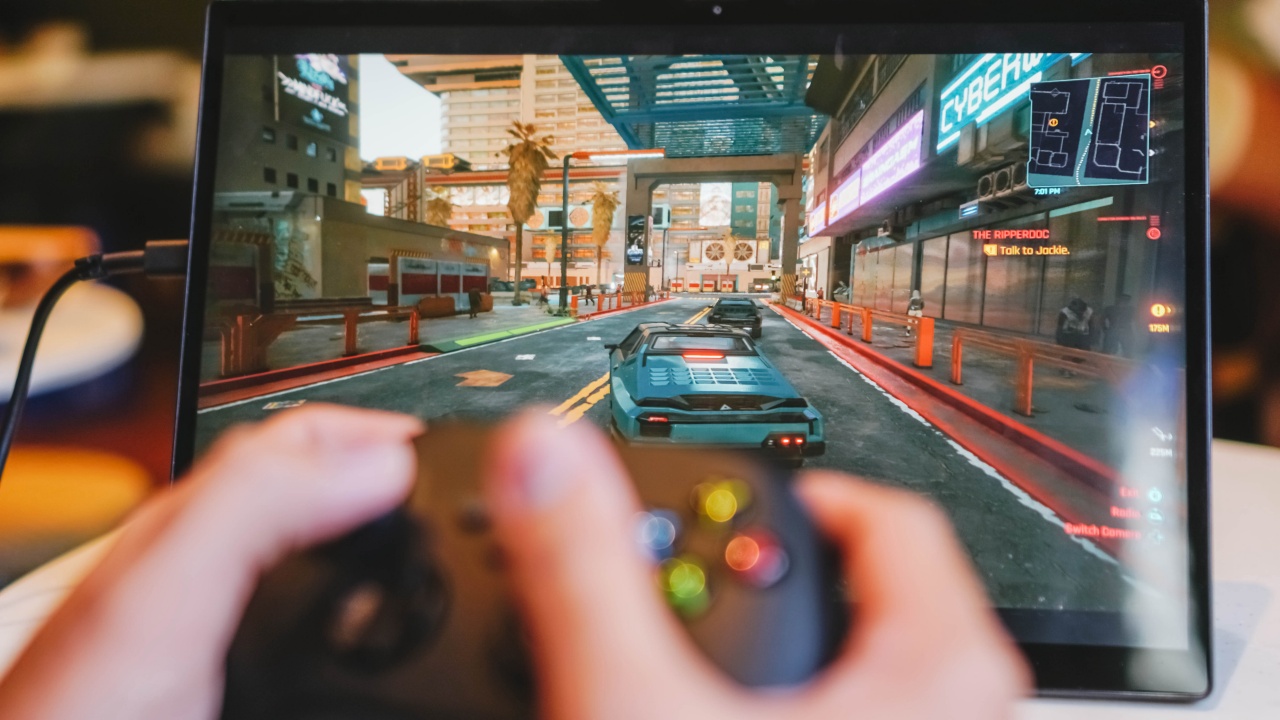
When playing games, you have to seat near a wall socket. Regardless of how low or high the settings are, you can only play with the tablet for under an hour before it dies. That’s not a lot of juice for gamers.

For less-demanding tasks, my specific test showed exactly 2 hours and 27 minutes on Balanced Mode while 2 hours and 46 minutes when Battery Saver Mode is on. Exactly as I type this part of the article, the Z13 went under 5% that I had to immediately plug-in its charger. That’s more than two hours of typing this review.

That said, ROG is true to its words. With its bundled 100W USB-C to AC Adapter, it can fast charge the Z13 from 0% to 50% in just 30 minutes. Filling it up to 100% just takes an hour to finish.
2. Useless as a standalone tablet
A tablet is made meant for a handed use, but that’s not the case with the ROG Flow Z13.

Turning Red is the only “red” I want to support 🤩
I’m not saying that the ROG Flow Z13 is useless. During my test with the tablet, playing touchscreen games without the keyboard/touchpad and mouse is what made it “useless”.
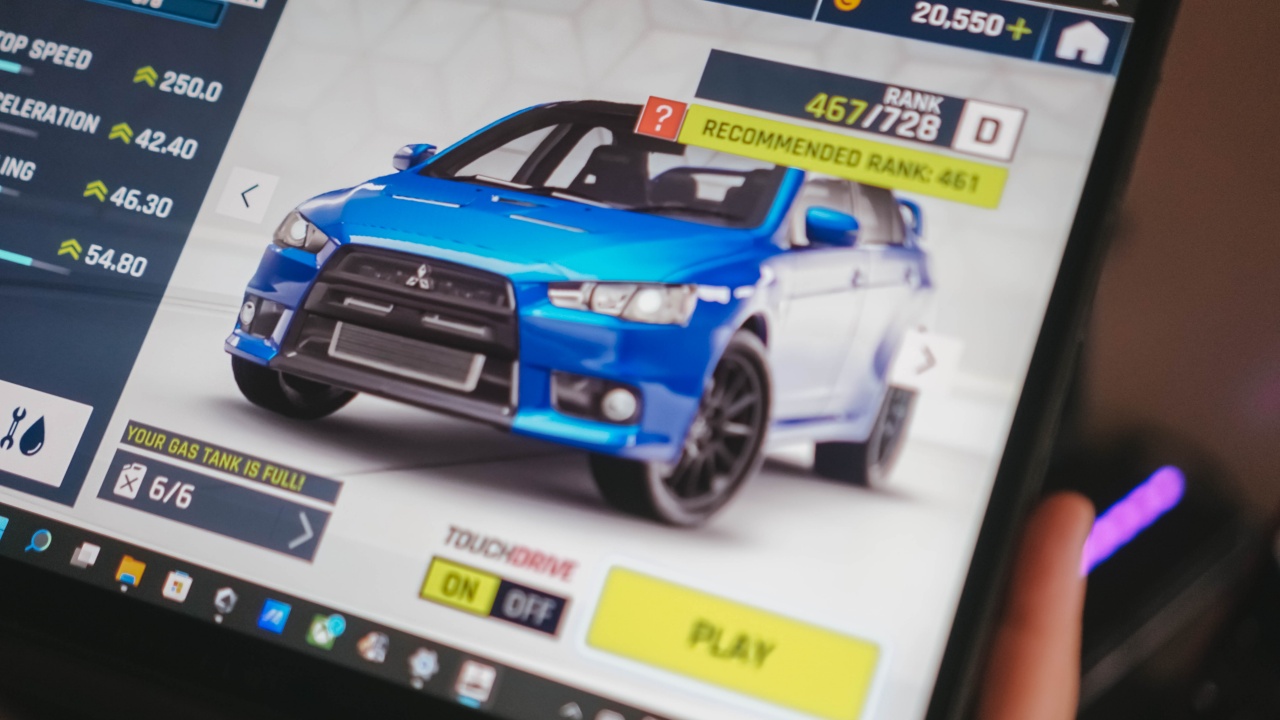
Case in point: I have the option to play Asphalt 9 using tablet mode. But with the ROG Flow Z13 not having the necessary sensors (such as an accelerometer and gyroscope), it can’t play using tilting and just relies on either the automatic acceleration feature called “TouchDrive” or via the bundled keyboard. This makes my gameplay less exciting and thrilling.

There are also times when selecting options in-game needs some stretch. Touchscreen games feel weird due to the large screen size and hefty body, making it uncomfortable to hold when playing.

Not a big dealbreaker but it’s also quite disappointing how I can’t run FPS games without the keyboard and mouse. But I guess it’s more on the software side since PC games aren’t meant to be played with touch inputs unlike iOS and Android FPS games.

Still, even running Android games such as Call of Duty: Mobile (CoDM) through the Gameloop emulator doesn’t make it possible to run FPS, RPG, or MOBA games via touchscreen. A keyboard and mouse are still needed.
3. Ugh… Display issues
Not that it always happens, but one big issue whenever I hook up my 4K TV through XG Mobile via HDMI is that, it randomly displays glitches and flickers when movies are being played.
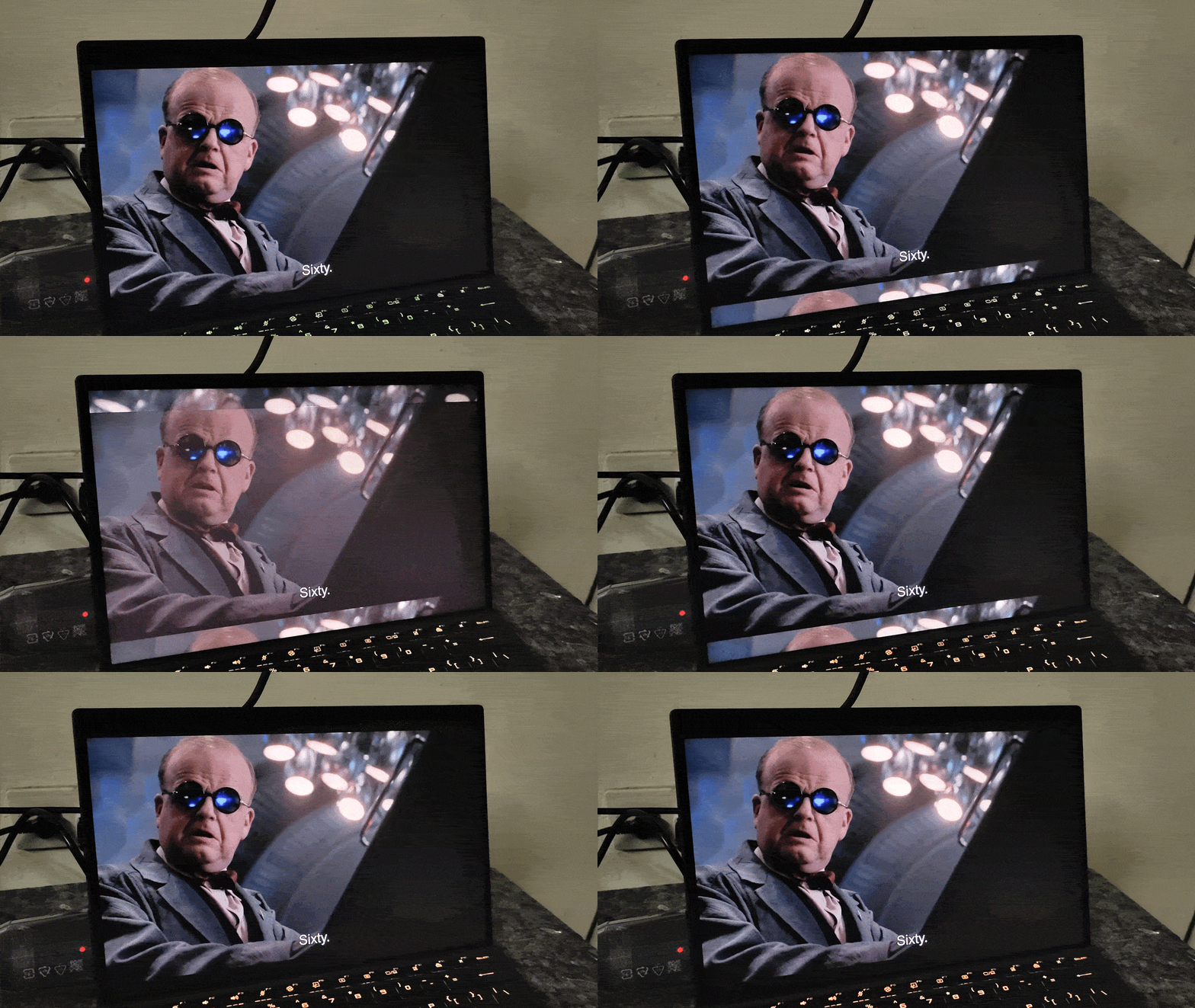
There are also numerous times when the tablet went into the horrifying BSoD (Blue Screen of Death) just right after hooking up the HDMI cable and properly switching to XG Mobile.

I’m quite unsure if the crucial component updates have fixed this critical issue. While I haven’t checked since I’m afraid I might ruin this review device, I hope ROG comes up with a patch real soon.
4. Undesirable overheating
The problem with heavily-powered portable devices like this is the lack of a better cooling implementation and heat dissipation — even with the existence of an advanced vapor-cooling chamber and “efficient” CPU and GPU units.
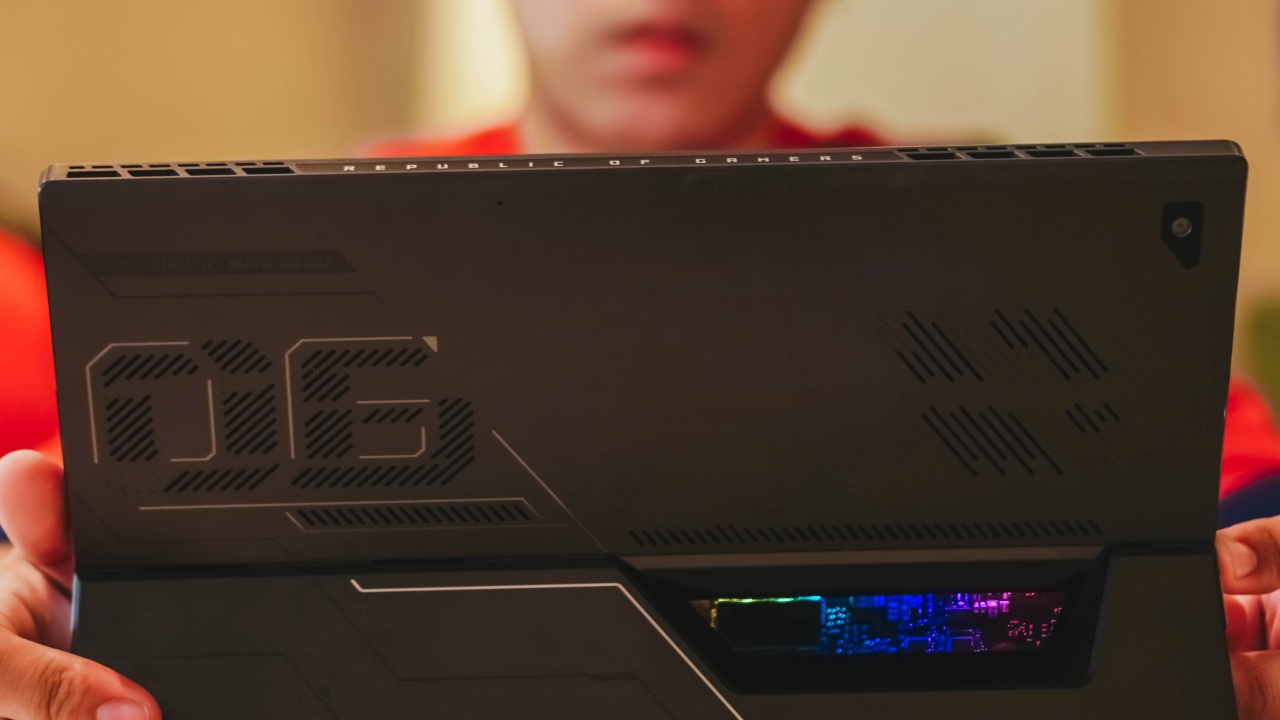
Any air-conditioned room (or purely just a snowy-cool climate) might suppress the heating issues temporarily, but its power-heavy yet crammed chassis is one reason why the ROG Flow Z13 doesn’t cool properly.
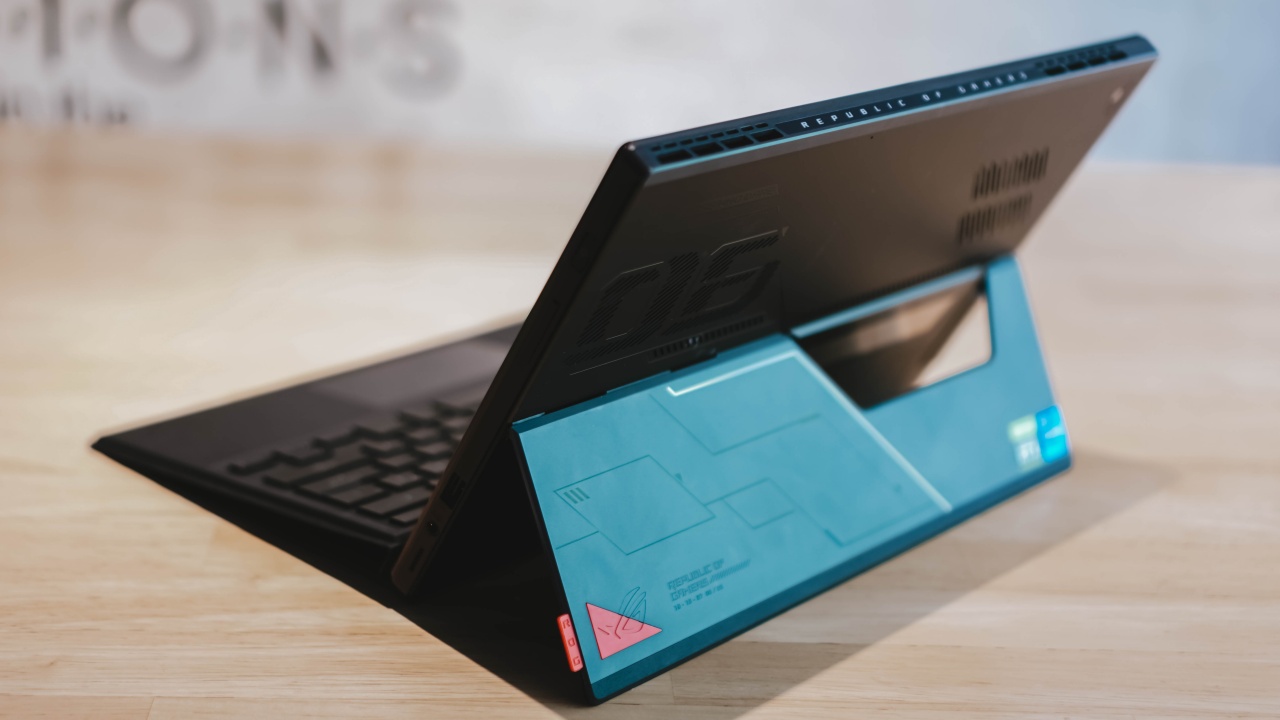
It’s either you have to flip its back stand, or you just have to deal with its unacceptable overheating. I also think overheating has something to do with the display issues I mentioned a while ago.
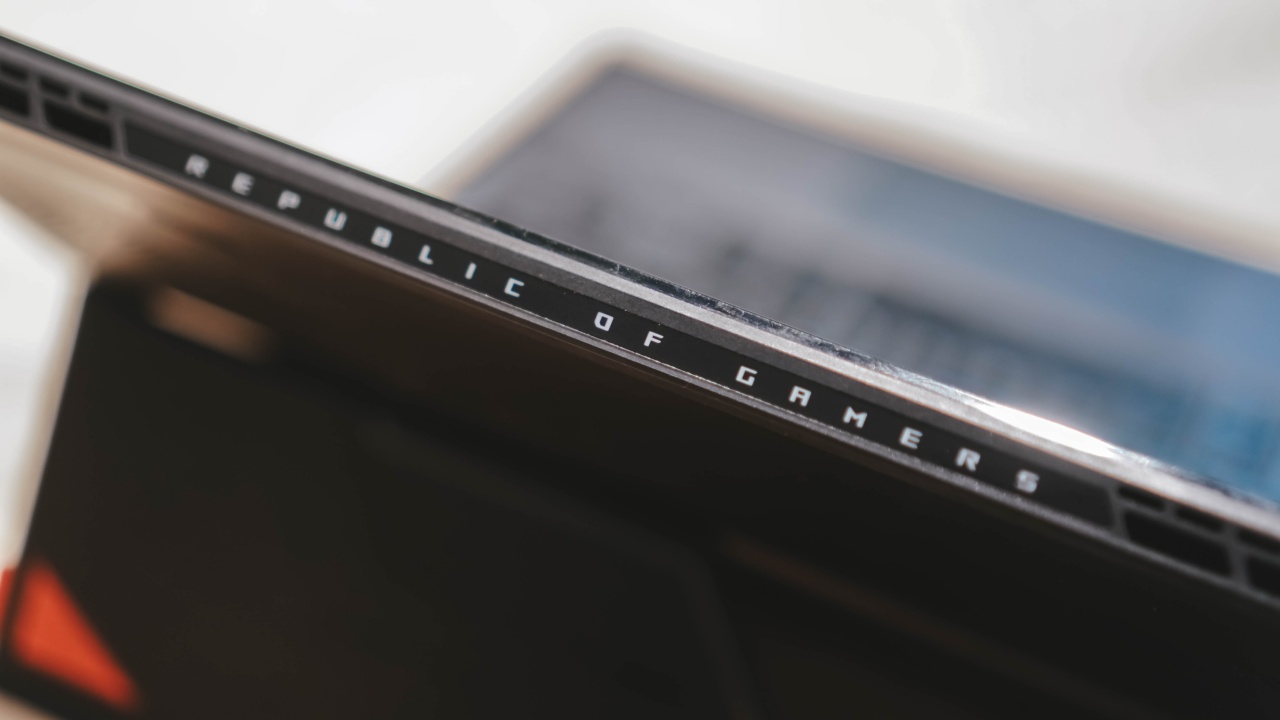
Did I also mention how loud the fans and hot the heatsinks are when playing games or rendering and exporting output files?
Is the ROG Flow Z13 your GadgetMatch?

In the Philippines, this higher-end ROG Flow Z13 is priced at PhP 99,995. The less-powerful Core i5 and Iris Xe-powered variant retails for a measly PhP 84,995. The ROG XG Mobile (which is sold separately) costs as much as PhP 69,995 for the RTX 3080 model while the Radeon-powered RX 6850M is almost 10,000 less than the Z13 itself at a whopping PhP 89,999. This just means one thing:
This gaming device isn’t for everyone.
With the presence of more affordable gaming laptops, buying the ROG Flow Z13 doesn’t apply from a practical, “worth-it” standpoint. Instead, this is for those with the extra purchasing power who want the versatility and portability of a tablet that can also run demanding games and creative apps in the long run.

And as a creative professional, this tablet isn’t meant for creatives neither. There are a lot of options out there that can do both work and play without sacrificing your savings.
Much like foldable smartphones, the ROG Flow Z13 focuses more on a specific type of market that want the bleeding edge tech regardless of how pricey it is. But if you want the best of both worlds in gaming and creative work, this might just do all the trick.





Gaming
Samsung Display’s QD-OLED panels help demos at gamescom 2026
Hundreds of gaming monitors feature company’s QD-OLED panels

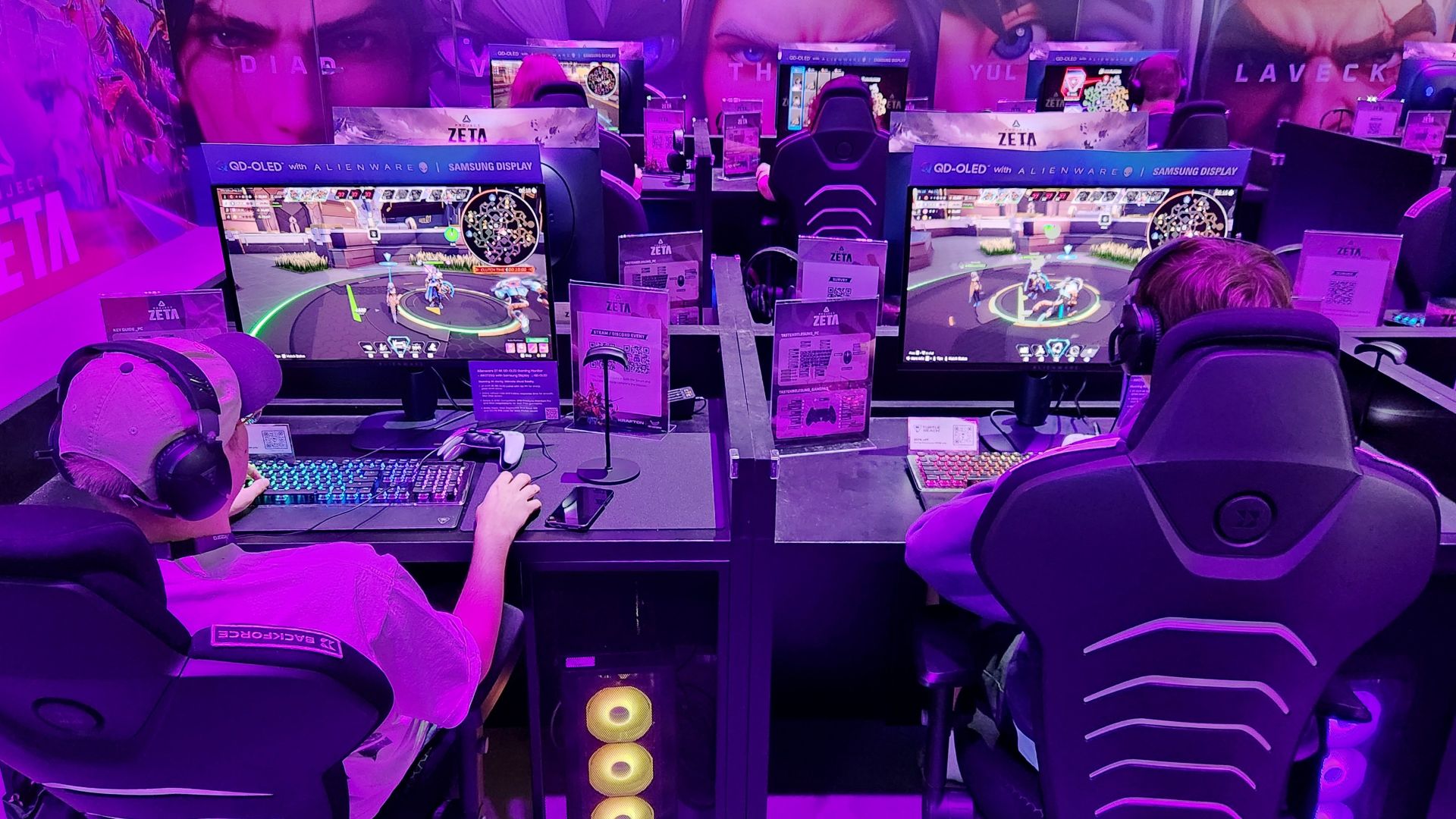
Samsung Display is showcasing the gaming performance advantages of QD-OLED at gamescom 2026 through hundreds of monitors helping with playable demos.
Samsung Display partnered with CAPCOM, KRAFTON, and CD PROJEKT RED, with their highly anticipated titles being showcased at gamescom 2026 (August 26 to 30, Cologne, Germany) on several gaming monitors featuring Samsung Display’s QD-OLED panels.
This demonstrates the outstanding picture quality of QD-OLED to gamers from around the world.
In addition, the company has announced that it will begin the mass production of 24.5-inch QD-OLED panels optimized for eSports and FPS games by the end of the year.
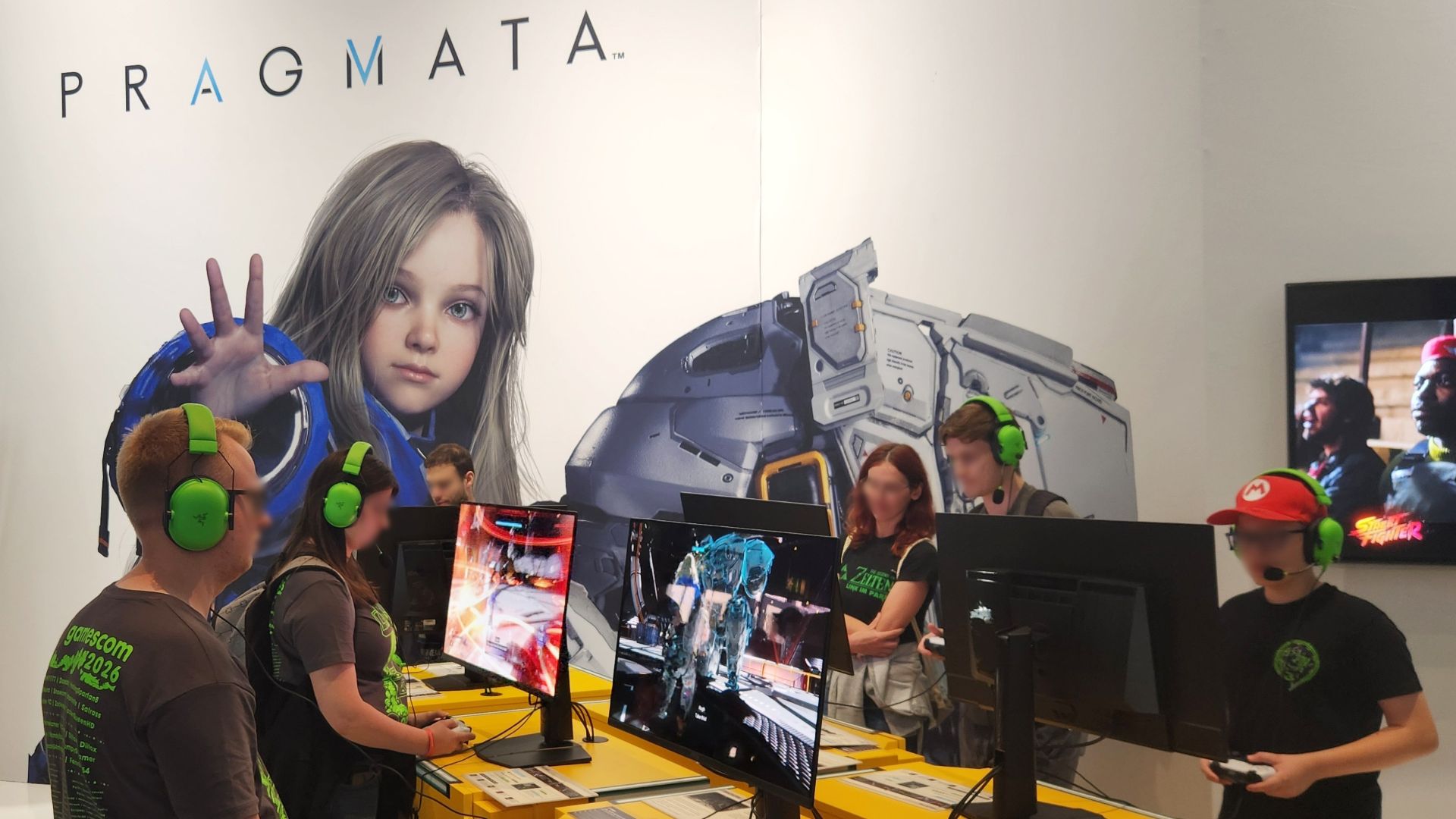
At CAPCOM’s booth, visitors can get a hands-on experience with the upcoming Onimusha: Way of the Sword and Dragon’s Dogma 2: Dark Arisen.
Other playable titles include PRAGMATA, Street Fighter 6, and Mega Man: Dual Override.
Samsung Display is supplying a total of 90 QD-OLED gaming monitors, including the EVNIA 32MN8900, GIGABYTE MO32U24 and MSI MAG 321UP QD-OLED X24, for the hands-on gameplay.
Meanwhile, KRAFTON will showcase three of its five upcoming titles on 85 Alienware QD-OLED gaming monitors.
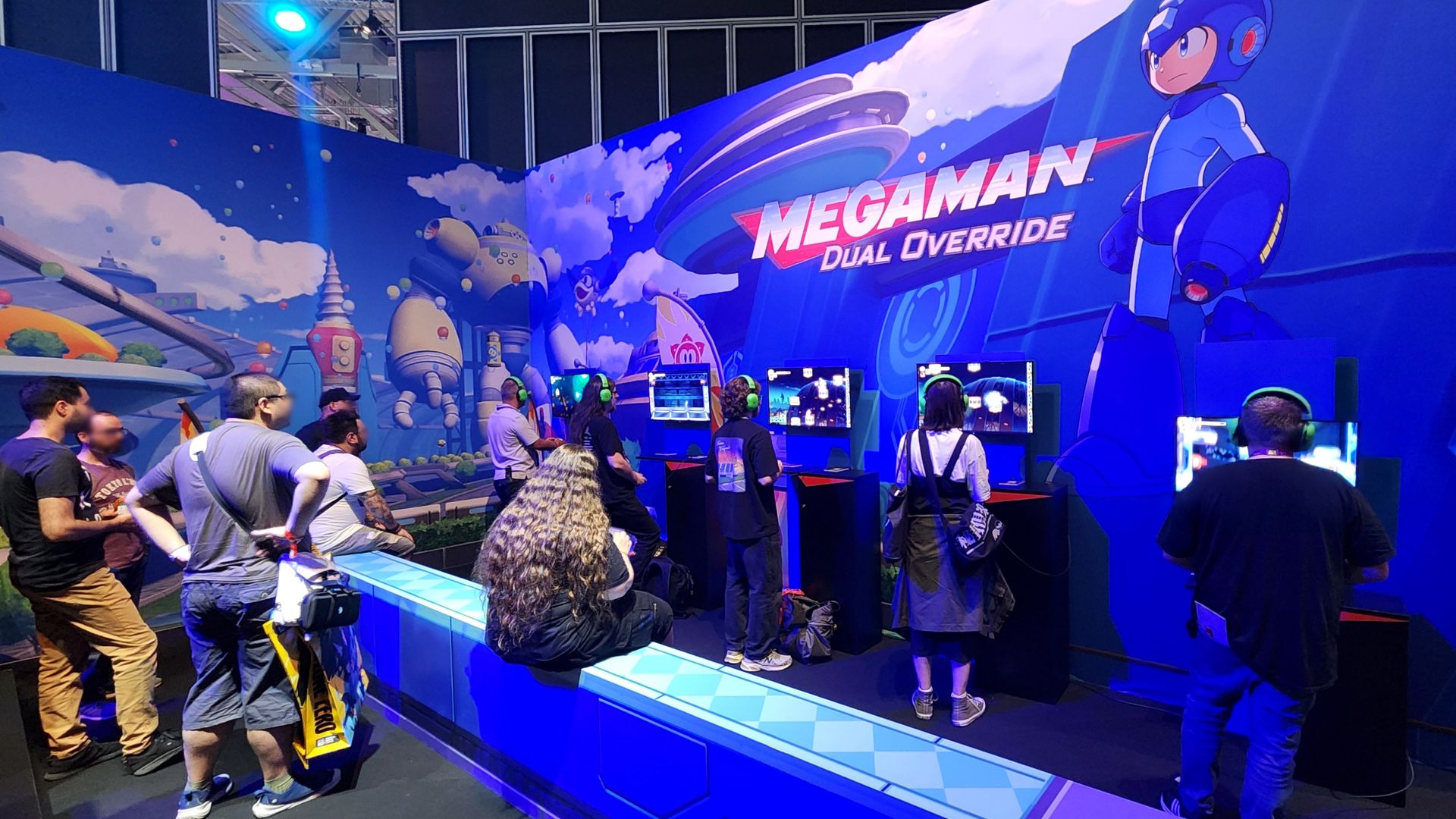
Visitors will have the opportunity to preview the multi-team tactical arena game Project ZETA, two-player coop AG Twisters, and the action RPG TARAE: The Unbound.
Lastly, at the CD PROJEKT RED booth, a trailer for Songs of the Past, the third expansion pack for The Witcher 3: Wild Hunt will be shown on eight QD-OLED TVs.
Visitors can also watch gameplay demonstrations on monitors equipped with similar displays. This gives Samsung Display the chance to highlight the QD-OLED Penta Tandem technology.
Gaming
Stage Tour is resurrecting your Rock Band childhood
You can rock the guitar, the drums, or vocals to your favorite songs.


A new Witcher 3 DLC, a new Final Fantasy VII, Mega Man, Rayman, and Crazy Taxi. What year is it again? With games as nostalgic as these coming out, there’s one game that can complete the circle: Rock Band. Now, resurrecting an era of rhythm games, Stage Tour will have you playing the guitar, the drums, or vocals in a star-studded game with a lot of iconic tracks.
For those who played through the classic Guitar Hero or Rock Band, Stage Tour needs no introduction. However, if you’re new to the scene, the game simply puts you into the shoes of a rock band. You can wield a guitar, a set of drums, or a microphone. And yes, the game comes with a customized controller for each instrument.
As for the soundtrack, you can rock and jam to a lot of the catchiest songs from yesteryear to today including titles from BABYMETAL, Paramore, Slipknot, The Rolling Stones, Ed Sheeran, Black Eyed Peas, Blink-182, Fall Out Boy, Metallica, Walk the Moon, and Olivia Rodrigo.
Stage Tour launches on December 10 for all major platforms like PlayStation 5, Xbox Series X|S, PC, and Switch 2. You can also grab their official accessories through their site, but they do cost a pretty penny.
Gaming
HoYoverse’s Nodusfall looks like nothing they’ve ever made before
But it looks so similar to Elden Ring or Dark Souls.

There’s a certain aesthetic you’ll always expect whenever you see HoYoverse mentioned. Touting long-standing hits like Genshin Impact and Zenless Zone Zero, the publisher’s games often have bright and appealing aesthetics, bolstered by highly attractive characters to get you into the gacha groove. However, for the first time, HoYoverse is trying something completely different: Nodusfall, an action RPG that looks and feels like Elden Ring.
Revealed at today’s gamescom, Nodusfall teases a deeply fantastical setting focusing on Weavers taking on ferocious monsters and divine entities. Players will be able to take on these challenges with, based on the trailer, four players. Each player can wield an assortment of weapons including a greatsword, a regular sword, a bow, and magic. The trailer also teases spells that can transform the player into a divine being themselves.
As for the enemies, they have a strangely striking resemblance to other games you might have played before. One is a grizzled warrior who beheads a giant lion, something that’s shockingly identical to Hoarah Loux in Elden Ring. Another rides a dragon, similar to the Nameless King from Dark Souls 3.
Comparisons aside, Nodusfall is an impressive transformation for HoYoverse. Since forever, the publisher thrived on anime aesthetics, highlighted these days by the godly trilogy of Genshin Impact, Honkai: Star Rail, and Zenless Zone Zero.
HoYoverse hasn’t revealed the release date of Nodusfall just yet, but we’re excited to see it in action.
SEE ALSO: HoYoverse’s first life sim, Petit Planet, opens Stardrift Test sign-ups

REDMI Note 17 Pro review: What a rollercoaster ride!
The serious series of ups and downs are NOTEworthy of your attention


Insta360 Luna Ultra review: My new solo coverage camera
Changed my workflow

TECNO MEGAPAD 2 review: Eyes on the size
The MEGA pad for two base users

Samsung Galaxy S26 FE brings Galaxy AI upgrades
REDMI Note 17 Pro review: What a rollercoaster ride!

REDMI Note 17 Series: Price, availability in Singapore

REDMI reveals the refreshed Note 17 and Note 17 Pro series

AGIBOT just topped the medal table at the World Humanoid Robot Games

VinFast debuts two-wheeler models, opens 21 e-motorcycle showrooms
TECNO MEGAPAD 2 review: Eyes on the size

REDMI Note 17 Series focuses on long-term reliability

OnePlus officially leaves the United States and Canada

Xiaomi debuts SkyNomad Series featuring new Kunlun platform


-
Reviews5 days ago
TECNO MEGAPAD 2 review: Eyes on the size
-
 Singapore2 weeks ago
REDMI Note 17 Series focuses on long-term reliability
-

 News1 week ago
realme 16T to come with 8,000mAh battery, 7-year battery health guarantee
-

 News1 week ago
HUAWEI Pura X View is 2026’s first WIDE slab-type smartphone
-
 Reviews2 weeks ago
Samsung Galaxy Z Fold8 Review
-
 Accessories1 week ago
Jackery expands Explorer Series portable power stations
-

 Gaming2 weeks ago
Now Playing: Assassin’s Creed Black Flag Resynced
-

 Cameras6 days ago
30 days with the DJI Osmo Pocket 4P